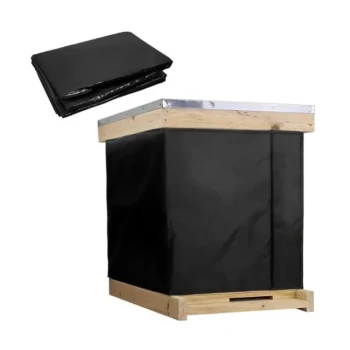
The top cover functions as the weatherproof roof of the Langstroth hive structure. It is the final component placed on the stack, sitting directly over the inner cover to serve as the primary barrier against rain, snow, and wind.
Core Takeaway: The top cover is the hive's first line of defense against the elements, preventing moisture accumulation that could harm the colony. While it provides external protection, it relies on the inner cover beneath it to maintain proper internal airflow and prevent the bees from sealing the roof shut.
Primary Defense Against the Elements
Shedding Precipitation
The most essential function of the top cover is keeping the interior of the hive dry. Without this barrier, water and snow would enter the colony, chilling the bees and potentially causing mold or colony collapse.
The Telescoping Design
A telescoping top cover is the most popular choice for general beekeeping. It is typically constructed of wood and designed to fit loosely over the inner cover and the top box (super). The sides hang down a few inches, telescoping over the box below to ensure water runs off the side rather than seeping into the seams.
Durability and Materials
To withstand constant exposure, these covers are usually sheathed in a thin metal sheet. This metal layer prevents the wooden structure from rotting and ensures snow and ice slide off easily.
Relationship with the Inner Cover
Preventing Propolis Bonding
The top cover is rarely placed directly on the frames; it sits on an inner cover. If the top cover were placed directly on the boxes, bees would seal it down with propolis (bee glue). This would make the heavy top cover extremely difficult to remove without jarring the hive.
Thermal Regulation
By creating a gap between the inner cover and the outer top cover, the hive benefits from a "dead-air" space. This air pocket acts as insulation, protecting the colony from intense heat in the summer and damp cold in the winter.
Understanding the Trade-offs
Telescoping vs. Migratory Covers
While the telescoping cover offers superior weather protection, it extends beyond the width of the hive body. Migratory covers are flat, flush with the sides of the box, and lack the telescoping overhang. These are used by commercial beekeepers because they allow hives to be packed tightly side-by-side on trucks, though they offer less protection against heavy rain.
Vulnerability to Wind
Because top covers are designed to be removable, they are susceptible to strong gusts of wind. A telescoping cover acts like a lid and can be blown off during storms. To prevent this, beekeepers must secure the cover using straps or by placing a heavy object, such as a brick or large stone, on top.
Making the Right Choice for Your Goal
- If your primary focus is stationary hobby beekeeping: Choose a telescoping cover for maximum protection against rain and snow, as the overhang ensures the hive stays dry.
- If your primary focus is moving hives frequently: Opt for a migratory cover, as the flush edges allow you to stack hives immediately next to one another for transport.
- If your primary focus is storm security: Regardless of cover type, always use a heavy brick or ratchet strap to ensure the wind does not expose your colony to the elements.
The top cover is the shield that ensures the longevity of the woodenware and the survival of the colony within.
Summary Table:
| Feature | Telescoping Top Cover | Migratory Top Cover |
|---|---|---|
| Primary Use | Stationary / Hobby Beekeeping | Commercial / Transport |
| Design | Overhanging edges (telescoping) | Flush with hive sides |
| Weather Protection | High (sheds water away from seams) | Moderate (compact for stacking) |
| Material | Wood with metal sheathing | Solid wood or plywood |
| Propolis Prevention | Requires an Inner Cover | Can be used without Inner Cover |
Scale Your Beekeeping Operations with HONESTBEE
At HONESTBEE, we understand the demands of commercial apiaries and professional distributors. Whether you are looking for durable telescoping covers, specialized hive-making machinery, or high-efficiency honey-filling equipment, we provide a comprehensive wholesale portfolio to support your business growth. Our expertise extends from essential industry consumables to unique honey-themed cultural merchandise, ensuring you have every tool needed for success.
Ready to upgrade your inventory or equipment? Contact us today to explore our wholesale solutions!
Related Products
- Long Langstroth Style Horizontal Top Bar Hive for Wholesale
- Telescopic Beehive Outer Cover Lid Roof with Galvanised Sheeting for Langstroth Hive and Beehive Outer Cover
- Professional Hive Top Bee Feeder for Beekeeping
- Solid Bottom Board Australian Pine Wood Langstroth Bottom Board for Wholesale
- Langstroth Solid Bottom Board for Beekeeping
People Also Ask
- What are the potential applications of top bar hives in resource-limited settings? Empower Communities with Sustainable Beekeeping
- What are the benefits of extra wax production in top bar hives? A Natural Byproduct for Craft & Efficiency
- What does the general management of a top bar hive entail? Master Horizontal Beekeeping with Ease
- How does the top bar hive help control varroa mites? A Natural Approach to Mite Management
- How is a top bar hive used to start a new colony? Master Incremental Expansion for a Thriving Hive