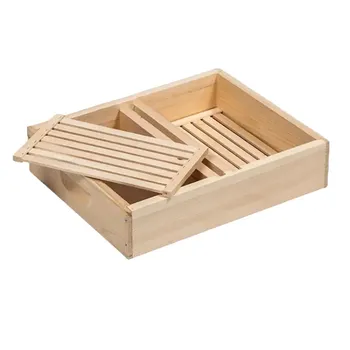
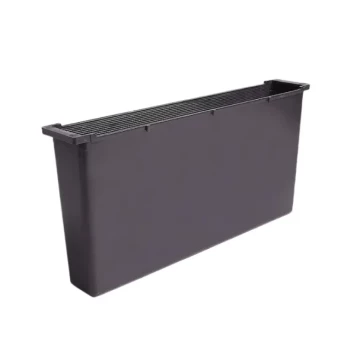
To rapidly establish a captured bee swarm, provide a complete deep-hive setup, ready-to-use comb, and supplemental sugar syrup. The essential equipment is a solid bottom board, one standard deep brood box, frames fitted with wax foundation, an inner cover, an outer cover, and a feeder. Place one frame of clean drawn comb near the center and supply sugar syrup through an internal frame feeder or compatible hive-top feeder, especially when natural nectar is limited.
A captured swarm already has the bees and usually a queen, but it still needs a stable home, usable comb, and reliable feed. Drawn comb accelerates early storage and brood rearing, while syrup encourages the bees to draw foundation into functional comb.
Build the Hive Around Immediate Colony Needs
Start With a Stable Hive Base
A solid bottom board or hive floor supports the brood box and defines the entrance. Place the hive on a stable hive stand or level surface to reduce shifting, moisture problems, and disturbance during inspections.
Keep the entrance wide open initially, without an entrance reducer, so the incoming swarm can enter and ventilate the hive efficiently. A wooden plank or sheet placed from the ground to the entrance can help guide stragglers into the hive.
Use One Deep Brood Chamber
A standard deep hive body provides the initial enclosed space for the swarm. One brood chamber is generally sufficient for installation; additional boxes and honey supers can be added as the colony expands.
The box should contain a full set of frames so the bees can distribute themselves across a consistent structure rather than occupying an improvised cavity.
Install Frames With Foundation
Fit the brood box with frames containing wax foundation or another suitable foundation type. Foundation gives the colony a starting pattern for producing comb for brood rearing, pollen storage, and honey storage.
For distributors and resellers, offering compatible boxes, frames, and foundation as a single package reduces ordering errors and speeds field deployment.
Add a Frame of Drawn Comb
Place a frame of clean, drawn comb near the center of the brood chamber. This is one of the most valuable additions for rapid establishment because the bees can immediately store incoming honey and pollen without first producing all the wax needed to build new comb.
The queen can also begin using prepared cells sooner, allowing brood production to start earlier than it would in a hive containing foundation alone.
Close the Hive With Inner and Outer Covers
An inner cover helps create the intended internal hive space and separates the colony from the outer cover. The outer cover protects the hive from rain, sunlight, and other weather exposure.
These covers are basic structural components, but omitting either one can compromise the colony's protection during the vulnerable establishment period.
Supply Feed That Supports Fast Comb Building
Use an Internal Frame Feeder
An internal frame feeder placed inside the brood box provides sugar syrup close to the colony. This arrangement is particularly useful after installation because the bees can access feed without leaving the hive.
Reliable feed supports wax production and helps the swarm draw comb across the foundation frames when nectar sources are weak or unavailable.
Consider a Hive-Top Feeder
A hive-top feeder is an alternative when it matches the hive configuration and management preference. It can provide substantial feed while keeping the syrup vessel above the brood chamber.
The feeder should be compatible with the chosen hive assembly and installed securely so it does not create leaks, exposed syrup, or unnecessary disturbance.
Feed During Nectar Gaps
Swarms arrive with stored honey, which gives them an initial energy reserve. However, that reserve does not eliminate the need for supplemental feeding when natural nectar is scarce or when rapid comb construction is the priority.
Sugar syrup should therefore be treated as an establishment aid, not as a permanent replacement for natural forage.
Include the Tools Needed for Safe Installation
Protect the Beekeeper
At minimum, have protective clothing, a veil, and gloves or a suitable suit combination available for transfer and inspection. Swarms are often manageable, but their behavior can change during handling or transport.
Protective equipment is especially important for commercial teams, new beekeepers, and installations near people or property.
Carry a Smoker and Hive Tool
A smoker with appropriate fuel helps manage the colony during transfer and follow-up work. A hive tool is required to separate frames, lift covers, and inspect the newly installed colony.
These tools are small but operationally essential. A complete swarm-installation kit should include them alongside the hive hardware and feeder.
Prepare for Transport and Stragglers
If the swarm must be moved, use a ventilated nuc box or other suitable transport container to prevent overheating. Secure the container with ratchet straps so it cannot shift during transport.
A white sheet or drop cloth can collect straggler bees, while a queen clip or comparable tool may help secure the queen when the situation requires it.
Understanding the Trade-offs
Drawn Comb Speeds Establishment but Requires Quality Control
Drawn comb is the fastest way to give a swarm usable storage and brood space. It must be clean and suitable for reuse, because poor-quality or contaminated comb can introduce management and colony-health problems.
Where clean drawn comb is unavailable, foundation-only frames remain a practical alternative, but the colony may take longer to create usable comb.
Feeders Improve Momentum but Add Management Risk
Supplemental syrup can stimulate wax production and maintain colony progress during poor forage conditions. Leaking feeders, exposed syrup, or unsuitable placement can create mess, attract pests, and increase robbing pressure.
The feeder type should be selected according to the hive design, access requirements, and the beekeeper's ability to monitor it.
A Wide Entrance Improves Access but Reduces Control
Keeping the entrance wide open makes it easier for a large swarm to enter and supports ventilation. As the colony develops or local pest pressure changes, entrance management may need to be reconsidered.
The initial configuration should therefore be reviewed during follow-up inspections rather than treated as permanent.
A Basic Brood Setup Is Not a Complete Apiary Program
The immediate installation does not require every piece of mature-apiary equipment. Honey supers, queen excluders, specialized pest-control equipment, and expanded hive bodies can be added as the colony grows and its management needs change.
However, distributors should distinguish clearly between swarm-establishment essentials and later-stage equipment so customers can purchase the right package for the current operation.
Making the Right Choice for Your Goal
The most efficient supply package combines the hive, frames, foundation, drawn comb, feeder, covers, and installation tools.
- If your primary focus is rapid colony establishment: Supply a deep brood box with a complete set of foundation frames, one clean drawn-comb frame positioned centrally, and an internal frame feeder filled with sugar syrup.
- If your primary focus is one-stop B2B sourcing: Bundle the bottom board, brood box, frames, foundation, inner cover, outer cover, feeder, smoker, hive tool, and protective equipment into a compatible installation kit.
- If your primary focus is reliable field deployment: Add a stable hive stand, entrance ramp, ventilated transport container, ratchet straps, and basic straggler-management equipment.
- If your primary focus is reducing operational risk: Verify component compatibility, feeder security, comb cleanliness, ventilation, and weather protection before the swarm is transferred.
With the right combination of usable comb, complete hive hardware, safe handling tools, and dependable supplemental feed, a captured swarm can move quickly from temporary containment into an organized, productive colony.
Summary Table:
| Equipment/Supply | Purpose | Key Considerations |
|---|---|---|
| Solid Bottom Board | Provides stable base and entrance | Wide entrance initially; use hive stand for stability |
| Deep Brood Box | Enclosed space for colony | Use one standard deep body |
| Frames with Wax Foundation | Guides comb building | Use quality foundation; bundle with box for convenience |
| One Frame of Drawn Comb | Immediate storage and brood rearing | Place near center; ensure cleanliness |
| Inner and Outer Covers | Protect hive from weather | Necessary for colony protection |
| Internal Frame Feeder | Provides easy access to syrup | Prevents leaks; monitor regularly |
| Hive-Top Feeder | Alternative feeding method | Must be compatible with hive |
| Sugar Syrup | Supports wax production and comb building | Use during nectar gaps |
| Smoker and Hive Tool | Manage bees during installation | Essential for safe handling |
| Protective Gear | Safety for beekeeper | Include veil, gloves, suit |
| Transport Container | Move swarm safely | Ventilated and secured |
Looking to equip your apiary with top-quality hive hardware and feeding supplies? HONESTBEE offers a full range of beekeeping tools, machinery, and consumables tailored for commercial apiaries and distributors. Our one-stop sourcing, rapid response, and ultra-fast delivery ensure you get what you need when you need it. From complete swarm installation kits to bulk syrup feeders and protective gear, we support your success with certified products and expert advice. Contact us today to streamline your supply chain and boost your operational efficiency!
Related Products
- HONESTBEE Professional Hive Top Bee Feeder Feeding Solution
- Professional Hive Top Bee Feeder for Beekeeping
- 3.5L Plastic Beehive Frame Feeder Deep Frame Water Feeder for In Hive Use
- Premium Wood Hive Top Feeder with Floating Rafts for Langstroth Hives
- HONESTBEE Entrance Bee Feeder Efficient Hive Front Liquid Feeding Solution for Beekeeping
People Also Ask
- How does a bee hive top feeder work? A Guide to Efficient, Protected Feeding
- Do I need an inner cover with a hive top feeder? Optimize Your Hive Setup for Healthy Bees
- What is a hive top feeder? A Guide to Efficient, Low-Stress Beekeeping
- What is a hive top feeder, and how does it work? A Complete Guide to Efficient In-Hive Feeding
- What are the characteristics, advantages, and disadvantages of hive top feeders? Optimize Your High-Volume Feeding