The most effective hive protection combines a narrow, defensible entrance with a well-sealed hive body and perimeter hornet control. Entrance reducers and purpose-built hornet guards limit where predators can attack, allowing guard bees to concentrate their defense. Sealing cracks prevents hornets from exploiting secondary access points, while traps placed around the apiary help reduce pressure on returning foragers and hive entrances.
Physical protection works best as a system: restrict and guard the main entrance, eliminate structural gaps, and manage hornet populations beyond the hive so colonies are not forced to defend against attacks from every direction.
Why Hive Design Matters Against Vespa Predators
Different Hornet Species Use Different Attack Tactics
Predatory Vespa species do not all attack colonies in the same way. Some hover near the entrance and ambush returning worker bees, while larger hornets may attack guard bees directly or attempt to breach the hive.
Older or damaged wooden hives can create additional vulnerabilities. Cracks, gaps, and loose joints may give predators alternative access points that bypass the main entrance defense.
Concentrated Defense Helps Colonies Resist Attacks
A wide entrance forces guard bees to defend a larger exposed area. A narrowed entrance creates a more concentrated defensive point where worker bees can detect and challenge intruders more efficiently.
This does not make a colony invulnerable, but it reduces the number of access routes that guards must monitor and can help maintain normal foraging activity under predator pressure.
Components That Provide Physical Protection
Entrance Reducers
Entrance reducers restrict the width or height of the hive entrance. They are among the most practical first-line components because they reduce the exposed opening and make it easier for the colony to control access.
A suitable reducer should fit securely, resist weathering, and preserve enough opening for normal bee traffic and ventilation. The correct opening depends on colony strength, season, climate, and local predator pressure.
Narrow Entrance Guards
Narrow entrance guards provide a more specialized barrier than a basic reducer. They can help limit hornet access while retaining passage for honey bees.
For commercial apiaries, guards should be selected according to the actual size difference between local honey bees and predatory hornets. A guard with an unsuitable aperture can fail to block predators or interfere with bee movement.
Specific-Aperture Protective Mesh and Grates
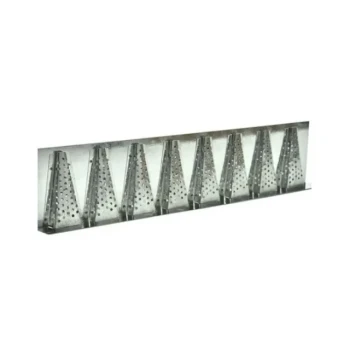
Protective mesh, grates, and hornet guards with controlled apertures use physical size discrimination. The objective is to create openings that honey bees can navigate while preventing larger hornets from entering the hive entrance.
These components are particularly relevant where large predatory species or group attacks create a serious risk to guard bees and brood. They should be manufactured from durable, corrosion-resistant material and designed to remain stable under repeated bee traffic and outdoor exposure.
Entrance Baffles
Entrance baffles add a physical obstacle between the open air and the brood nest. By narrowing or redirecting the approach, they can make direct entry more difficult for larger predators and reduce the intensity of hawking around the entrance.
Baffles must be designed carefully. Excessive complexity can slow bee traffic, create congestion, or make inspection and cleaning unnecessarily difficult.
Hive Seals and Replacement Hive Parts
Hive seals address vulnerabilities outside the main entrance. Operators should close cracks in hive bodies, gaps around joints, loose boards, damaged lids, and other openings that may allow hornets to exploit the structure.
For wholesalers and resellers, a complete protection range should include compatible seals, replacement entrance components, hive-body repair materials, and weather-resistant fittings. Compatibility matters because poorly fitted parts can create new gaps or obstruct normal colony movement.
Perimeter Controls That Reduce Hive Pressure
Wasp and Hornet Traps
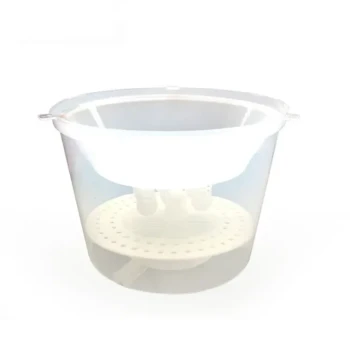
Targeted traps placed around the apiary perimeter can reduce the number of predators approaching the hives. Positioning matters: traps should be placed away from hive entrances so they do not increase traffic directly beside the colony.
Trap design, bait selection, maintenance, and local regulations all affect performance. Traps should support hive barriers rather than replace them, since they do not stop every predator from reaching the entrance.
Removal of Scout Wasps
Early detection and removal of scout wasps near hive entrances can be important because repeated scouting may increase predator pressure on the apiary. Regular inspections help identify unusual hovering, repeated attacks, or concentrated hornet activity.
Operators should follow applicable safety and pest-control requirements when dealing with active hornet nests. Large Vespa species can pose a serious sting hazard to both bees and people.
Mechanical Population Control
Where infestations are severe, mechanical removal or other professionally managed control measures may be required around the apiary. Reducing the surrounding predator population helps protect foragers before they reach the entrance and lowers the burden on guard bees.
This work should be coordinated with the use of entrance guards and hive sealing. External control alone cannot prevent a hornet from exploiting an unprotected hive opening.
Designing a Protection System for Commercial Apiaries
Match the Barrier to the Local Predator
The appropriate aperture, entrance width, and guard configuration depend on the predator species present. A barrier designed for a large hornet may be unnecessary in one region but insufficient in another with smaller or more agile predators.
Distributors should therefore offer multiple entrance reducer sizes, guard formats, mesh specifications, and replacement parts rather than treating one component as universally suitable.
Preserve Bee Traffic and Ventilation
Protection hardware must allow worker bees to enter and leave without persistent congestion. It should also maintain adequate airflow and avoid trapping moisture inside the hive.
A component that blocks hornets but disrupts foraging, ventilation, or inspection can weaken the colony in a different way. Product specifications should clearly state aperture dimensions, compatible hive formats, installation requirements, and intended operating conditions.
Build for Fast Replacement
Predator pressure, weather, and routine handling can damage entrance hardware. Commercial users benefit from standardized parts that can be replaced quickly without removing the entire hive or modifying the hive body.
For B2B buyers, dependable availability is part of the protection system. A supplier with a broad product portfolio, responsive technical support, and efficient fulfillment can reduce downtime when an apiary requires urgent replacement components.
Combine Hardware With Monitoring
Physical barriers are strengthened by regular colony and apiary monitoring. Operators should track hornet activity, entrance congestion, unusual bee losses, weakened colonies, and signs of structural damage.
Digital colony health monitoring can supplement visual inspections, particularly across large apiaries. Monitoring does not replace entrance protection, but it can help identify when a colony needs a smaller opening, a repaired seal, or additional perimeter control.
Understanding the Trade-offs
Overly Narrow Entrances Can Create Congestion
Reducing an entrance too aggressively can restrict normal bee movement. Congestion may interfere with foraging and increase stress, especially in strong colonies or during high nectar flow.
Entrance size should be adjusted according to colony strength and observed traffic. The goal is a controllable opening, not the smallest possible opening.
Incorrect Apertures Can Harm Colony Function
A guard with openings that are too small may obstruct worker bees, drones, or debris removal. Openings that are too large may admit the predators the guard is intended to exclude.
Aperture specifications should be verified against local bee and hornet sizes before purchase. Field testing and routine observation are essential after installation.
Traps Require Careful Placement and Maintenance
Traps that are placed too close to hive entrances may draw predators into the very area they are meant to protect. Full traps, degraded bait, or neglected equipment can also reduce effectiveness.
Perimeter traps need scheduled inspection, safe handling, and replacement supplies. They should be integrated into a broader pest-management plan.
Queen Excluders Are Not a Direct Substitute
A queen excluder is designed primarily to restrict queen movement within the hive, not to serve as a general hornet barrier. It should not automatically be used at the entrance as a substitute for a purpose-built hornet guard.
Entrance protection should use components engineered for bee traffic, predator exclusion, ventilation, and routine hive access.
Making the Right Choice for Your Goal
The strongest purchasing and operating decisions align the component with the colony’s actual risk and the apiary’s operating scale.
- If your primary focus is entrance defense: Use a properly sized entrance reducer or specific-aperture hornet guard that allows normal bee traffic while limiting access by local Vespa species.
- If your primary focus is protecting older hives: Seal cracks, gaps, loose joints, and damaged hive-body sections, then inspect those repairs regularly.
- If your primary focus is reducing perimeter pressure: Combine strategically placed wasp or hornet traps with professional population-control measures where necessary.
- If your primary focus is commercial supply reliability: Source a compatible product range covering guards, reducers, mesh, seals, replacement parts, and monitoring support from a supplier capable of rapid fulfillment.
- If your primary focus is colony stability: Monitor traffic, bee losses, congestion, and predator activity so protective hardware can be adjusted before the colony is seriously weakened.
A well-matched combination of entrance barriers, structural seals, perimeter controls, and monitoring gives honey bee colonies their best practical defense against predatory Vespa species.
Summary Table:
| Component | Purpose | Key Feature |
|---|---|---|
| Entrance Reducers | Restrict hive entrance to concentrate defense | Reduces exposed opening for better control |
| Narrow Entrance Guards | Block hornets while allowing bee passage | Sized to local bee/hornet dimensions |
| Protective Mesh/Grates | Physical size discrimination | Prevents hornet entry, durable material |
| Entrance Baffles | Redirect approach to hinder entry | Adds obstacle without disrupting bee traffic |
| Hive Seals | Seal cracks and gaps in hive body | Prevent secondary access points |
| Wasp/Hornet Traps | Reduce predator population around apiary | Placed away from entrances to minimize attraction |
Protect your apiary with HONESTBEE’s comprehensive range of hive protection components, from entrance reducers to hornet guards and seals. We cater to commercial apiaries and distributors, offering a one-stop sourcing solution with rapid delivery and expert support. Our products are designed to ensure colony safety and operational efficiency. For bulk orders, OEM/ODM support, and certified quality, contact us today to secure your supply chain and maximize profitability.
Related Products
- Professional Multi-Component Bucket Wasp Trap
- Metal Hive Feet Bee Hive Stand for Ant Protection
- Steel Round Disc Entrance Reducer for Flexzion Bee Hive Nuc Box Gate
- 8-Cone Galvanized Steel Bee Robber Guard
- Inner Beehive Cover for Beekeeping Bee Hive Inner Cover
People Also Ask
- How do professional wasp traps function? Master Physical Control of Oriental Hornets to Protect Your Apiary
- What are the practical advantages of using professional wasp traps and protective equipment in apiary management? Scale Up
- Why replace sugar syrup bait in wasp traps every three days? Ensure Maximum Attraction and Catch Rates
- How can commercial apiary operators mitigate wasp predation around hives using specialized trapping equipment? Effective strategies for wasp control
- What is the primary function of specialized traps used to defend against wasps? Protect Your Hive and Queen Today