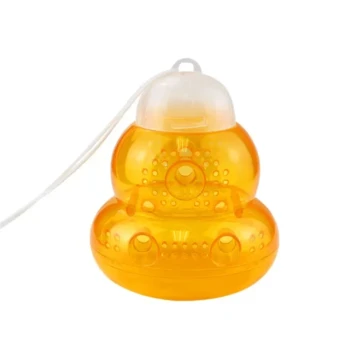
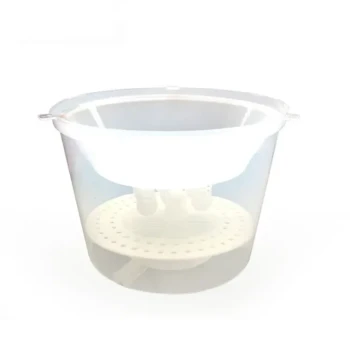
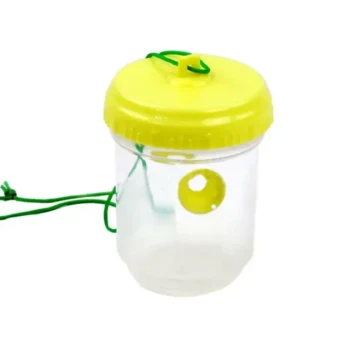
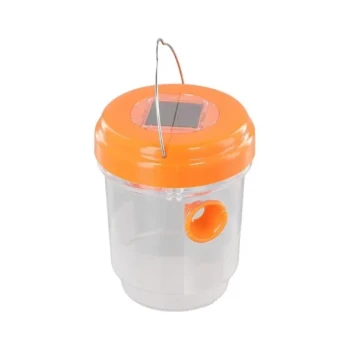
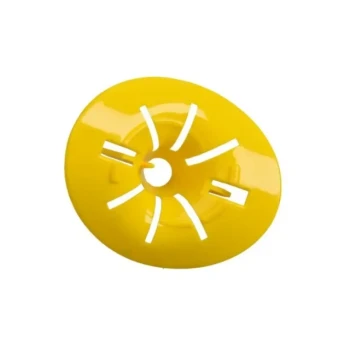
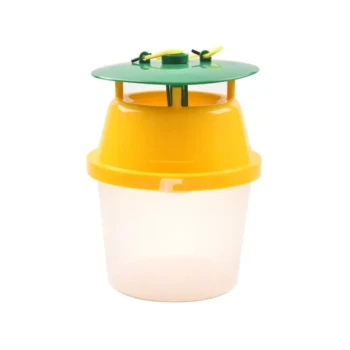
Commercial apiary operators can reduce wasp predation by deploying liquid wasp traps around hive stands and apiary perimeters. Charge the traps with a suitable sweet-liquid or beer lure so wasps enter but cannot escape. Positioning multiple traps near vulnerable colonies—and reinforcing them with entrance reducers—reduces predator pressure before wasps can overwhelm hive entrances.
The most effective approach is a layered physical barrier: attract and confine predatory wasps with specialized traps, then reduce hive access with entrance hardware so guard bees can defend a smaller opening.
Build a Layered Defense Around the Apiary
Use liquid wasp traps as the primary capture device
Liquid wasp traps are designed to draw wasps inside with an attractant and prevent their exit. For commercial operations, this provides a non-spray method of reducing local pest pressure around valuable colonies.
Sweet liquid or beer lures can be used according to the trap design and operating conditions. Operators should follow the equipment supplier’s instructions for lure quantity, replacement intervals, and safe handling.
Combine perimeter coverage with hive-side protection
Predator traps should be distributed around the apiary perimeter to intercept hornets, yellowjackets, and other predatory wasps before they reach hive entrances. Additional units can be positioned close to vulnerable hive stands or beneath stands where permitted by the equipment design.
This layered placement is more reliable than depending on a single trap beside one colony. It creates a broader reduction in local wasp density while protecting colonies facing the greatest pressure.
Increase protection during seasonal pest surges
Late summer and autumn can bring increased wasp activity, robbing, and attacks on standalone hives. Commercial operators should inspect trap performance more frequently during these periods and ensure that lure remains effective and capture chambers are not full.
Early deployment is preferable to waiting until wasps are already killing bees at the entrance. Trapping is most useful as a preventive pressure-reduction measure.
Select Equipment for Commercial Operating Conditions
Prioritize physical isolation and escape prevention
Specialized mesh or liquid traps should provide a clear entry path while physically confining captured wasps. The enclosure must be robust enough for outdoor placement and practical to service across multiple apiary locations.
For wholesale and distribution programs, product consistency matters: replacement parts, compatible lure containers, durable materials, and straightforward cleaning can be as important as the initial purchase price.
Match trap design to the target pest pressure
Predatory hornets and yellowjackets can differ in size and behavior, so trap openings and capture mechanisms should be appropriate for the pests present in the operating region. A professional supplier should be able to provide product specifications and usage guidance rather than treating every trap as interchangeable.
Where non-toxic or non-chemical capture devices are preferred, physical trapping equipment offers an alternative to relying on unregistered toxicants near bee colonies.
Plan inventory around multi-hive deployment
Commercial apiaries require more than one trap, especially where hives are spread across several stands or sites. Distributors and resellers should support customers with complete procurement packages that may include traps, lure containers, entrance reducers, replacement components, and protective equipment.
Fast fulfillment and dependable stock availability are operational advantages when wasp pressure rises quickly.
Reinforce Trapping with Hive Entrance Hardware
Install entrance reducers on vulnerable colonies
An entrance reducer narrows the hive opening, allowing guard bees to defend a smaller access point against marauding wasps. This is particularly valuable for weakened colonies or hives experiencing robbing pressure.
Reducers do not eliminate wasps by themselves. They work best when used with traps that lower the number of predators approaching the hive.
Use durable guards where other pests are also present
Metal mouse guards and other robust entrance hardware can restrict access by rodents and larger insects. This helps protect wax, brood, honey stores, and frames from additional pest damage.
Because apiaries can attract multiple opportunistic pests through honey and beeswax aromas, a broader entrance-protection program may provide more value than wasp trapping alone.
Avoid treating entrance hardware as a substitute for colony management
Entrance reduction helps guard bees, but it cannot compensate for a severely weakened or queenless colony. Operators should use trapping and entrance protection alongside routine inspections and appropriate colony-strength management.
Operate and Maintain Traps Effectively
Place equipment where it captures wasps before attack
Trap placement should focus on likely approach routes, hive stands, and the apiary perimeter. The objective is to intercept wasps before they concentrate at hive entrances or begin robbing behavior.
Operators should avoid obstructing bee flight paths and should verify that each unit remains stable, visible, and accessible for servicing.
Inspect catches and lure condition routinely
A trap that is full, damaged, or depleted of lure will provide declining protection. Scheduled inspections should include checking capture capacity, physical integrity, lure condition, and signs of weather damage.
For multi-site operations, standardized inspection records help teams identify underperforming locations and maintain consistent protection.
Use protective equipment during servicing
Wasps and hornets can remain active around traps, especially when capture chambers contain many insects. Beekeepers and field personnel should use appropriate bee suits and other personal protective equipment when installing, emptying, or relocating traps.
Service procedures should be documented so staff can work consistently and safely across commercial sites.
Understanding the Trade-offs
Traps reduce pressure but rarely eliminate it
Physical traps lower the number of active predators in a defined area; they do not guarantee complete eradication. New wasps may enter from outside the apiary, and pressure can increase rapidly during seasonal peaks.
For this reason, traps should be deployed as part of an integrated defense rather than as a single corrective measure.
Lure management affects performance
A lure that is unsuitable, exhausted, contaminated, or poorly maintained can reduce capture rates. Operators should select attractants compatible with the trap and local pest conditions, then replace them according to supplier guidance.
Testing trap performance across different apiary sites can help determine where additional units or different configurations are justified.
Placement requires a balance
Traps must be close enough to intercept wasps but positioned so they do not interfere with normal bee movement or routine hive work. Poor placement can make servicing difficult, increase accidental contact, or reduce operational efficiency.
Commercial users should evaluate placement during installation and revise it when hive layouts, vegetation, or seasonal activity changes.
Product quality influences total operating cost
Low-cost traps may be less attractive if they require frequent replacement, have fragile mesh, or lack compatible replacement components. For distributors and professional operators, durability, serviceability, supply reliability, and technical support should be assessed alongside unit price.
A dependable one-stop supply program can reduce delays when traps, lure supplies, and entrance hardware are needed simultaneously.
How to Apply This to Your Apiary Program
Select equipment and deployment quantities according to colony density, wasp pressure, site layout, and servicing capacity.
- If your primary focus is reducing wasp density: Deploy liquid or mesh wasp traps around the apiary perimeter and near vulnerable hive stands, using suitable sweet-liquid or beer lures.
- If your primary focus is protecting weak or heavily targeted colonies: Combine nearby wasp traps with entrance reducers so guard bees can defend a smaller opening.
- If your primary focus is multi-site commercial efficiency: Source standardized traps, replacement components, entrance hardware, and protective equipment through a supplier able to provide rapid fulfillment and technical support.
- If your primary focus is safer non-spray control: Prioritize physical, non-toxic capture devices and establish clear inspection and servicing procedures for field staff.
A coordinated trapping and entrance-protection program helps commercial apiaries reduce wasp pressure while preserving stronger, more productive honey bee colonies.
Summary Table:
| Aspect | Key Details |
|---|---|
| Primary Strategy | Deploy liquid wasp traps with sweet-liquid or beer lures around apiary perimeter and hive stands. |
| Secondary Defense | Install entrance reducers to help guard bees defend smaller openings. |
| Placement | Distribute traps along likely wasp approach routes and near vulnerable colonies. |
| Seasonal Focus | Increase inspection and maintenance during late summer and autumn. |
| Equipment Selection | Choose durable, easy-to-service traps with compatible replacement parts. |
| Safety | Use protective gear when servicing traps; document procedures. |
| Integrated Approach | Combine trapping with hive entrance hardware and routine colony management. |
At HONESTBEE, we supply commercial beekeepers and distributors with a comprehensive range of wasp traps, entrance reducers, and hive protection equipment. Our one-stop sourcing ensures rapid delivery, OEM/ODM support, and dedicated service to keep your colonies safe. Contact us today for a tailored solution! Get in touch with our specialists
Related Products
- Gourd Shaped Hanging Wasp Trap Professional Wasp Catcher
- Professional Multi-Component Bucket Wasp Trap
- Compact Multi-Funnel Hanging Wasp Trap
- Solar Powered LED Wasp Trap
- Reusable Wasp Trap Bottle Converter
People Also Ask
- How do professional wasp traps function? Master Physical Control of Oriental Hornets to Protect Your Apiary
- What are the practical advantages of using professional wasp traps and protective equipment in apiary management? Scale Up
- Why replace sugar syrup bait in wasp traps every three days? Ensure Maximum Attraction and Catch Rates
- What role do specialized wasp traps play in wasp control? Enhance Apiary Security and Pest Monitoring
- What is the primary function of specialized traps used to defend against wasps? Protect Your Hive and Queen Today