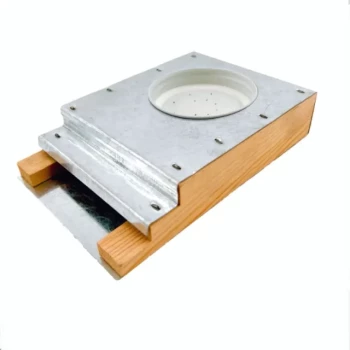
A top feeder is a specialized feeding device designed to sit directly on top of a bee hive's upper box, typically beneath the outer cover. Its construction features a shallow box, roughly 4 to 5 inches deep, containing a high-capacity reservoir for syrup and a protective mesh barrier to allow feeding while preventing bees from drowning.
Core Takeaway Top feeders are the industry standard for beekeepers requiring high-volume feeding with minimal colony disturbance. By holding several gallons of syrup and utilizing safety screens, they allow for rapid resource uptake in the fall or infrequent maintenance for distant apiaries.
Detailed Construction and Design
The Outer Structure
The unit is constructed as a shallow box with a depth of approximately 4 to 5 inches. It is dimensioned to fit standard beekeeping equipment, with specific models available for both 8-frame and 10-frame hive bodies.
The Internal Reservoir
Inside the box, a plastic reservoir holds the liquid feed. This design prioritizes volume, with 8-frame models capable of holding up to 4 gallons and 10-frame models typically accommodating 3 gallons, though capacities can vary by manufacturer.
Safety Mechanisms
A critical feature of the top feeder is the integration of hardware cloth or a galvanized steel safety screen. This mesh provides the bees with a secure foothold to access the syrup, significantly reducing the risk of bees falling in and drowning.
Operational Advantages
Minimizing Disturbance
Because the feeder is placed directly under the outer cover, you do not need to fully open the hive or remove frames to refill it. This allows for checking and replenishing feed without disrupting the colony's internal temperature or organization.
High Efficiency for Distant Apiaries
The large capacity of these feeders means they only require refilling once every week or two. This makes them an excellent choice for apiaries located far from home where daily visits are impractical.
Versatility in Feed Types
While primarily designed for syrup, the top feeder’s accessible design also makes it effective for feeding raw or dry white sugar. This is particularly useful during early to mid-winter when liquid syrup might freeze or cause moisture issues.
Design Considerations and Trade-offs
Equipment Compatibility
You must ensure the feeder size matches your hive equipment exactly. An 8-frame feeder is not interchangeable with a 10-frame hive body, and vice versa, as a proper seal is required to prevent robbing and exposure.
The Need for Enclosure
While the feeder sits on the top bars, it is typically designed to be enclosed within an empty hive box. This protects the unit from sun, wind, rain, and robber bees, but requires you to have an extra box available for every hive you intend to feed.
Making the Right Choice for Your Goal
To maximize the effectiveness of a top feeder, align its use with your specific management objectives:
- If your primary focus is Rapid Fall Feeding: Use this feeder to provide a large quantity of syrup that the colony can consume quickly before winter sets in.
- If your primary focus is Remote Management: Rely on the high gallon capacity to reduce the frequency of your trips to distant yards while ensuring bees have constant access to food.
By utilizing the high volume and non-invasive design of a top feeder, you ensure your colony has the resources it needs with significantly less labor.
Summary Table:
| Feature | Specification/Detail |
|---|---|
| Typical Depth | 4 to 5 inches |
| Capacity (10-Frame) | Approx. 3 Gallons |
| Capacity (8-Frame) | Approx. 4 Gallons |
| Material | Shallow wooden box with plastic reservoir |
| Safety Mechanism | Hardware cloth/Galvanized steel mesh |
| Best Used For | High-volume feeding & remote apiary management |
Elevate Your Commercial Beekeeping with HONESTBEE
At HONESTBEE, we understand the demands of large-scale operations. Whether you are managing thousands of colonies or distributing to local beekeepers, our comprehensive wholesale portfolio offers the specialized tools you need to succeed.
From high-capacity top feeders and precision hive-making machinery to honey-filling equipment and branded cultural merchandise, we provide the full spectrum of industry essentials.
Partner with HONESTBEE for:
- Wholesale Durability: Robust equipment built for commercial use.
- Full-Scale Solutions: Everything from specialized hardware to consumables.
- Industry Expertise: Value-driven products designed for efficiency and yield.
Ready to scale your production? Contact us today to discuss your wholesale needs and let us help you grow your apiary business.
Related Products
- HONESTBEE Round Hive Top Bee Feeder for Syrup
- HONESTBEE Professional Hive Top Bee Feeder Feeding Solution
- Professional Hive Top Bee Feeder for Beekeeping
- HONESTBEE Square Top Hive Bee Feeder Top Bee Feeder
- Rapid Bee Feeder White Plastic 2L Round Top Feeder for 8 or 10-Frame Bee Hives
People Also Ask
- What can the round hive top feeder be used for? A Guide to Efficient, Safe Bee Feeding
- What is the capacity of the round hive top feeder for syrup and pollen? A Guide to Targeted Apiary Support
- What types of hive boxes is the round hive top feeder compatible with? Universal Fit for 8 & 10-Frame Langstroth Hives
- What types of feed can be used with the round hive top feeder? Versatile Feeding for Optimal Apiary Health
- What are the different types of top feeders for bees? Choosing the Best Feeder for Your Apiary