The international color code for queen bees follows a standardized five-year cycle based on the last digit of the year the queen was introduced. The official schedule assigns White to years ending in 1 or 6, Yellow to 2 or 7, Red to 3 or 8, Green to 4 or 9, and Blue to 5 or 0.
While the colors render the queen visually distinct, their primary technical function is precise age tracking. This coding system allows beekeepers to instantly assess a queen's longevity and verify if a colony has quietly replaced its matriarch through natural supersedure.
The Standardized Color Cycle
The Five-Year Rotation
The system relies on the last digit of the year. Because queen bees rarely live longer than a few years, a five-year repeating cycle prevents confusion.
The Breakdown by Year
- White: Years ending in 1 or 6.
- Yellow: Years ending in 2 or 7.
- Red: Years ending in 3 or 8.
- Green: Years ending in 4 or 9.
- Blue: Years ending in 5 or 0.
A Simple Mnemonic
To easily recall the chronological order, beekeepers use the phrase: "What, You Raise Green Bees?" The first letter of each word corresponds to the color sequence: White, Yellow, Red, Green, Blue.
The Strategic Value of Marking
Immediate Identification
A queen bee can be difficult to locate among thousands of workers, especially for beginners or those with poor eyesight. A vibrant dot on the thorax serves as a visual anchor, significantly reducing the time the hive remains open during inspections.
Detecting Supersedure
The most critical technical benefit is identifying unplanned replacements. If you marked your queen Red (for a year ending in 3) but later find an unmarked queen in the hive, you know the colony has swarmed or superseded the original queen.
Managing Productivity
Queens typically reach peak productivity in their first two years. By knowing the exact age through the color code, a beekeeper can make data-driven decisions about when to replace a queen before her laying rate declines significantly.
Operational Trade-offs and Safety
Chemical Safety
Not all markers are safe for insect application. You must use water-based acrylic paint markers specifically designed for low toxicity. Solvents found in standard permanent markers can be harmful or fatal to the queen.
Application Precision
The marking process carries physical risk. The marker must have a soft tip to deliver paint gently without applying pressure. A heavy hand can damage the queen, and excessive paint can clog her spiracles (breathing tubes), causing injury or death.
Making the Right Choice for Your Apiary
Beekeeping requires balancing quick visual checks with long-term colony management.
- If your primary focus is rapid inspection: Prioritize marking every queen immediately upon introduction to minimize the time the hive is open and the bees are disturbed.
- If your primary focus is breeding accuracy: Use the color code strictly to maintain precise records of lineage and age, ensuring you do not accidentally breed from a superseded (unmarked) daughter queen.
Reliable hive management starts with knowing exactly which queen is on the throne and how long she has been there.
Summary Table:
| Last Digit of Year | Marker Color | Mnemonic Reference |
|---|---|---|
| 1 or 6 | White | What |
| 2 or 7 | Yellow | You |
| 3 or 8 | Red | Raise |
| 4 or 9 | Green | Green |
| 5 or 0 | Blue | Bees? |
Scale Your Apiary with HONESTBEE Precision
Effective queen management is the backbone of a productive apiary. At HONESTBEE, we empower commercial apiaries and distributors with the professional-grade tools needed to maintain peak colony health. From specialized queen-marking supplies to advanced honey-filling machines and hive-making hardware, our comprehensive wholesale portfolio is designed for industry leaders.
Why partner with HONESTBEE?
- Complete Equipment Range: Access everything from essential consumables to heavy-duty beekeeping machinery.
- Commercial Expertise: We cater specifically to large-scale operations and global distributors.
- Value-Added Merchandise: Enhance your brand with our unique honey-themed cultural products.
Ready to upgrade your equipment and streamline your production? Contact us today to discuss your wholesale needs!
Related Products
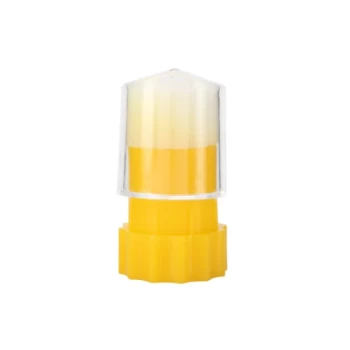
- One Hand Yellow Queen Marking Catcher Tube Cage Beekeeper Tool Accessory for Queen Bee
- Queen Bee Marking Pen POSCA Queen Marking Pens for Beekeeping Bee Markers
- Queen Bee Marking Pen UNI Medium Point for Queen and Bee Marking
- Plastic Long Marker Device for Catching and Marking Bees Queen Bee Marking Tube and Cage
- Queen Bee Marking Tube Cage Bottle Catcher Holder with Clear Plastic Plunger Marker
People Also Ask
- What tools are available to assist in safely marking a queen bee? Essential Gear for Professional Beekeepers
- What equipment is needed to mark a queen bee? A Simple 3-Tool Guide for Every Beekeeper
- Why are high-quality queen bee marking tools essential for pedigree tracking? Master Honey Bee Genetic Integrity
- What are the specific advantages of using international standard marking tools in queen bee production and management?
- What tools are recommended for marking a Queen bee? Ensure a Safe and Successful Mark