reducing frame count in a honey super forces bees to draw out the honeycomb cells further than usual, creating "fatter" combs. By placing eight or nine frames in a standard 10-frame box, you create a setup where the wax extends beyond the wooden frame edges, allowing for a faster, cleaner uncapping process with a straight cut.
Core Takeaway The primary benefit of using fewer frames is mechanical efficiency during harvest: "fat" combs allow an uncapping knife to slice off wax cappings in one pass without hitting the wooden frame. However, this technique relies entirely on using already drawn comb; attempting this with empty foundation will result in a structural mess.
The Operational Benefits
Streamlined Uncapping
The most immediate advantage is the physical shape of the honeycomb. Because the bees extend the cells to bridge the wider gap between frames, the honey-filled comb protrudes past the wood.
This allows an uncapping knife to slice smoothly through the cappings. You avoid the uneven, "digging" motion often required for standard-width frames where the comb sits flush with or below the wood.
Reduced Handling Time
Using fewer frames reduces the total workload in the extraction room. By running 8 frames instead of 10, you reduce the number of frames you must lift, uncap, extract, and replace by 20%.
Despite the lower frame count, the total volume of honey remains roughly the same because the individual combs are thicker and hold more nectar.
Improved Airflow and Clearing
Wider spacing between frames improves ventilation within the super. When it is time to harvest, this extra space makes it significantly easier to clear bees out of the box using a blower.
Correct Technique and Implementation
The Golden Rule: Drawn Comb Only
You must never space out frames that contain only bare foundation. This is the most critical technical constraint.
If you give bees extra space with empty frames, they will build "cross comb" or "burr comb" in the gaps, connecting frames together in a chaotic web. You must only space out frames that have fully drawn comb from a previous season.
Proper Spacing Configurations
Common practice involves placing 9 frames in a 10-frame box for a balance of ease and stability. For maximum comb thickness, some beekeepers reduce this to 8 frames.
Regardless of the number, the frames must be spaced perfectly evenly. Uneven spacing leads to combs of varying thickness, which defeats the purpose of uniform uncapping.
Restriction to Honey Supers
This technique is strictly for honey production. Do not use reduced frame counts in brood boxes.
Brood frames require standard spacing to maintain the correct "bee space" for raising larvae. Altering spacing in the brood nest can disrupt colony thermodynamics and organization.
Understanding the Trade-offs
The Risk of Bridge Comb
Pushing the limit to 8 frames increases the risk of bees building bridge comb (wax connecting two frames). This is messy and requires extra time to scrape off during inspection or extraction.
Mechanical Instability
With only 8 frames in a 10-frame box, the frames are prone to sliding or "wobbling" during transport.
Frames may fall out more easily when the box is empty or being handled. 9-frame setups generally offer better stability than 8-frame setups.
Material Limitations
Be cautious when applying this technique to plastic frames. Even with drawn comb, bees behave differently on plastic than on wax.
Bees are less likely to draw plastic frames out into the thick, "fat" combs desired for this technique. Using fewer plastic frames often results in a mess rather than the intended efficiency.
Making the Right Choice for Your Goal
Before adjusting your hive configuration, assess your equipment and your primary objective.
- If your primary focus is speed in the extraction room: Use 8 frames of drawn wax comb to maximize comb thickness and reduce frame handling by up to 20%.
- If your primary focus is a balance of stability and ease: Use 9 frames spaced evenly; this provides fatter combs for easier uncapping but maintains better stability for automated extractors.
- If you are using new foundation or plastic frames: Stick to the standard 10 frames until the comb is fully drawn out to prevent cross-comb disasters.
Mastering this technique requires patience: draw your frames out tight, then space them out wide.
Summary Table:
| Setup Configuration | Recommended For | Primary Benefit | Required Condition |
|---|---|---|---|
| 8 Frames (in 10-frame box) | Max Extraction Speed | Thickest combs; 20% less handling | Fully drawn wax comb |
| 9 Frames (in 10-frame box) | Stability & Ease | Balanced uncapping and frame security | Fully drawn wax comb |
| 10 Frames (Standard) | New Foundations | Prevents cross-comb and burr comb | New foundation/Plastic |
| Brood Box | Colony Health | Maintains thermal regulation | Standard bee space |
Maximize Your Honey Yield with HONESTBEE
Efficiency in the extraction room starts with the right equipment and techniques. At HONESTBEE, we specialize in supporting commercial apiaries and distributors with high-performance beekeeping solutions. From honey-filling machines and specialized hive-making hardware to a full spectrum of wholesale beekeeping tools and consumables, we provide the infrastructure your business needs to scale.
Ready to upgrade your commercial honey production or stock your distribution line? Contact us today to discover how our comprehensive equipment portfolio can enhance your operational efficiency and bottom line.
Related Products
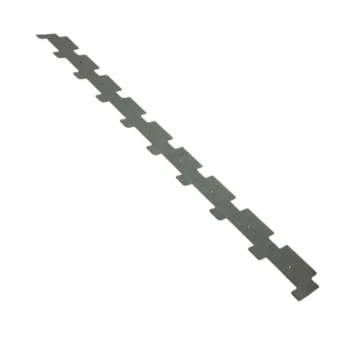
- Heavy Duty Castellated Iron Frame Spacer for Honey Supers
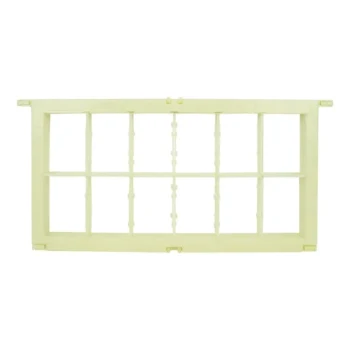
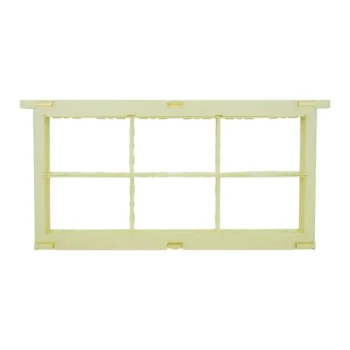
- Professional Sectional Comb Honey Frame with 250g Cassette System for Beekeeping
- Professional 500g Sectional Comb Honey Frame System for Beekeeping
- Heart-Shaped Comb Honey Frame and Honeycomb Cassette
- Plastic Honey Comb Frames Cassette Box for Honey
People Also Ask
- What are honey super frames and what foundation options are available? Choose the Best Support for Your Bees
- What are the reasons and drawbacks of using nine frames in a ten-frame honey super? Boost Extraction Speed Today
- What are honey super frames and how many are needed per box? A Beekeeper's Essential Guide
- What are honey super frames and their foundation options? Choose the Best Support for Your Hive's Honey Production
- Why might a beekeeper use fewer than the standard number of frames in a honey super? Boost Extraction Efficiency