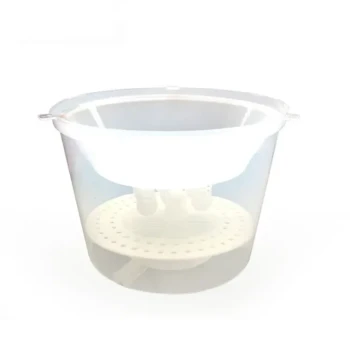
The fundamental design principle behind internal hive traps is the exploitation of the Small Hive Beetle’s (SHB) defensive behavior, rather than its hunger. Unlike external traps that lure pests with food, these internal devices function by creating a physical sanctuary that leverages the beetle's instinct to hide from aggressive honey bees. When beetles flee into the trap's crevices to escape bee harassment, they fall into a contained killing medium and are permanently immobilized.
Core Takeaway Internal hive traps do not hunt the beetle; they wait for the beetle to hunt for safety. By leveraging the natural aggression of the colony, these devices turn the beetle's survival instinct—seeking refuge in tight, dark spaces—into the primary mechanism for its elimination.
The Mechanics of Refuge-Based Trapping
Exploiting Bee Harassment
The effectiveness of this design relies heavily on the activity of the honey bee colony itself.
Bees naturally identify Small Hive Beetles as intruders and will aggressively harass them. This pressure forces the beetles to scurry away from the comb and open areas of the hive in search of safety.
The "Safe Harbor" Illusion
The trap is strategically placed between the hive frames (top bars) to simulate a secure hiding spot.
To a fleeing beetle, the specialized plastic device appears to be a protective crevice or gap where bees cannot reach them. The design deliberately mimics the tight, dark spaces beetles naturally prefer for aggregation.
Passive Immobilization
Once the beetle enters the trap, the mechanism shifts from psychological to physical.
Inside the device, a killing medium awaits. When the beetle drops into this medium, it is unable to escape, allowing for effective capture without releasing active pesticides into the hive environment.
Strategic Distinction: Internal vs. External
Refuge vs. Bait
It is critical to distinguish the operating principle of internal traps from external measures.
Supplementary data indicates that external pole traps rely on chemical attractants—such as fermented honey, pollen, or yeast—to lure beetles via food signals.
Utilizing Colony Pressure
Internal traps, conversely, do not require bait to function.
They utilize the "push" of the colony's aggression rather than the "pull" of a food scent. This makes them distinctively suited for catching beetles that have already breached the hive's defenses.
Understanding the Trade-offs
Dependence on Colony Strength
Because the trap relies on the "refuge instinct," it functions best when the colony is strong enough to harass the beetles.
If the bees are weak or apathetic toward the pests, the beetles may not feel the urgency to seek the shelter provided by the trap.
Passive vs. Active Management
This is a passive control method.
While it avoids the risks associated with chemical pesticides, it requires the beetles to voluntarily enter the device. It is often used as a monitoring tool to gauge infestation levels rather than an instant eradication solution.
Making the Right Choice for Your Goal
When integrating Small Hive Beetle traps into your management strategy, consider your specific objective:
- If your primary focus is monitoring current infestation levels: Use internal top-bar traps, as they provide a clear physical count of beetles already present within the colony without risking chemical contamination.
- If your primary focus is preventing invasion: Consider external baited traps around the apiary perimeter to intercept migrating beetles before they ever reach the hive entrance.
By understanding the behavioral biology behind the trap, you transform a simple plastic device into a calculated defensive asset.
Summary Table:
| Feature | Internal Hive Traps | External Bait Traps |
|---|---|---|
| Mechanism | Behavioral "Push" (Bee Harassment) | Chemical "Pull" (Food Lures) |
| Primary Goal | Management & Population Monitoring | Prevention of Hive Entry |
| Key Lure | Physical Refuge / Dark Crevices | Fermented Bait / Yeast |
| Colony Status | Requires Strong, Aggressive Colony | Independent of Colony Strength |
| Pesticide Risk | Minimal/Non-toxic Medium | Varies by Bait Type |
Maximize Your Apiary Productivity with HONESTBEE
Protecting your colonies from Small Hive Beetles is just one part of a successful beekeeping operation. At HONESTBEE, we empower commercial apiaries and distributors with the high-performance tools and machinery needed to scale efficiently. From precision hive-making machines and automated honey-filling systems to a complete range of wholesale beekeeping hardware and consumables, our portfolio is designed to enhance your operational yield.
Ready to upgrade your equipment or stock your distribution business with premium supplies? Contact us today to discover how our comprehensive wholesale solutions can drive your success.
References
- Rafael A. Calderón-Fallas, Paola Hernández-Ching. Strategies for detection and monitoring of the small hive beetle (Aethina tumida) in Africanized honeybee colonies in Costa Rica. DOI: 10.15359/rcv.42-1.2
This article is also based on technical information from HonestBee Knowledge Base .
Related Products
- Reusable Aluminium Beetle Trap for Small Hive Beetles Silver Bullet
- Black Plastic Beetle Barn Hive Beetle Trap for Beehives
- Reusable Clear Small Hive Beetle Traps for Beehives Beetle Trapping Tools
- Removable Washable Hive Beetle Trap Attractants for Small Hive Beetles
- Plastic Beetle Blaster Trap Beekeeping Tools and Supplies
People Also Ask
- How should powdered substances be used in beetle traps for hive beetle control? Expert Guide for Maximum Colony Protection
- Why are beetle traps less effective during winter? Seasonal Shifts in Pest Control Explained
- When is the best time to use small hive beetle traps in cold climates? Protect Your Honeybee Winter Stores Now
- When and how should disposable traps for small hive beetles be removed? Master Hive Hygiene and Efficiency
- How do small hive beetle traps contribute to colony management? Enhance Diagnostic Accuracy and Protect Hive Health