Commercially supplied breeding bees are the essential biological engines of the modern apiary. They provide the immediate genetic foundation and population mass required to scale operations, ensure high-yield honey production, and secure consistent pollination services. These assets allow beekeepers to bypass the slow, unpredictable process of natural colony growth, moving directly into high-productivity cycles that define commercial success.
Breeding bees represent the critical starting point for apiary profitability, offering a standardized way to control genetics, disease resistance, and colony health at scale. For distributors, providing high-quality queens and worker clusters is a strategic intervention that stabilizes a client's production timeline and maximizes their economic output.
The Biological Significance of Superior Genetics
Genetic Quality and Disease Resistance
The queen bee is the singular genetic blueprint for an entire colony, dictating everything from temperament to survival rates. High-quality biological materials serve as the foundation for beekeeping production, directly determining how well a colony can resist local pathogens and environmental stressors. By introducing superior queens, apiaries establish a biological basis for long-term health and consistent high yields.
Rapid Colony Restoration and Expansion
Worker clusters and package bees allow apiaries to rapidly rebuild pollination capacity after winter losses or disease outbreaks. These biological resources enable a seamless transition from traditional small-scale rearing to professional, large-scale operations. This speed of expansion is critical for commercial beekeepers who must meet strict seasonal deadlines for honey flows or agricultural pollination contracts.
Maintaining Superior Traits through Specialized Equipment
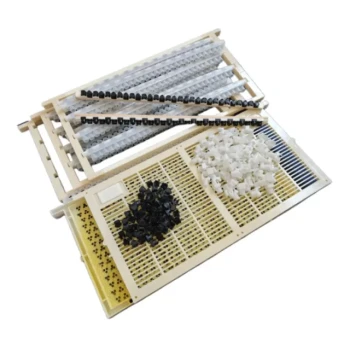
The use of specialized queen breeding equipment is vital for artificial rearing and colony replacement within closed biosecurity systems. This equipment allows beekeepers to select for specific traits, such as high honey productivity and better adaptation to local climates. Maintaining these genetic traits is essential for the long-term sustainability of the apiary’s biological assets.
The Economic Impact on Apiary Operations
Stability of Rural Beekeeping
Commercially supplied bees serve as a pillar for the economic stability of rural beekeeping by ensuring steady production. Reliable access to breeding stock allows rural operations to maintain a predictable output of high-value products like honey, beeswax, and royal jelly. This predictability transforms beekeeping from a high-risk hobby into a stable commercial enterprise.
Efficiency through Standardized Infrastructure
Standardized bee housing and hive components are the fundamental infrastructure that protects these biological assets. Precisely designed hives ensure part interchangeability, which significantly improves the efficiency of inspections, honey extraction, and migratory transport. For large-scale distributors, offering standardized housing alongside breeding bees provides a complete, high-efficiency solution for the end user.
Maximizing High-Value Economic Outputs
The ultimate goal of commercial breeding stock is the consistent production of economic outputs. High-yield queens and robust worker clusters ensure that the colony spends less energy on survival and more on the accumulation of marketable products. This efficiency is what drives the profitability of the entire supply chain, from the breeder to the wholesaler.
Understanding the Trade-offs and Risks
The Challenge of Acclimatization
While commercial bees offer rapid scaling, they must be properly acclimated to their new environment to avoid colony stress. Rapid delivery and efficient order fulfillment are not just logistical goals; they are biological necessities to ensure the bees arrive in peak condition. Failure to manage the transportation environment can lead to high mortality rates and significant financial loss.
Genetic Homogeneity vs. Diversity
Relying solely on a narrow range of commercial queen lines can sometimes lead to genetic homogeneity. Smart apiary management involves balancing the immediate benefits of high-yield commercial traits with the long-term need for biological diversity. Distributors play a key role by providing a wide-ranging product portfolio that includes various strains suited for different environments.
Strategies for Optimizing the B2B Supply Chain
Distributors and wholesalers must recognize that they are not just selling insects, but time and genetic potential. To succeed in this market, the focus must remain on the reliability and speed of the biological supply chain.
- If your primary focus is rapid market entry for clients: Prioritize ultra-fast delivery and worker clusters to provide immediate "out-of-the-box" pollination capacity.
- If your primary focus is long-term client loyalty: Focus on the genetic pedigree of queen bees to ensure your clients see year-over-year improvements in disease resistance and honey yield.
- If your primary focus is operational efficiency: Offer a comprehensive full-spectrum portfolio that includes both the biological assets and the standardized housing required to maintain them.
Empowering your clients with superior biological assets and professional expertise is the surest path to securing their long-term productivity and your own market position.
Summary Table:
| Key Asset | Biological Significance | Economic Impact |
|---|---|---|
| Queen Bees | Genetic foundation & disease resistance | Dictates long-term yield & colony stability |
| Worker Clusters | Immediate population mass & pollination | Enables rapid scaling & recovery from losses |
| Breeding Tools | Trait selection & artificial rearing | Ensures sustainable, high-quality stock |
| Standardized Hives | Biological asset protection | Improves efficiency in transport & extraction |
Elevate Your Wholesale Portfolio with HONESTBEE Professional Solutions
As a distributor or B2B reseller, your success depends on providing reliable, high-performance solutions to commercial apiaries. HONESTBEE is your strategic partner, offering a one-stop sourcing experience for the entire beekeeping lifecycle.
From specialized queen-rearing tools to industrial honey-filling machinery and high-durability hives, our comprehensive full-spectrum product portfolio ensures you can meet every client demand. We empower our partners with:
- Deep Industry Expertise: Professional-grade equipment designed for high-yield commercial operations.
- Rapid Order Fulfillment: Ultra-fast delivery to keep your supply chain moving at the speed of the honey flow.
- Dedicated Support: Exceptional customer service and OEM/ODM capabilities to differentiate your brand.
Ready to maximize your profit margins and secure supply reliability?
Contact HONESTBEE Today to Discuss Wholesale Opportunities
References
- Tania Tania. An insight into the global decrement of honey bee population: causes and its imposing effects. DOI: 10.36948/ijfmr.2025.v07i03.48301
This article is also based on technical information from HonestBee Knowledge Base .
Related Products
- Twin Queen Styrofoam Honey Bee Nucs Mating and Breeding Box
- Jenter Queen Rearing Kit Complete Set for Bee Breeding
- Queen Bee Artificial Insemination Instrument Equipment for Instrumental Insemination
- Premium Nicot Style Queen Rearing Kit with Hair Roller Bee Cages
- Plastic Chinese Queen Grafting Tool for Bee Queen Rearing
People Also Ask
- What are the benefits of using double nuc boxes in beekeeping? Boost Apiary Resilience & Growth
- What are the practical advantages of a double nuc box? Maximize Efficiency with Standardized Beekeeping Gear
- What is the frame capacity of each side in a double nuc box? Master Queen Rearing & Colony Starts
- What are the advantages of double nuc boxes in winter? Boost Survival Rates & Apiary Resilience
- What is the purpose of exploring double nuc boxes in beekeeping? Boost Apiary Resilience & Growth