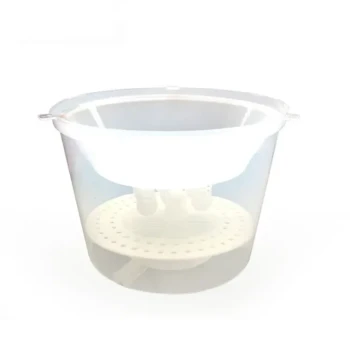
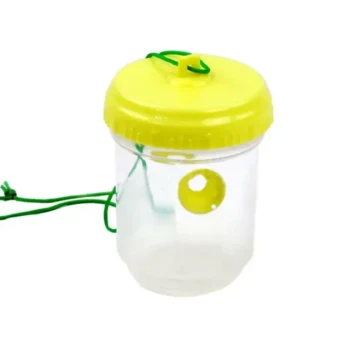
In the context of acute toxicity bioassays, a modified pollen trap functions as a precision dosing device. Constructed from a compact disc box, it acts as a controlled carrier delivery system that forces the Small Hive Beetle (SHB) to ingest a specific, quantitative amount of an active substance, such as acetamiprid. This mechanism allows researchers to standardize the evaluation of chemical control agents in both laboratory and field environments.
The core value of this device lies in its ability to transform variable feeding behavior into measurable data. By controlling the pollination path, the trap ensures that every target pest ingests a precise dose of the medication, eliminating the guesswork often associated with toxicity assessments.
The Mechanics of Controlled Dosing
Functioning as a Carrier Delivery System
The modified pollen trap is not used to harvest pollen in this context. Instead, it serves as a delivery vehicle for active ingredients.
The design, often improvised from a compact disc box, creates a contained environment. This allows researchers to introduce substances like acetamiprid safely and effectively.
Ensuring Quantitative Ingestion
The primary challenge in bioassays is ensuring the test subject eats the poison.
This device solves that by controlling the movement of the beetle. It forces the pest through a specific path where they must interact with and ingest the active agent.
Standardization Across Environments
Reliable scientific data requires consistency.
This specific modification allows the same testing methodology to be applied in both field and laboratory settings. This versatility ensures that toxicity data remains comparable regardless of where the trial takes place.
Distinguishing Bioassay Tools from Management Traps
The Purpose of Bioassay Traps
It is critical to distinguish the "modified pollen trap" used for research from standard management traps.
The bioassay trap described above is a scientific instrument. Its goal is to measure the lethality of a substance, not necessarily to reduce the beetle population in a commercial hive.
Contrast with Baited Pole Traps
In general beekeeping, "baited pole traps" serve a different function: perimeter defense and monitoring.
As noted in supplementary literature, these use attractants like fermented honey or yeast to lure beetles. They are designed to intercept migrating beetles outside the apiary, rather than measuring chemical toxicity.
Contrast with In-Hive Traps
Similarly, standard "in-hive traps" rely on the beetle's behavior rather than forced ingestion.
These devices exploit the beetle's fear of light and bees, providing a dark cavity for them to hide in. They function as physical control methods to capture adult beetles, rather than dosing systems for testing chemical agents.
Making the Right Choice for Your Goal
To select the correct apparatus, you must define whether your objective is scientific measurement or colony management.
- If your primary focus is Toxicity Assessment: Use the modified pollen trap (CD box type) to ensure precise, quantitative ingestion of the active substance for research data.
- If your primary focus is Monitoring Invasion: Use baited pole traps on the apiary perimeter to track beetle migration trends and intercept them before entry.
- If your primary focus is Colony Defense: Use in-hive traps that leverage light-avoidance behavior to physically capture and reduce the adult beetle population inside the hive.
Successful SHB management requires distinguishing between tools designed for research data and tools designed for population control.
Summary Table:
| Feature | Modified Pollen Trap (Bioassay) | Baited Pole Trap | In-Hive Trap |
|---|---|---|---|
| Primary Function | Precision Dosing & Research | Perimeter Monitoring | Population Control |
| Mechanism | Forced Ingestion (CD Box) | Attractant Luring | Light-Avoidance Escape |
| Setting | Lab & Field Research | Apiary Perimeter | Inside the Hive |
| Goal | Measure Lethality Data | Intercept Migrating Beetles | Physical Capture/Removal |
Maximize Your Apiary Efficiency with HONESTBEE
Whether you are a commercial apiary conducting rigorous field research or a distributor supplying the latest in pest management technology, HONESTBEE is your strategic partner. We provide a full spectrum of professional beekeeping tools, from precision-engineered honey-filling machinery to durable hive-making equipment and essential consumables.
Our value to you:
- Comprehensive Wholesale Catalog: One-stop sourcing for all beekeeping hardware and machinery.
- Industry-Specific Solutions: Specialized equipment designed for commercial-scale operations and distributors.
- Expert Support: We help you select the right tools for both colony defense and scientific monitoring.
Ready to upgrade your beekeeping operations? Contact HONESTBEE today to explore our wholesale offerings and discover how our high-quality equipment can drive your success.
References
- Franco Mutinelli. Special Issue: “Frontier Research in Apiculture (Diagnosis and Control of Bee Diseases, Bee Products, Environmental Monitoring)”. DOI: 10.3390/app132212357
This article is also based on technical information from HonestBee Knowledge Base .
Related Products
- Removable Plastic Pollen Trap With Ventilated Tray for Bees Pollen Collector
- 30 cm Plastic Entrance Hole Bee Pollen Trap and Collector
- Plastic Bee Pollen Trap Strips Comb Catcher Collector
- High-Efficiency Diamond Maze Bee Escape for Clearing Supers
- Professional Multi-Component Bucket Wasp Trap
People Also Ask
- What are the design principles and advantages of pollen traps in the collection of bee pollen? Boost Your Apiary Yield
- What is the function of professional pollen traps in evaluating honey plants? Quantifying Pollination and Crop Potential
- What functions do pollen traps serve for bee bread production? Optimize Your Raw Material Collection
- What maintenance and pest prevention measures should be taken for pollen traps? Protect Your Hive and Harvest Quality
- How does the use of pollen traps in honeybee hives enhance crop fertilization? Boost Your Yield Through Induced Activity