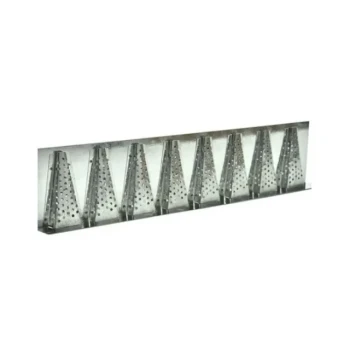
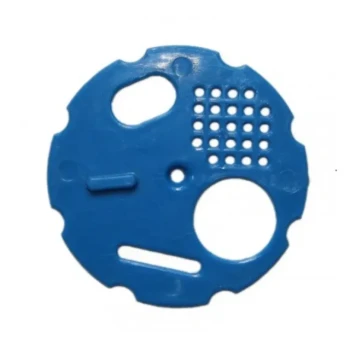
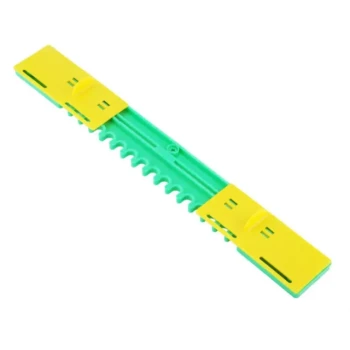
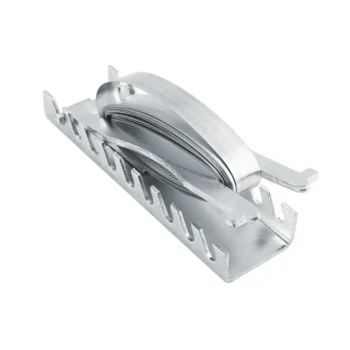
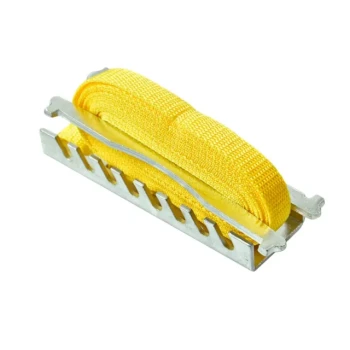
Hive entrance guards serve as a critical force multiplier for your colony's natural defenses. By physically narrowing the hive's opening to a manageable size, these devices restrict the area that guard bees must patrol, allowing them to more effectively intercept and expel adult Small Hive Beetles before they infiltrate the colony.
The primary function of an entrance guard is not to kill pests directly, but to optimize the colony's biological defense capabilities. By converting a large, indefensible opening into a restricted bottleneck, you empower guard bees to identify and block intruders with significantly higher efficiency.
The Mechanics of Defensive Barriers
Creating a Physical Checkpoint
The fundamental function of an entrance guard is to act as a physical barrier that drastically reduces the size of the hive's entry point.
By installing this hardware, you eliminate the large, unprotected openings that adult Small Hive Beetles often use to force their way inside.
This modification transforms the entrance from a wide-open gate into a controlled checkpoint, regulating exactly where and how organisms can enter the hive.
Enhancing Interception Efficiency
The effectiveness of a colony's defense relies heavily on the ratio of guard bees to the size of the entrance they must protect.
When the entrance is narrowed, the density of guard bees per square inch of opening increases significantly.
This allows the bees to focus their attention on a consolidated area, making it much harder for beetles to slip past the "security line" undetected.
Strengthening Weak Colonies
While strong colonies can often defend larger openings, weak or compromised colonies lack the population to patrol a standard hive entrance effectively.
Entrance guards act as a compensator for lower population numbers, artificially strengthening the hive's primary line of defense.
This ensures that even a smaller workforce can successfully maintain a secure perimeter against beetle infiltration.
Strategic Considerations and Limitations
Biological Leverage, Not Total Immunity
It is important to understand that the guard is a tool to assist the bees, not a standalone cure.
The device leverages the bees' natural instinct to identify and expel intruders; it requires an active workforce of guard bees to function correctly.
If the colony is too weak to provide any guard bees, the physical barrier alone may not be sufficient to stop persistent beetles.
Balancing Defense and Access
The goal of the entrance guard is precision: it must be narrow enough to hinder beetles but sufficient for worker bees to pass freely.
Properly designed devices exploit the physical differences between the colony members and the pests.
Using an improper size or material may inadvertently restrict the movement of the colony's foragers, so selecting precision-manufactured inserts is advisable.
Optimizing Your Hive Defense Strategy
To effectively utilize entrance guards in your pest management plan, consider the current state of your apiary:
- If your primary focus is protecting a weak colony: Install guards immediately to consolidate the entrance, minimizing the patrol area your limited number of bees must defend.
- If your primary focus is preventative maintenance: Use entrance guards to create a permanent defensive checkpoint that discourages opportunistic beetles from testing the hive's perimeter.
By controlling the architecture of the hive entrance, you turn the geometry of the hive into a defensive weapon against pests.
Summary Table:
| Feature | Primary Function | Impact on Hive Defense |
|---|---|---|
| Physical Barrier | Constricts entry size | Eliminates large, undefensible openings for pests. |
| Guard Bee Density | Increases patrol efficiency | Allows fewer bees to cover more entry area effectively. |
| Resource Allocation | Leverages colony instincts | Empowers weak colonies to maintain a secure perimeter. |
| Structural Access | Precision-sized openings | Facilitates worker bee traffic while blocking larger intruders. |
Secure Your Apiary with HONESTBEE Professional Solutions
Maximize your colony's survival rate by equipping your apiary with the industry's most reliable hardware. HONESTBEE is a premier partner for commercial apiaries and distributors, offering a comprehensive wholesale catalog that includes precision-engineered hive components, advanced honey-filling machinery, and essential beekeeping tools.
Whether you are scaling your operation with specialized hive-making machines or stocking up on industry-standard consumables, our portfolio is designed to enhance your efficiency and yield. Don't leave your hives vulnerable to Small Hive Beetles—invest in professional-grade protection and infrastructure today.
Contact our wholesale experts at HONESTBEE to discuss how our tailored beekeeping equipment can add value to your business.
References
- Peter Neumann, Patti J. Elzen. The biology of the small hive beetle (<i>Aethina tumida</i>, Coleoptera: Nitidulidae): Gaps in our knowledge of an invasive species. DOI: 10.1051/apido:2004010
This article is also based on technical information from HonestBee Knowledge Base .
Related Products
- Beehive Entrance Reducer Guardian Metal Hive Entrance for Bees
- 8-Cone Galvanized Steel Bee Robber Guard
- Professional Hive Front Entrance Bee Feeder
- Multi-Functional Rotary Hive Entrance Disc for Beekeeping
- Multi-Functional Sliding Hive Entrance for Beekeeping
People Also Ask
- Why are entrance reducers used to counter hornet infestations? Protect Your Hive with Strategic Choke Points
- What is the purpose of an entrance reducer for a beehive? Strengthen Colony Defense and Prevent Robbery
- What are the proper guidelines for using hive entrance reducers? Master Temperature Control & Colony Defense
- Why is it critical to maintain a smaller entrance for a newly established bee hive? Boost Colony Growth and Security
- What is the physical mechanism behind the use of hive entrance reducers? Protect Your Bees from Vespa velutina