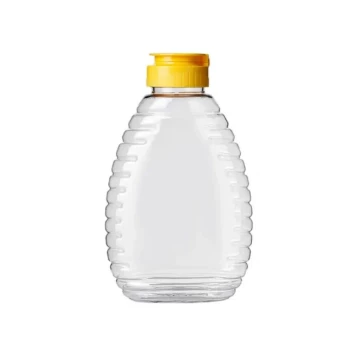
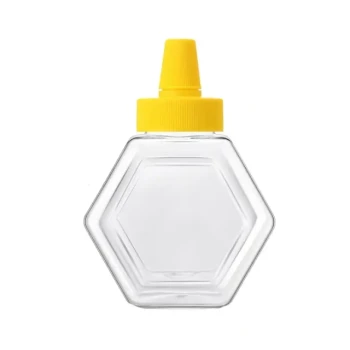
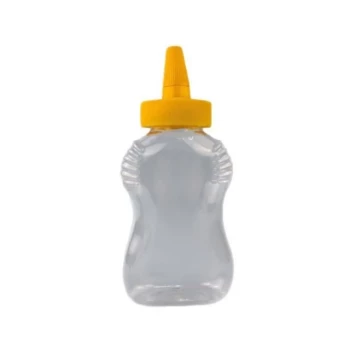
Industrial-grade plastic funnels serve as the essential interface between bulk honey storage and consumer-ready packaging. Their primary function is to guide the accurate transfer of honey from large-capacity containers into retail bottles, specifically managing the unique flow characteristics of high-viscosity fluids to prevent spillage and waste.
By acting as a critical control point during manual or semi-automated filling, these funnels eliminate the overflow risks inherent to thick fluids, ensuring that the transition from storage to shelf remains hygienic, efficient, and cost-effective.
The Mechanics of Efficient Honey Transfer
Managing High Viscosity
Honey is a dense, high-viscosity fluid that resists rapid flow. Without guidance, it is prone to "mounding" and overflowing narrow openings.
Industrial-grade funnels act as fluid-guiding consumables that channel this thick liquid precisely. They prevent the erratic flow that typically occurs when pouring viscous materials, ensuring the product enters the bottle rather than coating the exterior.
Minimizing Product Loss
In commercial production, every drop of honey represents revenue. The specific design of these funnels is intended to prevent overflow during the filling process.
By containing the surge of liquid as it leaves the bulk container, the funnel ensures maximum yield transfer. This reduction in waste is critical for maintaining the profitability of the packaging stage.
Hygiene and Environmental Control
Maintaining a Clean Workspace
Sticky spills are a major liability in food processing. They attract pests, require labor-intensive cleanup, and introduce contamination risks.
By physically containing the fluid path, funnels maintain a clean working environment. This containment is vital for meeting the rigorous hygiene standards required in food-grade production facilities.
Supporting Sanitary Standards
While other packaging elements like polypropylene bags and sealed buckets handle long-term moisture protection, the funnel protects the honey during the brief, vulnerable transfer phase.
Using distinct, industrial-grade equipment for this step ensures that the honey is not exposed to unhygienic surfaces or external contaminants during the critical moment it is exposed to the air.
Operational Considerations and Trade-offs
Manual Efficiency vs. Automation
While funnels are excellent for accuracy and loss prevention, they represent a manual or semi-manual step in the process.
In highly automated environments using industrial filling machines, the role of the funnel is often replaced by integrated dosing nozzles. Funnels are most effective in workflows where flexibility and low capital cost are prioritized over the high-speed throughput of fully mechanized systems.
Cleaning and Maintenance requirements
Plastic components are effective, but they require strict sanitation protocols.
Because honey is sticky and can harbor yeasts if diluted, these funnels must be cleaned rigorously between batches. Failure to remove residue can compromise the hygiene control that the funnel is meant to support, potentially affecting the quality of subsequent batches.
Making the Right Choice for Your Workflow
To determine how best to integrate these tools into your production line, consider your current volume and automation level.
- If your primary focus is waste reduction in manual filling: Utilize industrial-grade funnels to control viscosity and eliminate the revenue loss caused by overflow and spillage.
- If your primary focus is scaling to high-volume retail: View funnels as a transitional tool; eventually, you may need to upgrade to automated dosing machines to achieve the speed required for large supermarket chains.
Ultimately, the proper use of these funnels transforms a messy, high-risk transfer process into a controlled, professional operation.
Summary Table:
| Key Feature | Primary Function | Operational Benefit |
|---|---|---|
| Viscosity Management | Channels dense honey flow | Prevents mounding and accidental overflows |
| Waste Reduction | Directs fluid into narrow openings | Maximizes yield and protects profit margins |
| Hygiene Control | Contains the fluid path | Minimizes sticky spills and contamination risks |
| Process Flexibility | Facilitates manual/semi-manual filling | Low capital cost alternative to automated nozzles |
Elevate Your Honey Production with HONESTBEE
At HONESTBEE, we understand that every drop of honey counts. As a dedicated partner to commercial apiaries and distributors, we provide more than just equipment; we provide the precision and reliability your business demands. From industrial-grade funnels and consumables to advanced honey-filling machines and specialized hive-making hardware, our comprehensive wholesale catalog is designed to scale your operations.
Ready to eliminate waste and streamline your packaging process? Contact us today to explore our full spectrum of beekeeping tools and machinery. Let HONESTBEE empower your journey from hive to shelf.
References
- R Umaru, Ronald A. W. Bee Keeping; An Alternative Source of Income Generation. DOI: 10.58578/amjsai.v1i1.3522
This article is also based on technical information from HonestBee Knowledge Base .
Related Products
- Honey Gate Valve with Ergonomic Ball Handle Plastic Bee Honey Tap for Beekeeping Bottling and Honey Extractor Equipment
- Plastic Honey Gate Spout with Wing Nut for Beekeeping Honey Bucket
- Professional Plastic Honey Dipper for Easy Honey Drizzling
- Food Grade Plastic Honey Bucket Pail for Beekeeping
- Precision Durable Efficient HONESTBEE Rotary Honey Filling Machine
People Also Ask
- How is the flow of honey controlled using a honey gate valve? Master Precise Bottling and Extraction Techniques
- How do you adjust the flow of honey using a honey gate valve? Master Precision Control for Your Bottling Line
- What is the function of the honey gate on the honey press? Master Clean and Precise Bottling Controls
- What is a honey gate and what is its purpose? Master Precision Bottling and Waste Reduction
- Under what conditions should the honey gate be closed? Prevent Messy Spills and Ensure Extraction Efficiency