Professional larva grafting tools and queen rearing kits function as the critical mechanism for converting a bee colony’s natural biological drive into a scalable production line. These tools are primarily used to accurately transfer young larvae into artificial queen cells, directly inducing worker bees to secrete and store large quantities of royal jelly.
These tools simulate a natural emergency queen-rearing response, compelling worker bees to fill artificial cells with nutrient-rich royal jelly. By standardizing the environment and ensuring larval survival, this equipment transforms a biological rarity into a harvestable commercial resource.
Inducing Mass Secretion Through Simulation
Triggering the Nursing Instinct
The core function of these tools is to mimic the natural conditions required for raising queen bees.
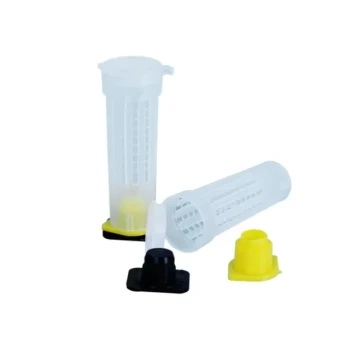
In a natural hive, bees only produce significant amounts of royal jelly when rearing a new queen. By introducing artificial queen cells containing larvae, the tools trick the colony into believing it needs to raise hundreds of queens simultaneously.
The Role of Grafting Needles
High-precision grafting needles are used to move larvae of a specific age from worker cells to artificial queen cups.
This transfer must be executed without damaging the delicate larvae. If the larva dies due to poor handling, the bees will clean out the cell rather than filling it with royal jelly. Therefore, the needle's precision directly dictates the success rate of the operation.
Standardization and Efficiency
High-Density Production via Grafting Frames
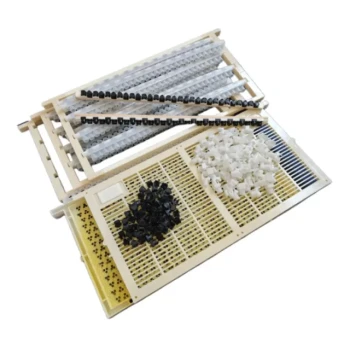
The queen rearing kit typically includes a grafting frame, which acts as a central carrier for the artificial cells.
This frame allows beekeepers to arrange hundreds of queen cell cups at high density within a single hive. Unlike natural combs, this structure allows for systematic, intensive harvesting.
Environmental Uniformity
The physical structure of the kit ensures that all cell cups are maintained at a uniform temperature, humidity, and nursing position.
This consistency significantly enhances the statistical accuracy of acceptance rates. When the environment is uniform, the bees are more likely to accept the artificial cells and deposit jelly into all of them equally.
Understanding the Operational Trade-offs
The Risk of Mechanical Damage
While these tools enable mass production, they introduce the risk of mechanical injury to the larvae or contamination of the jelly.
If the grafting needle is not used with extreme precision, it can damage the larva. A damaged larva may be rejected by the nurse bees, resulting in an empty cell and zero yield for that unit.
Timing and Extraction Sensitivity
The use of these tools dictates a strict operational timeline. Typically, extraction must occur on the fourth day after grafting.
Removing larvae too early results in low yield; removing them too late results in lower quality jelly as the larva consumes it. The equipment must allow for rapid processing to minimize mechanical damage to the jelly's composition during extraction.
Making the Right Choice for Your Goal
To maximize the effectiveness of your royal jelly production, align your tool usage with your specific objectives:
- If your primary focus is Commercial Yield: Prioritize high-density grafting frames to maximize the number of cups per colony, leveraging the simulated environment for mass secretion.
- If your primary focus is Product Purity: Invest in high-precision grafting needles and extraction devices to minimize mechanical damage and preserve the biological activity of the raw material.
- If your primary focus is Colony Sustainability: utilize specialized queen rearing devices to ensure rapid colony succession and biological consistency, creating a strong foundation for future harvests.
Success in royal jelly production is ultimately defined by the precision with which you can simulate nature to serve commercial ends.
Summary Table:
| Component | Primary Function | Impact on Production |
|---|---|---|
| Grafting Needles | Precise larval transfer | Determines acceptance rates & larval survival |
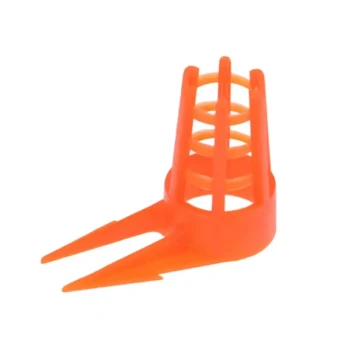
| Artificial Queen Cups | Mimic queen rearing cells | Triggers nurse bees to secrete royal jelly |
| Grafting Frames | High-density cell carrier | Maximizes yield per hive and enables scaling |
| Rearing Kits | Environmental uniformity | Ensures consistent jelly quality and deposition |
Scale Your Apiary Production with HONESTBEE
Maximize your royal jelly yields and queen rearing success with professional-grade equipment from HONESTBEE. We specialize in supporting commercial apiaries and distributors by providing a comprehensive wholesale range of high-precision beekeeping tools. From delicate larva grafting needles and high-density rearing kits to advanced honey-filling and hive-making machinery, our portfolio is designed to enhance your operational efficiency and product purity.
Partner with HONESTBEE to access industry-leading hardware and essential consumables. Contact our expert team today to discuss how our wholesale solutions can grow your beekeeping business.
References
- A. A. Oyerinde, Theresa Ebia Omara-Achong. Comprehensive Value Chain Development of Natural Resources for Economic Diversification: The Apiculture Approach. DOI: 10.4236/ae.2021.92006
This article is also based on technical information from HonestBee Knowledge Base .
Related Products
- Plastic Beekeeping Honey Bee Larvae Grafting Tools for Queen Rearing and Chinese Grafting
- Stainless Steel Queen Grafting Tool for Beekeeping and Bee Queen Grafting
- Plastic Chinese Queen Grafting Tool for Bee Queen Rearing
- Black 2 Pack Beekeeper Queen Grafting Tool for Bee Queen Larva Transferring Needle
- Stainless Steel Beekeeping Queen Grafting Tool for Honey Bee Rearing
People Also Ask
- How do larvae grafting tools and royal jelly production kits contribute to a diversified bee product strategy?
- What happens if a larva is grafted too late? Avoid Scrub Queens and Failed Rearing
- What is the primary function of a Professional Bee Larvae Grafting Tool in queen rearing? Enhance Breeding Efficiency
- What is the grafting method of queen rearing? Master Controlled Queen Production for Your Apiary
- What is the primary function and technical requirement of a larvae grafting tool? Master Precision Queen Rearing