Queen cups and queen cells act as the specialized biological vessels required to transform a common fertilized egg into a fertile queen bee. The queen cup serves as the initial foundation—a dome-shaped wax base where the egg is laid or grafted—while the queen cell is the elongated extension of that cup, constructed to accommodate the massive accumulation of royal jelly and the larger physical size of the developing queen.
These structures are the physical mechanism that dictates the caste of the bee. By providing a vertically oriented, voluminous space, they allow for the unlimited consumption of royal jelly, which is the sole biological trigger that differentiates a queen from a worker.
The Biological Function in the Colony
The transition from a cup to a fully formed cell represents a shift in the colony's focus from maintenance to reproduction or survival.
The Holding State
In a natural setting, worker bees construct queen cups as a preparatory measure. These dome-shaped wax structures often remain empty in the brood nest until the colony decides to swarm or replace a failing queen. They act as "placeholders" for potential future royalty.
The Developmental Trigger
Once a fertilized egg is placed in the cup—either by the queen or by workers moving an egg—the colony shifts into rearing mode. As the egg hatches and the larva requires feeding, the workers extend the walls of the cup downward.
The Incubation Chamber
This extension transforms the cup into a queen cell. The elongated shape is critical because it allows the larva to float in a bath of royal jelly. This abundance of nutrition is necessary for the larva to undergo the specific anatomical changes required to become a reproductive female.
The Role of Queen Cups in Artificial Rearing
In managed beekeeping and research, the biological function of the queen cup is replicated to standardize production.
Standardization of Growth
Artificial queen cups, often made of plastic or wax, act as standardized molds. They mimic the natural geometry of a queen cell base to ensure that every grafted larva has the exact same amount of space for development.
The Carrier for Grafting
In artificial rearing, the cup serves as a mobile carrier. Because the cups are detachable, beekeepers can graft larvae into them and then move them onto cell bars. This allows for the mass production of queens without destroying natural honeycomb.
Optimizing Royal Jelly Deposition
Standardized cups are designed to be mounted on cell bars that keep the larvae vertically suspended. This alignment utilizes gravity and worker bee instincts to maximize the deposition of royal jelly, which directly influences the vitality and quality of the resulting virgin queen.
Understanding the Trade-offs
While artificial cups offer control, they introduce variables that must be managed carefully.
Volume vs. Quality
The internal volume of an artificial cup is a fixed constraint. If the cup is too small, it limits the storage capacity for royal jelly, potentially leading to undernourished queens. High-quality cups are engineered to provide ample space that matches or exceeds natural parameters.
Acceptance Rates
Bees may reject artificial materials if they do not mimic the texture or smell of natural wax. To mitigate this, artificial cups are often coated with beeswax or designed with specific textures to encourage worker bees to accept the graft and begin building the cell wall.
Making the Right Choice for Your Goal
Whether you are managing a small apiary or running a commercial breeding operation, the utility of these structures varies based on your objective.
- If your primary focus is Natural Colony Management: Monitor natural wax queen cups in the brood nest; their presence alone is normal, but the presence of an egg or larva inside signals immediate swarming or supersedure.
- If your primary focus is Commercial Queen Production: Utilize standardized artificial cups on grafting bars to ensure consistent larval nutrition and to facilitate the efficient harvest of royal jelly or mature queen cells.
- If your primary focus is Scientific Research: Use artificial cups to control environmental variables, allowing for precise toxicological studies or nutritional impact assessments without the irregularity of natural comb.
The queen cup is the architectural foundation of the hive's future, translating biological potential into the physical reality of a new queen.
Summary Table:
| Structure | Primary Form | Biological Function | Role in Artificial Rearing |
|---|---|---|---|
| Queen Cup | Dome-shaped wax base | Initial foundation and placeholder for eggs | Standardized mold for grafting larvae |
| Queen Cell | Elongated vertical tube | Chamber for royal jelly immersion and growth | High-capacity vessel for mass production |
| Royal Jelly | Nutritional liquid | Biological trigger for queen caste differentiation | Maximum deposition via vertical alignment |
Elevate Your Apiary with Professional Rearing Solutions
Maximize your colony's reproductive success with premium equipment from HONESTBEE. As a dedicated partner to commercial apiaries and global distributors, we provide the specialized tools necessary to transform your queen rearing operations. From high-acceptance artificial queen cups and cell bars to advanced honey-filling machines and specialized hive-making hardware, our comprehensive wholesale offering is designed to optimize your efficiency and output.
Ready to scale your production? Contact us today to explore our full spectrum of beekeeping machinery and essential industry consumables. Let HONESTBEE provide the quality foundation your queens deserve.
Related Products
- JZBZ Type Wide Base Plastic Queen Cell Cups for Base Mounting and Queen Rearing
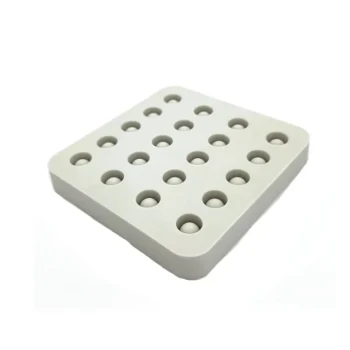
- High-Efficiency 20-Cell Silicone Mold for Beeswax Bee Queen Cup Production
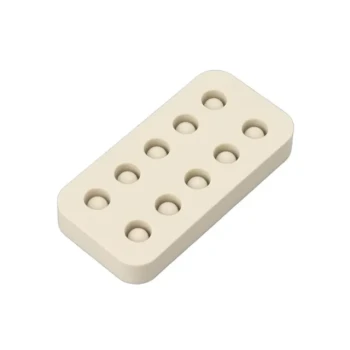
- 10-Cell Silicone Beeswax Bee Queen Cups Forming Mold
- Brown Nicot Queen Cell Cups for Breeding Queen Bees Beekeeping
- Clear Black Plain Polystyrene Queen Bee Grafting Cell Cups No Lug for Bee Queen Cup
People Also Ask
- What are the primary advantages of using plastic queen cell cups? The Industrial Choice for High-Efficiency Apiaries
- What technical advantages do commercial plastic queen cell cups offer? Scale Your Queen Rearing for Maximum Efficiency
- What is the function of standardized plastic Queen Cell Cups? Boost Efficiency in Commercial Larval Grafting
- Why are standardized plastic queen cell cups preferred? Boost Commercial Queen Rearing Efficiency
- Why are standardized plastic queen cell cups typically used in large-scale queen bee production? Boosting Apiary Output