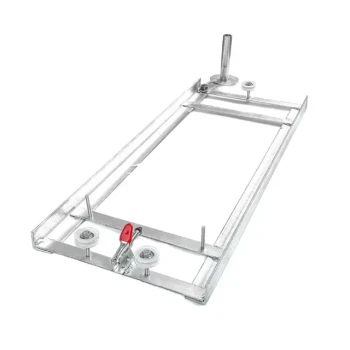
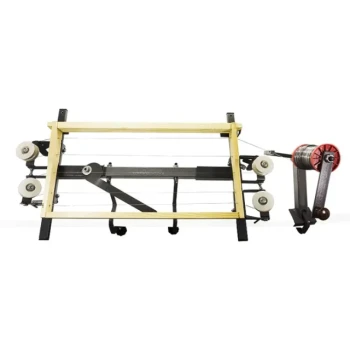
Standardized beehives and frames function as the critical educational baseline for teaching precision assembly and operational consistency. In a training context, utilizing these components ensures that participants master the exact physical specifications required for biological success, rather than simply learning general carpentry. This focus on strict dimensional accuracy guarantees that trainees understand how to build equipment that is fully interchangeable across different apiaries, a prerequisite for efficient large-scale management.
Core Takeaway Standardization is not merely a manufacturing convenience; it is the technical foundation of modern apiculture. Training on standardized equipment shifts the focus from individual craftsmanship to system compatibility, ensuring that every assembled unit supports scalability, automation, and long-term colony health.
The Role of Standardization in Skill Acquisition
The use of standardized equipment in training serves to bridge the gap between raw hardware assembly and the biological needs of the colony.
Mastering Precision Assembly
The primary function of using standardized parts in training is to enforce precision. Participants learn that deviations in assembly are not just aesthetic flaws but functional failures.
By adhering to exact physical specifications, trainees ensure the equipment respects "bee space" (the specific gap bees need to move). This precision prevents the bees from gluing frames together with propolis or building burr comb, which complicates future maintenance.
Ensuring Component Interchangeability
Training with standardized hives instills the importance of modularity. A frame assembled in a training workshop must fit a hive in a remote apiary years later.
This interchangeability allows for efficient colony transfers. In large-scale operations, the ability to move frames between hives without friction is essential for balancing resources and managing populations.
Operational Implications of Assembly Training
Beyond the immediate build, training with standardized gear prepares the beekeeper for the lifecycle management of the apiary.
Facilitating Disease Management
Standardized assembly techniques create a controlled physical environment. Trainees learn that proper construction allows for the independent inspection of frames.
Because the frames are built to standard specs, they can be removed for inspection without disrupting the rest of the colony. This modularity is the technical foundation for effective disease monitoring and non-destructive honey extraction.
Preparation for Automation
Modern beekeeping increasingly relies on mechanical support, particularly for honey extraction. Training with standardized frames ensures compatibility with this machinery.
If a frame is assembled outside of standard tolerances, it will not fit into mechanical extractors or automated uncapping machines. Therefore, the training emphasizes that hardware consistency is the key to unlocking automation and shortening harvest cycles.
Scientific Reliability
For trainees entering research or data-driven management, standardization eliminates physical variables.
By ensuring every hive offers a consistent nesting template, beekeepers can accurately compare colony health and production rates. This converts the apiary from a collection of boxes into a source of quantifiable spatial distribution data.
Understanding the Trade-offs
While standardization is the industry standard, it introduces specific challenges that must be addressed during training.
The Precision Trap
The reliance on standardization means there is zero tolerance for error. In non-standardized systems, a beekeeper might fudge a measurement to make a part fit.
With standardized equipment, a small assembly error renders the component incompatible with the entire ecosystem of the apiary. Training must emphasize that adherence to specifications is absolute, as ill-fitting equipment can lead to increased crushing of bees and operational inefficiencies.
Making the Right Choice for Your Goal
How you approach the assembly and maintenance of standardized gear depends on your ultimate objective.
- If your primary focus is Commercial Scalability: Prioritize the interchangeability of frames and boxes to ensure seamless integration with automated extraction lines and rapid colony transfers.
- If your primary focus is Scientific Research: Focus on the consistency of the internal environment to eliminate physical variables when comparing pathogen rates or overwintering survival.
- If your primary focus is Colony Health: Emphasize the modular precision of the assembly to facilitate frequent, non-destructive inspections and disease monitoring.
Mastering the assembly of standardized equipment is the first step toward building an apiary that is scalable, measurable, and biologically secure.
Summary Table:
| Training Focus | Primary Function | Operational Benefit |
|---|---|---|
| Precision Assembly | Maintains exact "bee space" | Prevents burr comb and propolis buildup |
| Interchangeability | Ensures component modularity | Enables seamless frame transfers and resource balancing |
| Disease Management | Facilitates independent inspection | Allows non-destructive monitoring and health checks |
| Automation Readiness | Aligns with extraction machinery | Unlocks use of mechanical uncappers and honey extractors |
| Data Consistency | Standardizes nesting templates | Provides reliable metrics for scientific research |
Scaling Your Apiary Starts with Precision
At HONESTBEE, we understand that for commercial apiaries and distributors, efficiency is built on standardization. Our comprehensive wholesale offering provides the high-precision beekeeping tools, machinery, and essential consumables needed to maintain a professional operation. From specialized hive-making and honey-filling machines to a full spectrum of standardized hardware, we empower your business to achieve maximum scalability and biological security.
Ready to upgrade your inventory or equipment? Contact HONESTBEE today to discover how our premium supplies can streamline your production and serve your customers better.
References
- Cooper Schouten, John Caldeira. Improving the Effectiveness of Beekeeping Training: A Case Study of Beekeeping Instructors in Fiji. DOI: 10.1080/0005772x.2021.1885199
This article is also based on technical information from HonestBee Knowledge Base .
Related Products
- Wooden Bee Hive Frames for Beekeeping and Wholesale
- Assembled Wooden Bee Frames with Plastic Foundation for Durability and Convenience by HONESTBEE
- Plastic Bee Frame Beekeeping Hive Frames for Wholesale
- Professional Galvanized Steel Frame Rest for Beehives
- HONESTBEE Wired and Assembled Wooden Bee Frames Foundation for a Thriving Hive
People Also Ask
- How do wooden and plastic hive frames compare in terms of durability? Wood vs. Plastic Longevity & Repairability
- How does balancing the number of frames impact hive productivity? Optimize Your Apiary's Biological Output
- What are the main considerations when choosing between wooden and plastic bee hive frames? Optimize Your Apiary's Efficiency
- How should beehive frames be maintained to prolong their lifespan? 5 Pro Tips for Durable Beekeeping Equipment
- What are frames and combs used for in beekeeping? The Foundation of Modern Hive Management