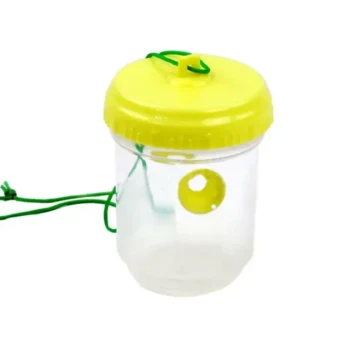
The blocking system functions as a mechanical filter designed to enforce capture selectivity within the trap. Its primary purpose is to admit the target species, the Asian hornet (Vespa velutina), while actively preventing the accidental capture of non-target beneficial insects, such as local honey bees and native pollinators.
This mechanism is not merely a trapping device; it acts as a critical biodiversity safeguard. It ensures that the physical control of invasive predators does not inadvertently deplete the local pollinator populations you are trying to protect.
The Mechanics of Selectivity
Filtering the Target
The core engineering of these traps utilizes a one-way entry structure. This allows the larger, predatory hornets to enter the device, driven by olfactory attractants, but prevents them from escaping.
Excluding Beneficial Insects
Simultaneously, the system is calibrated to exclude smaller non-targets. By utilizing specific physical dimensions in the blocking mechanism, the trap allows smaller species to escape or prevents them from entering entirely, ensuring only the invasive hornets are retained.
Preserving Biodiversity
The primary reference highlights that this selectivity is essential for protecting local biodiversity. An unselective trap would be counterproductive, potentially harming the very ecosystem the beekeeper intends to defend.
Strategic Role in Pest Management
Reducing Predation Pressure
As noted in the supplementary data, these professional traps serve as a core physical control component. By successfully isolating the hornets, the system directly reduces the population density surrounding an apiary.
Alleviating Colony Stress
Beyond simple population reduction, the blocking system helps lower the "hawking" pressure at the hive entrance. This alleviates the stress caused by external threats, allowing the honey bee colony to maintain productivity and foraging efficiency.
Targeting the Lifecycle
These systems are particularly effective when paired with specific baits during the spring. By targeting overwintered queens seeking sugar, the traps help reduce the number of nests formed at the source, preventing future population explosions.
Understanding the Trade-offs
Bait Dependency
While the blocking system manages physical entry, the trap's overall success relies heavily on chemical or food-based baits. Without a potent attractant (sugar-based in spring, protein-based later), the mechanical system sits idle.
Maintenance Requirements
These are not "set and forget" devices. To maintain the selectivity and attraction, users must monitor the traps to replenish baits and remove trapped hornets, which can otherwise decompose and repel other targets.
Selectivity Limitations
While designed for high selectivity, no mechanical system is perfect. Extreme variations in insect sizes may occasionally result in minor by-catch, requiring regular inspection to release any trapped beneficial insects manually.
Maximizing Trap Effectiveness
To utilize these systems effectively within an integrated management plan, consider your specific operational goals:
- If your primary focus is protecting active hives: Deploy traps with high-selectivity blocking systems directly around the apiary to immediately lower predation pressure and colony stress.
- If your primary focus is long-term population control: Deploy traps in the spring with sugar baits to target queens, leveraging the system to prevent nest establishment before the season peaks.
By combining precise mechanical blocking with the correct seasonal baiting, you transform a simple trap into a sophisticated tool for ecosystem management.
Summary Table:
| Feature | Functionality | Primary Benefit |
|---|---|---|
| One-Way Entry | Allows hornets in while preventing escape | Efficiently reduces predator density |
| Calibrated Apertures | Size-specific physical filter | Prevents capture of native pollinators |
| Selective Exit | Allows smaller non-target insects to escape | Safeguards local biodiversity |
| Predation Reduction | Lowers "hawking" pressure at the hive | Alleviates colony stress and boosts yield |
Secure Your Apiary with HONESTBEE Professional Solutions
Protecting your commercial honey production from the Asian hornet requires more than just a trap—it requires a precision-engineered management system. HONESTBEE specializes in supporting commercial apiaries and distributors with high-performance beekeeping tools and pest control machinery.
Our comprehensive wholesale range includes everything from selective trapping systems to honey-filling machines and specialized hardware. By partnering with us, you gain access to industry-leading equipment designed to maintain colony productivity and forage efficiency.
Ready to scale your beekeeping operation? Contact us today to explore our full spectrum of wholesale machinery and essential consumables.
References
- Fernando Mata, Concha Cano‐Díaz. Evaluation of Asian Hornet (Vespa velutina) Trappability in Alto-Minho, Portugal: Commercial vs. Artisanal Equipment, Human Factors, Geography, Climatology, and Vegetation. DOI: 10.3390/app14177571
This article is also based on technical information from HonestBee Knowledge Base .
Related Products
People Also Ask
- What are the practical advantages of using professional wasp traps and protective equipment in apiary management? Scale Up
- Why replace sugar syrup bait in wasp traps every three days? Ensure Maximum Attraction and Catch Rates
- What is the importance of deploying hornet traps around an apiary for maintaining colony stability? Protect Your Yields.
- What are the advantages of placing hornet traps on the tops of beehives? Maximize Hive Defense Against Predators
- What is the technical purpose of placing expanded clay balls in a hornet trap? Optimize Your Apiary Monitoring