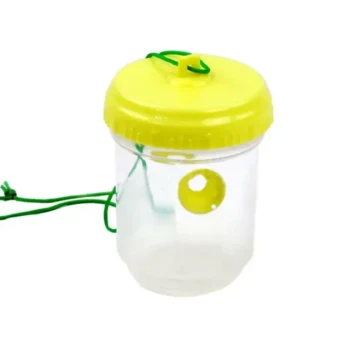
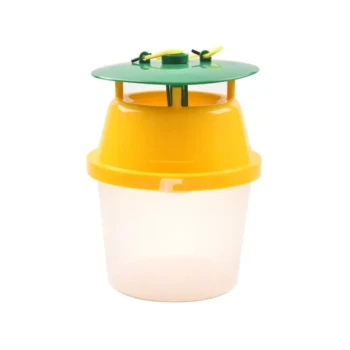
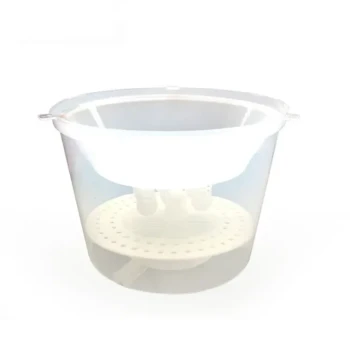
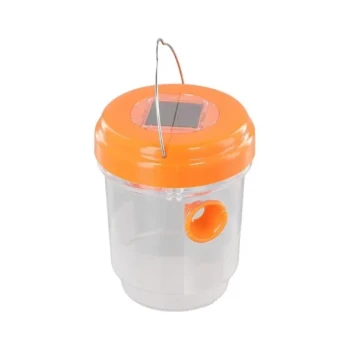
The technical advantage of the inverted funnel structure lies in its ability to create a highly effective one-way entry point that exploits the specific flight mechanics of hornets. By narrowing the channel diameter as the pest moves inward, the design allows for effortless entry toward a bait while rendering the exit geometrically obscure and physically difficult to navigate from the inside.
This design leverages geometric constriction and pest behavior to achieve entrapment. It functions as a mechanical check valve, admitting pests into a confined space but baffling their attempts to locate the exit, all without the use of chemical agents.
The Mechanics of Physical Confinement
Geometric Constriction
The core of this structure involves cutting the upper section of a container and inserting it inversely. This creates a funnel that acts as a gradually narrowing channel.
Exploiting Flight Behavior
Flying pests like hornets are adept at following scents into wide openings but struggle to navigate through small, suspended apertures when trying to escape. The wide outer rim invites the pest in, guiding them seamlessly toward the bait.
The One-Way Barrier
Once inside the wider internal space of the container, the pest cannot easily locate the small, narrow exit hole of the funnel. The geometry effectively locks them in, achieving physical confinement purely through structural design.
Safety and Environmental Advantages
Elimination of Chemical Agents
A significant technical benefit of this design is its independence from toxins. Because the physical confinement is absolute, there is no need to coat the trap with pesticides or poisons to kill the pest.
Passive Operation
The trap operates continuously without the need for power or active mechanical triggers. It relies entirely on the static shape of the container and the natural instincts of the hornet.
Understanding the Trade-offs
Dependence on Attraction
The inverted funnel is solely a retention mechanism, not an attraction mechanism. As the reference notes, the system relies on the pest being "attracted by bait." Without a potent lure, the geometric advantages of the funnel are useless.
Potential for Escape via Saturation
While the reference highlights the difficulty of exit, the physical nature of the trap means the "narrow internal space" must remain clear. If the trap becomes overly full, the physical distance between the trapped pests and the exit narrows, potentially compromising the confinement.
Making the Right Choice for Your Goal
To maximize the effectiveness of an inverted funnel trap, align your construction with your specific objectives:
- If your primary focus is safety: Utilize this structure to eliminate the need for chemical agents, relying on the physical barrier to contain pests securely.
- If your primary focus is efficiency: Ensure the funnel creates a dramatic difference between the entry width and the exit width to maximize the difficulty of escape.
The inverted funnel is a testament to the power of simple geometry, turning a pest's natural flight patterns into a fool-proof containment strategy.
Summary Table:
| Technical Feature | Mechanism | Advantage |
|---|---|---|
| Geometric Constriction | Narrowing internal channel | Seamless entry, difficult exit |
| One-Way Barrier | Small, suspended aperture | Passive physical confinement |
| Flight Behavior Mapping | Scents vs. Spatial navigation | Exploits pest's natural instincts |
| Chemical-Free Design | Mechanical check valve | Environmentally safe & non-toxic |
| Passive Operation | Static container shape | Continuous use without power |
Elevate Your Beekeeping Operation with HONESTBEE
Protect your commercial apiaries and ensure the health of your colonies with professional-grade pest control solutions. As a leading global supplier, HONESTBEE provides distributors and commercial beekeepers with everything from precision-engineered honey-filling machines to specialized hive-making hardware and industrial-strength traps.
Our comprehensive wholesale portfolio is designed to enhance your efficiency and bottom line. Whether you are stocking essential consumables or investing in advanced machinery, our team is ready to deliver the value your business deserves.
Contact HONESTBEE today for a custom wholesale quote
References
- Boymakhmat Kakhramanov, Khusniddin Donaev. Effective methods of bee pest control. DOI: 10.1051/e3sconf/202338101012
This article is also based on technical information from HonestBee Knowledge Base .
Related Products
- Compact Multi-Funnel Hanging Wasp Trap
- HONESTBEE Professional Telescopic Pole Bee Swarm Catcher
- HONESTBEE Collapsible Tiered Bee Swarm Catcher for Beekeeping
- Reusable Aluminium Beetle Trap for Small Hive Beetles Silver Bullet
- Reusable Clear Small Hive Beetle Traps for Beehives Beetle Trapping Tools
People Also Ask
- What are the practical advantages of using professional wasp traps and protective equipment in apiary management? Scale Up
- Why replace sugar syrup bait in wasp traps every three days? Ensure Maximum Attraction and Catch Rates
- What is the importance of deploying hornet traps around an apiary for maintaining colony stability? Protect Your Yields.
- What are the advantages of placing hornet traps on the tops of beehives? Maximize Hive Defense Against Predators
- What trapping methods and equipment setups protect commercial apiaries against seasonal hornet predation?