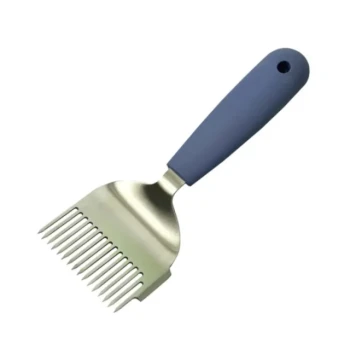
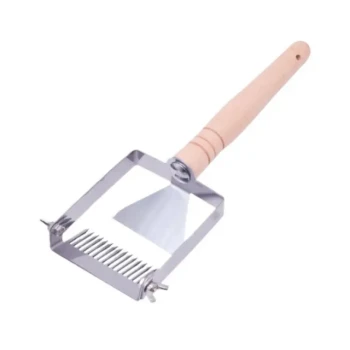
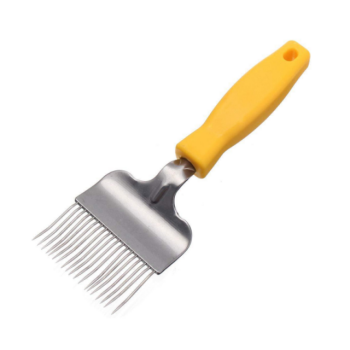
Uncapping is the fundamental preparatory step in honey harvesting where the protective wax seal is physically removed from the honeycomb. This manual or mechanical process exposes the stored honey, allowing it to be released from the cells during the subsequent extraction phase.
The Core Objective Uncapping removes the physical barrier—the wax operculums—that bees build to seal ripe honey. This step is essential because it opens the cells, enabling centrifugal force to overcome the natural viscosity and structural geometry that holds the honey inside the comb.
The Mechanics of Uncapping
Breaching the Protective Seal
When honey is fully ripened, bees seal each cell with a wax cap (or operculum) to preserve it. The primary function of uncapping is to slice or scratch off this layer. Without this breach, the honey remains hermetically sealed and cannot be harvested.
Overcoming Cell Geometry
Honey cells are naturally sloped downward toward the center of the comb to prevent the liquid nectar from leaking out before it is capped. Because of this angle, gravity alone is often insufficient to drain the honey. Uncapping removes the lid, creating a clear exit path for the honey to flow out once external force is applied.
Facilitating Centrifugal Extraction
Modern extraction relies on a centrifuge (extractor) that spins frames to throw honey out. Uncapping ensures the cells are open so this force can effectively empty the comb. If cells are left capped, the weight of the honey during spinning can cause the entire wax structure to blow out or collapse.
Impact on Hive Management
Preserving Comb Integrity
A critical, often overlooked function of proper uncapping is comb conservation. By using specialized tools like heated knives or mechanized equipment, the wax caps are removed with a flat, clean cut that leaves the cell walls intact.
Enabling Resource Efficiency
When the comb structure is preserved during uncapping, the empty frames can be returned to the hive. This allows bees to immediately refill the existing cells rather than consuming energy and resources to rebuild the wax comb from scratch.
Byproduct Collection
The uncapping process separates the cappings wax from the honey. This wax is a high-value industrial byproduct that can be processed and sold separately from the liquid honey harvest.
Understanding the Trade-offs
Thermal Efficiency vs. Honey Quality
Using heated or steam uncapping knives melts the wax for a faster, smoother cut that reduces drag and physical tearing of the comb. However, excessive heat must be managed to avoid scorching the honey near the surface.
Precision vs. Speed
Manual tools like uncapping forks or cold knives offer high precision, ensuring only the cap is removed without reducing the depth of the cell. While gentler on the comb, this method is significantly slower than mechanized options used in commercial operations.
Making the Right Choice for Your Goal
The method of uncapping you choose dictates the efficiency of your harvest and the longevity of your equipment.
- If your primary focus is preserving comb for reuse: Prioritize heated knives or precise electric tools that slice the cap without tearing the cell walls.
- If your primary focus is low-cost, small-scale harvesting: Utilize a cold knife or uncapping fork, which requires more labor but minimizes equipment investment.
- If your primary focus is commercial volume: Implement mechanized uncapping equipment to maximize throughput and efficiently separate wax byproducts.
Effective uncapping balances the need to access the honey with the necessity of protecting the comb structure for future seasons.
Summary Table:
| Uncapping Function | Primary Benefit | Key Impact |
|---|---|---|
| Seal Removal | Breaches wax operculums | Allows honey to be released from cells |
| Structural Support | Prevents cell collapse | Protects wax foundation during spinning |
| Comb Preservation | Maintains cell walls | Enables rapid frame reuse by bee colonies |
| Resource Recovery | Separates cappings wax | Generates high-value industrial wax byproduct |
| Flow Optimization | Overcomes cell geometry | Facilitates efficient centrifugal extraction |
Maximize Your Apiary’s Yield with HONESTBEE Solutions
At HONESTBEE, we specialize in empowering commercial apiaries and distributors with high-performance beekeeping technology. Whether you need precise heated knives, high-speed mechanized uncapping machinery, or honey-filling equipment, our comprehensive wholesale portfolio is designed to preserve your comb and optimize your harvest.
Ready to upgrade your honey processing line? Contact our specialists today to discover how our professional tools and essential industry consumables can drive your business efficiency.
Related Products
- Professional Multi-Function Uncapping Fork with Ergonomic Rubber Grip
- Plastic Honey Uncapping Tub Tank for Beekeeping
- Adjustable Stainless Steel Honey Uncapping Fork with Scraper for Beekeeping
- All-Stainless Steel Pivoting Honey Uncapping Fork for Beekeeping
- Professional Honey Uncapping Roller for Efficient Harvesting
People Also Ask
- What is the primary use of an uncapping fork in beekeeping? A Guide to Precision Honey Harvesting
- What is the use of an uncapping fork? A Precision Tool for Hive Management and Honey Harvesting
- What is the original purpose of an uncapping fork? Mastering Precision Honey Extraction and Comb Preservation
- How is an uncapping fork used to uncap honey frames? Precision Techniques for Perfect Honey Extraction
- What is an uncapping fork? A Precision Tool for Efficient Honey Harvesting