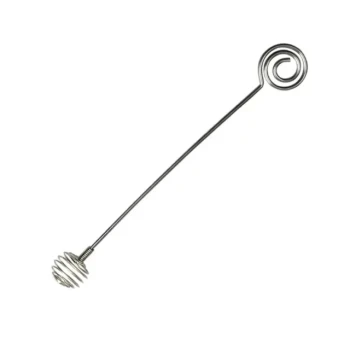
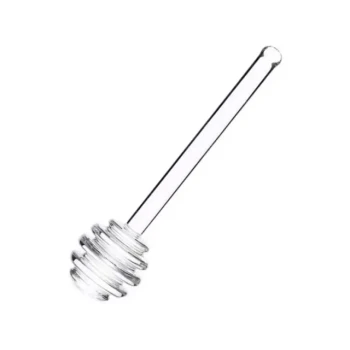
The primary function of using a glass stirring rod is to achieve complete physical homogenization of mature honey before it is sampled. Over time, honey tends to separate, leading to uneven layers of moisture and sugar. Vigorous stirring reintegrates these components, ensuring that any sample taken for analysis is truly representative of the entire batch.
Mature honey naturally undergoes moisture stratification and sugar crystallization during storage, creating pockets of uneven mineral concentration. Vigorous stirring eliminates these inconsistencies, guaranteeing that the weighed sample is uniform and ensuring high precision in industrial analysis results.
The Physics of Honey Storage
Understanding Stratification
During storage, mature honey is not a static substance. It is prone to moisture stratification, where water content becomes unevenly distributed throughout the container.
The Problem of Crystallization
Simultaneously, honey often undergoes sugar crystallization. This physical change further alters the texture and consistency of the matrix.
Uneven Mineral Distribution
These physical changes lead to a critical analytical problem: the uneven distribution of minerals. Without intervention, a sample taken from the top may have a completely different chemical profile than one taken from the bottom.
The Role of Vigorous Stirring
Achieving Physical Homogenization
Using a glass stirring rod allows for vigorous mechanical mixing. This action physically forces the separated layers back into a single, uniform phase.
Eliminating Regional Differences
The stirring process effectively removes regional compositional differences within the container. It ensures that pockets of high moisture or concentrated minerals are dispersed evenly.
Enhancing Analytical Precision
The ultimate goal of this process is precision. By ensuring the sample is homogeneous, the experimental data derived from it will accurately reflect the quality of the entire industrial batch.
Risks of Inadequate Preparation
The Trade-off of Time vs. Accuracy
Skipping the stirring step to save time introduces significant sampling bias. If the honey is not homogenized, the sample weighed for experiment is merely a "snapshot" of one layer, not the whole.
Compromising Data Integrity
Failure to stir vigorously leads to low precision in the overall analysis process. This renders the results unreliable for industrial quality control, as the detected mineral levels will be artificial artifacts of stratification rather than true values.
Ensuring Consistency in Analysis
To ensure your analytical data is reliable, you must prioritize sample preparation before weighing occurs.
- If your primary focus is Mineral Analysis: Vigorously stir the honey to redistribute minerals that may have settled or concentrated in specific layers due to crystallization.
- If your primary focus is General Quality Control: Use the glass rod to eliminate moisture stratification, ensuring the sample represents the average composition of the entire batch.
Uniform preparation is the only way to transform a variable raw product into consistent, actionable data.
Summary Table:
| Process Step | Physical Effect | Impact on Analytical Data |
|---|---|---|
| Stirring | Reintegrates moisture layers | Eliminates sampling bias and moisture variance |
| Homogenization | Disperses sugar crystals | Ensures mineral distribution is uniform |
| Vigorous Mixing | Removes regional differences | Guarantees the sample represents the entire batch |
| Final Preparation | Creates a stable matrix | Enhances precision in industrial quality control |
Elevate Your Honey Processing Efficiency with HONESTBEE
At HONESTBEE, we understand that precision in the lab starts with the right tools in the field and factory. We provide commercial apiaries and distributors with a comprehensive range of professional beekeeping tools, honey-filling machinery, and essential consumables.
Whether you need specialized hive-making equipment or high-performance machinery to maintain honey quality, our wholesale solutions are designed to scale your operations. Contact us today to discover how our industry-leading portfolio can optimize your production and help you deliver a consistent, premium product to your customers.
References
- Paweł Pohl, Piotr Jamróz. Interference-Free Determination of Trace Copper in Freshly Ripened Honeys by Flame Atomic Absorption Spectrometry Following a Preconcentration by Solid-Phase Extraction and a Two-Step Elution Process. DOI: 10.1007/s00244-013-9961-x
This article is also based on technical information from HonestBee Knowledge Base .
Related Products
People Also Ask
- What is a honey dipper? Master the Art of the Perfect Drizzle with This Essential Tool
- How do you clean and store a honey dipper? Simple Steps for Long-Lasting Performance
- What is a honey taking spoon called? Discover the Tool for a Perfect, Mess-Free Drizzle
- What is a honey dipper and what is it used for? A Guide to Mess-Free Drizzling
- What is the proper method for cleaning a honey dipper? Maintain Pure Flavor with These Easy Pro Tips