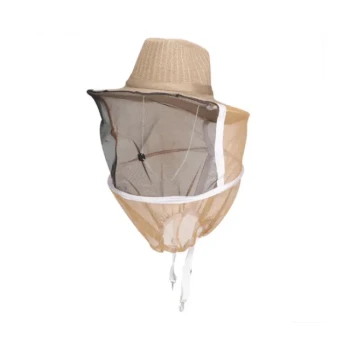
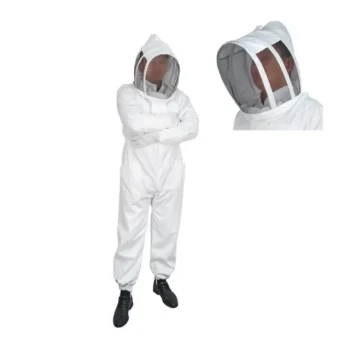
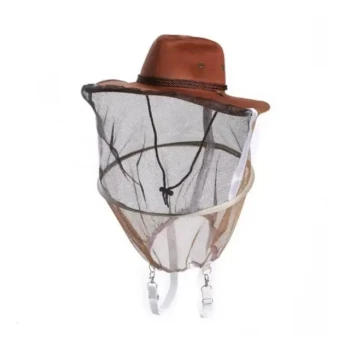
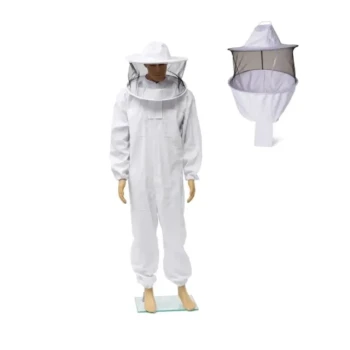
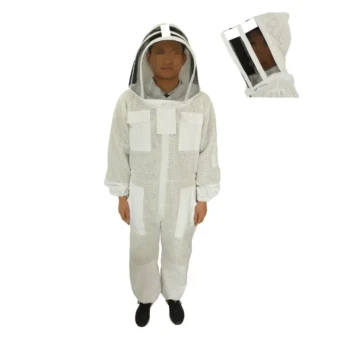
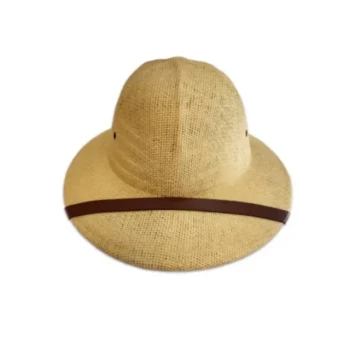
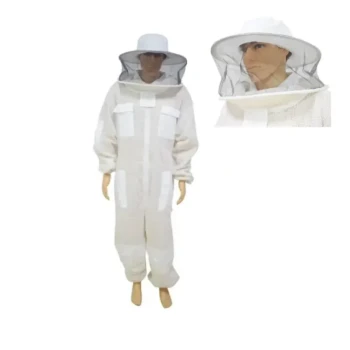
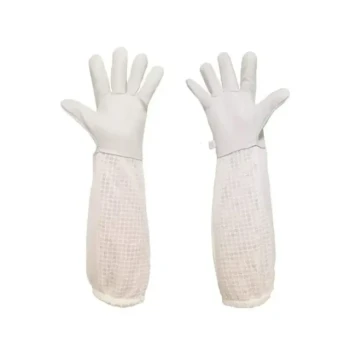
The primary function of veils and hoods in beekeeping is to establish an impenetrable barrier around the face and neck, the areas of the human body most sensitive to bee stings. These tools utilize a specialized mesh screen to maintain a safe physical distance between the bees and the beekeeper's skin while preserving the visibility necessary for apiary work.
Core Takeaway: Beyond simple physical protection, a veil serves a critical psychological function. By neutralizing the fear of facial stings, it reduces operator anxiety and enables the fine motor skills required for precise, gentle hive management.
The Mechanics of Protection
Shielding Vulnerable Areas
The face and neck are highly vascular and sensitive regions where stings can be particularly painful and dangerous.
Veils and hoods are designed specifically to isolate these areas from defensive bees.
Visibility and Distance
A well-designed veil does not just cover the face; it creates a spatial buffer.
The mesh screen must be fine enough to prevent bee entry but transparent enough to allow the beekeeper to spot tiny details, such as eggs or the queen.
The Operational Impact
Enhancing Precision and Focus
Protective gear is essential for maintaining the fine motor skills needed in the apiary.
When a beekeeper feels secure, they can lift frames and manipulate hive components with steady hands.
This reduces the likelihood of crushing or agitating bees, which ensures the inspection progresses smoothly.
Reducing Anxiety
For both beginners and experienced apiarists, the buzzing of defensive bees near the face can trigger an instinctive stress response.
By acting as a primary defense, the hood minimizes this anxiety, allowing the beekeeper to concentrate entirely on hive maintenance.
Hygiene and Contamination Control
Clean protective clothing, including hoods, acts as a barrier against external contaminants.
Using dedicated gear helps prevent the introduction of dirt or foreign substances that could compromise the hive's health or the quality of the honey.
Common Design Configurations
Hood (Sheriff/Fencing) Veils
These are generally lighter and offer excellent flexibility.
They are often favored for their portability, as they fold easily for storage and are typically integrated directly into jackets or suits.
Round Veils
These veils usually feature a built-in hat and a 360-degree mesh structure.
They provide a wide, consistent distance between the mesh and the face, offering superior ventilation and "breathing room."
Square Veils
Square designs utilize a heavier mesh and often require a separate helmet or hard hat to support the structure.
They are extremely durable and rigid, preventing the wind from blowing the mesh against the face.
Understanding the Trade-offs
Full Protection vs. Convenience
Choosing a full suit with an integrated hood offers total body protection from head to toe.
However, this maximizes heat retention; a jacket with a veil is cooler but leaves the legs exposed, requiring the beekeeper to accept a higher risk for the lower body.
Mesh Density vs. Visibility
A tighter, heavier mesh offers higher security against stings.
The trade-off is reduced optical clarity, which can make it difficult to spot eggs or identify disease markers during detailed inspections.
Making the Right Choice for Your Goal
Selecting the right protective gear depends on your specific environment and comfort level.
- If your primary focus is portability and ease of storage: prioritize a hood (fencing) veil, as these are lightweight and collapsible.
- If your primary focus is maximum separation from bees: choose a round veil, which keeps the mesh furthest from the face and offers better peripheral views.
- If your primary focus is durability: look for double-stitched seams and square veils that utilize heavy-duty mesh and separate helmets.
The best protective equipment is the one that makes you feel secure enough to handle your bees with calm, deliberate care.
Summary Table:
| Feature | Hood (Fencing) Veil | Round Veil | Square Veil |
|---|---|---|---|
| Design Type | Integrated/Collapsible | Built-in Hat/360° Mesh | Rigid/Heavy Mesh |
| Primary Benefit | Portability & Flexibility | Ventilation & Breathing Room | Maximum Durability |
| Best For | Mobile Beekeepers | High-Temperature Climates | Professional/Heavy Use |
| Visibility | High | Excellent Peripheral | Moderate |
Elevate Your Apiary Safety with HONESTBEE
At HONESTBEE, we understand that confidence in the apiary starts with superior protection. We cater to commercial apiaries and distributors by providing a comprehensive wholesale selection of professional-grade beekeeping gear.
Our extensive portfolio includes:
- High-Visibility Veils & Protective Suits designed for safety and comfort.
- Advanced Machinery, including hive-making and honey-filling systems.
- Essential Consumables and unique honey-themed cultural merchandise.
Whether you are scaling a commercial operation or stocking a distribution network, our high-quality beekeeping tools and equipment ensure precision and safety in every hive inspection.
Ready to upgrade your equipment? Contact us today to explore our wholesale offerings and discover how HONESTBEE can support your business growth.
Related Products
- Beekeeper Cowboy Hat and Veil for Beekeeping
- Professional Square Folding Wire Mesh Beekeeping Veil
- Premium Cotton Beekeeper Suit with Reinforced Fencing Veil
- Premium Cowboy Beekeeper Hat with Visibility Veil Outdoor Professional Beekeeping Protective Gear
- Professional Cotton Beekeeper Suit with Round Veil Design for Commercial Apiaries
People Also Ask
- What is the correct way to wash a beekeeping hat and veil? Safe Hand-Washing Guide to Protect Your Gear
- What are the components and importance of a beekeeper's hat and veil? Essential Safety Gear for Apiary Success
- What are the differences between a separated and an attached beekeeping hat and veil? Security vs. Versatility
- What are the design specifications for an effective beekeeping hat and veil? Professional Standards for Protection
- What is the function of a beekeeping hat and veil? Essential Protection for Safe Hive Management