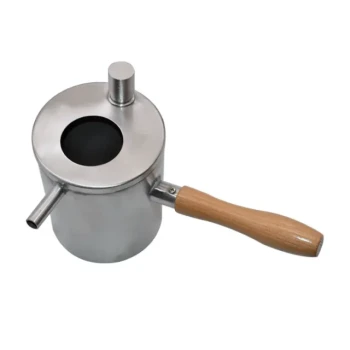
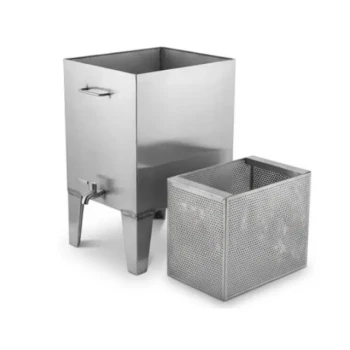
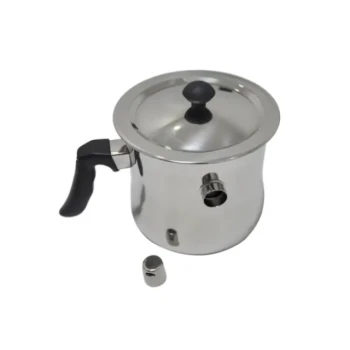
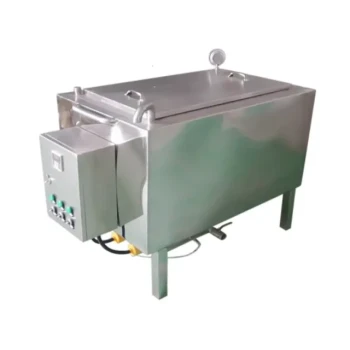
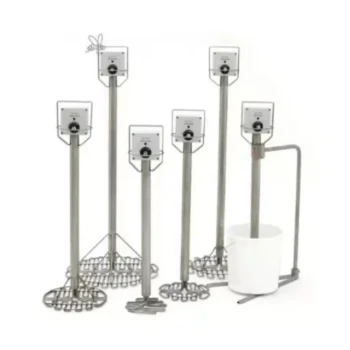
At its most fundamental level, the operating principle of a wax melter is a specific thermal phase change, regardless of the machine's design or fuel source. To operate effectively, the device must heat honeycombs loaded into a tank to a temperature exceeding +70 degrees Celsius, forcing the hard wax to liquefy for separation and collection.
The core function of any wax melter is to apply sufficient heat to trigger a transition from solid to liquid. This allows the beeswax to separate from the structural honeycomb material and flow into a dedicated container for harvest.
The Universal Mechanics of Extraction
While designs vary, the physics behind the extraction process remain constant. Understanding these mechanics ensures you can troubleshoot efficiency issues regardless of the model you use.
The Thermal Threshold
The critical variable in this process is temperature. The internal environment must be raised above +70 degrees Celsius.
Failure to reach this threshold prevents the wax from transitioning states, while excessive heat can damage the product.
Phase Transition
At the correct temperature, the wax undergoes a phase change from a hard solid to a liquid.
This liquefaction allows the wax to detach from the non-melting components of the honeycomb, such as pupal casings or propolis.
Design Variations: The Solar Example
While the primary reference establishes the temperature rule, solar wax melters provide a clear example of how this principle is applied mechanically.
Passive Energy Capture
Solar melters utilize a glass plate or double web plate on top of the device.
This captures solar energy to heat the internal chamber naturally, eliminating operational fuel costs.
Gravity-Assisted Flow
These devices are typically designed with an angled internal structure.
As the wax liquefies on the frames or plates, gravity pulls it down the slope, naturally separating it from the solid residue left behind.
Filtration and Purification
To ensure quality, the liquid wax often passes through a mesh or sieve as it flows downward.
The wax then drips into a collection bucket, which may be filled with water to separate remaining dirt and allow the clean wax to solidify on the surface.
Understanding Operational Trade-offs
When evaluating wax melting methods, you must consider the limitations inherent in the design.
Source Reliability vs. Cost
Solar melters offer zero operational costs but are strictly bound by weather conditions.
Because they rely on the sun to reach the +70°C threshold, their efficiency drops to zero during cloudy days or nighttime, unlike electrical or fuel-based alternatives.
Residue Management
Melting is only the first step; the "liquefy and flow" method does not automatically remove all contaminants.
Without a secondary filtration system (like a sieve or water bath), the collected wax blocks will likely retain coarse impurities.
Making the Right Choice for Your Goal
To select the best approach for your apiary, weigh your need for consistency against your desire for efficiency.
- If your primary focus is sustainability and low cost: Choose a solar-powered design to eliminate energy bills while utilizing a passive, eco-friendly heat source.
- If your primary focus is product quality: Prioritize a setup that includes an integrated sieve or water-collection vessel to filter out coarse impurities during the melting process.
By ensuring your system consistently hits the +70°C mark and accounts for filtration, you transform waste comb into a valuable, reusable resource.
Summary Table:
| Process Element | Description | Requirement/Outcome |
|---|---|---|
| Temperature Threshold | The minimum heat required for wax liquefaction | +70°C (158°F) |
| Phase Transition | Change from solid honeycomb state to liquid wax | Clean separation from debris |
| Gravity Flow | Angled internal design of the melter | Natural collection of liquid wax |
| Filtration | Use of mesh, sieves, or water baths | Removal of pupal casings and dirt |
Maximize Your Apiary’s Yield with HONESTBEE Professional Equipment
Transform your waste honeycomb into high-value wax with industry-leading efficiency. At HONESTBEE, we specialize in supporting commercial apiaries and distributors by providing the robust machinery and tools needed to scale production. From advanced wax melters to honey-filling machines and essential beekeeping consumables, our wholesale portfolio is designed to enhance your operational reliability.
Ready to upgrade your honey house? Contact our team today to discover how HONESTBEE can streamline your extraction process and deliver superior value to your customers.
Related Products
- Professional Stainless Steel Wax Melter for Beekeeping and Crafts
- Steam Beeswax Melter Wax Warmer for Wax Processing
- Beeswax Melter for Candle Making Honey Bee Wax Melter
- Electric Commercial Beeswax Melter for Factory Use
- Solar Beeswax Melter Easy Solar Wax Melter for Beeswax
People Also Ask
- What are the benefits of using a professional wax melter? Achieve Consistent, Scalable, and Safe Production
- What are the two main types of wax melters available? A Guide to Direct vs. Indirect Heat
- What are the types of wax melters available? Choose the Right Heating Method for Your Project
- What do you use a wax melter for? From Home Fragrance to Professional Beekeeping
- What is the recommended procedure for using a wax melter to process beeswax? Expert Tips for Purity