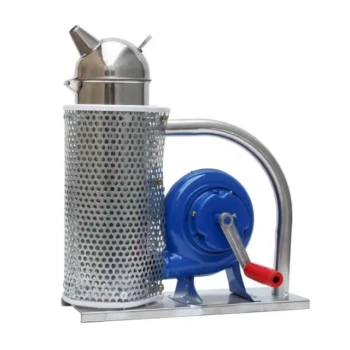
The operational mechanism of a beekeeping smoker functions primarily through chemical masking. By generating cool smoke, the device interrupts the colony's olfactory communication system, specifically neutralizing the alarm pheromones released by guard bees. This disruption prevents the spread of defensive signals throughout the hive, maintaining a calm environment for inspections and maintenance.
The smoker acts as a biological "jammer," severing the chemical link between a guard bee's alarm signal and the colony's defensive response, while simultaneously triggering a feeding instinct that further reduces aggression.
The Biological Impact on the Colony
To understand how a smoker protects the beekeeper, one must understand how it alters the behavior of the bees on a physiological level.
Interruption of Chemical Signaling
Honeybees rely heavily on pheromones to communicate threats. When a guard bee senses danger, she releases an alarm pheromone to recruit other bees for defense.
The smoke introduces particulate matter into the hive that physically masks these chemical scents. Because the worker bees cannot smell the alarm pheromones, the chain reaction of aggression is effectively broken before it can escalate.
Triggering the Survival Instinct
Beyond masking scents, the smoke simulates the presence of a nearby forest fire. This triggers an ancient, evolutionary survival instinct within the colony.
Sensing potential displacement, the bees instinctively begin to gorge on honey stores to maximize their energy reserves in case they need to abandon the hive. This feeding response distracts them from the intruder and focuses their attention on resource preservation.
Physical Limitation of Agitation
The consumption of honey has a secondary physical effect on the worker bees. As their abdomens become distended with food, they become physically lethargic.
Furthermore, a distended abdomen makes it mechanically difficult for a bee to curl its body to deploy its stinger. This renders the colony not only less motivated to sting but also physically less capable of doing so.
Operational Prerequisites
For the smoker to function as a safety tool rather than a hazard, specific operational conditions must be met regarding the nature of the smoke.
The Necessity of "Cool" Smoke
The smoke generated must be "cool" rather than hot. Hot smoke can singe the bees' wings or bodies, triggering panic rather than calmness.
Cool smoke is achieved by ensuring the fuel in the smoker smolders slowly rather than burning with an open flame. This dense, cool white smoke is the standard for professional colony management.
Creating a Safe Operational Window
By combining pheromone masking with the feeding distraction, the smoker creates a temporary window of docility. This allows for complex tasks such as frame extraction, artificial colony splitting, and pest inspection (such as checking for wax moths or beetles).
Without this intervention, the natural defensive behavior of the colony would make these standard maintenance tasks dangerous for the operator and stressful for the bees.
Understanding the Trade-offs
While the smoker is indispensable, it is not a tool to be used without discretion. Misuse can lead to diminishing returns or negative outcomes.
The Risk of Over-Smoking
Excessive smoke does not increase calmness; conversely, it can agitate the colony or cause the bees to run excessively across the combs. Over-smoking can also taint the flavor of the honey or wax if applied too heavily during harvest.
The Risk of Under-Smoking
Insufficient smoke fails to mask the initial alarm pheromones. Once the alarm spreads and the colony enters a full defensive state, applying smoke retroactively is significantly less effective than using it preventatively.
Making the Right Choice for Your Goal
Effective use of a smoker depends on aligning your technique with your specific objective for the hive visit.
- If your primary focus is Personnel Safety: Apply puffs of smoke at the entrance before opening the hive to neutralize guard bee pheromones immediately.
- If your primary focus is Colony Health: Ensure the smoke is cool and white to avoid singeing bees or contaminating open nectar cells during inspection.
- If your primary focus is Detailed Inspection: Use smoke periodically to maintain the pheromone blockade, allowing you to work slowly without triggering a defensive resurgence.
Mastering the smoker is not just about lighting a fire; it is about controlling the chemical narrative within the hive to ensure safety for both the keeper and the colony.
Summary Table:
| Mechanism Component | Action Taken | Biological Result |
|---|---|---|
| Pheromone Masking | Neutralizes alarm scents | Interrupts defensive communication |
| Survival Instinct | Simulates forest fire threat | Triggers honey gorging behavior |
| Physical Effect | Abdominal distension | Reduces stinging capability and movement |
| Smoke Quality | Dense, cool white smoke | Prevents physical injury to the colony |
Elevate Your Apiary Operations with HONESTBEE
At HONESTBEE, we understand that precision tools are the backbone of a successful beekeeping enterprise. We cater to commercial apiaries and global distributors by providing a comprehensive wholesale range of high-performance beekeeping equipment. From advanced hive-making and honey-filling machinery to professional-grade smokers and essential consumables, our products are designed to optimize your efficiency and hive safety.
Ready to scale your production? Contact us today to discover how our premium hardware and honey-themed cultural merchandise can add value to your business.
References
- Deborah Ruth Amulen, Paul Cross. The buzz about bees and poverty alleviation: Identifying drivers and barriers of beekeeping in sub-Saharan Africa. DOI: 10.1371/journal.pone.0172820
This article is also based on technical information from HonestBee Knowledge Base .
Related Products
- Stainless Steel Honey Bee Smoker Hive and Honeycomb Smoker for Beekeeping
- Miniature Stainless Steel Bee Smoker for Beekeeping
- Professional Bee Smoker with Elongated Spout and Durable Bellows for Beekeeping
- Electric Bee Smoker European Style Bee Hive Smoker for Beekeeping
- Galvanized Beekeeping Smoker for Honey Bee and Apiculture
People Also Ask
- What are bee smokers made out of? Choose the Right Material for Your Apiary
- Why is a stainless steel bee smoker considered indispensable? Master Hive Management with Cool Smoke Technology
- What type of bee smoker is recommended for a beginner? Top Picks for Easy Hive Management
- What is the best material for a bee smoker? Choose the Right Fuel for a Calm Hive
- How do bee smokers and colored light sources work together to assist in night-time honey harvesting? Expert Strategies