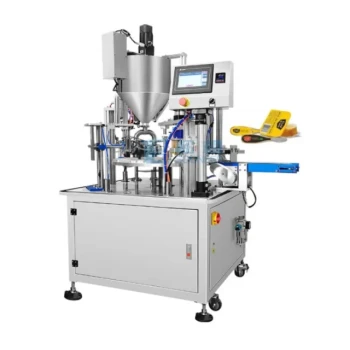
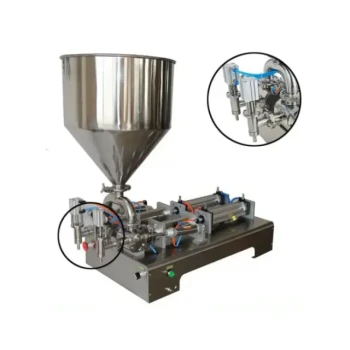
The primary distinction lies in operational velocity and standardization. Automated honey filling fundamentally outperforms manual processes regarding speed, efficiency, and consistency. While manual filling relies on human labor and is subject to natural variability, automated lines utilize precision technology to significantly accelerate production throughput while minimizing the potential for human error.
Automated systems do more than just speed up the process; they transform honey packaging from a labor-intensive task into a precise, hygienic science that protects the product's biological integrity.
The Mechanics of Consistency and Speed
Precision Volumetric Control
Manual filling often results in variability between containers. In contrast, industrial-grade machines utilize high-precision volumetric control. This ensures that the net weight of every honey container meets strict industry standards, enhancing the professionalism and marketability of the product.
Throughput Capabilities
Manual filling is inherently slow and limited by physical stamina. Automated machines can fill hundreds of containers per hour. This capability allows commercial apiaries to scale operations without a linear increase in headcount.
Reducing Human Error
Manual processes require constant attention and physical adjustments for every bottle. Automated lines eliminate this variable. Once programmed, they deliver the exact same fill level repeatedly, removing the inconsistencies associated with manual handling.
Hygiene and Product Integrity
Closed-Loop Environments
Manual filling often exposes honey to the open environment and human contact, increasing the risk of secondary contamination. Automated machines generally operate in closed environments. This effectively isolates the product from external pollution, ensuring high hygiene standards.
Vacuum Anti-Drip Systems
Sticky residues and waste are common issues with manual pouring. Advanced automation employs vacuum anti-drip systems. These mechanisms cut off the flow precisely, preventing waste and ensuring the exterior of the packaging remains clean.
Preserving Enzymatic Activity
Honey contains sensitive enzymes and active biological components. Manual handling can inadvertently involve excessive heating or friction, which degrades these properties. Automated machines use precise temperature and flow control systems to prevent degradation, maintaining the natural healing properties required for medical-grade honey.
Understanding the Trade-offs
Labor vs. Capital Costs
Manual filling incurs high long-term labor costs and is dependent on workforce availability. However, the initial capital requirement is low. Automated systems reverse this dynamic: they require a significant upfront investment and occasional maintenance, but they drastically reduce ongoing labor expenses.
Flexibility and Setup
Manual filling is highly flexible; a human can switch bottle sizes instantly. Automated machines allow for different bottle sizes, but they require reprogramming and mechanical adjustments. This makes automation less agile for operations that switch container types frequently for very small batches.
Making the Right Choice for Your Operation
For producers deciding between these methods, the choice often depends on volume goals and quality strictness.
- If your primary focus is small-batch or artisanal sales: Manual filling offers a low barrier to entry and maximum flexibility for changing container styles frequently.
- If your primary focus is commercial scale or medical-grade honey: Automation is essential to guarantee the hygiene, weight consistency, and enzyme preservation required for regulatory compliance and mass market distribution.
Ultimately, while manual filling is sufficient for hobbyists, automation is the critical bridge to professional reliability and market stability.
Summary Table:
| Feature | Manual Honey Filling | Automated Honey Filling |
|---|---|---|
| Production Speed | Low (Limited by human labor) | High (Hundreds of containers per hour) |
| Fill Precision | Variable (Human error possible) | High-Precision (Volumetric control) |
| Hygiene Level | Risk of environmental exposure | Superior (Closed-loop environment) |
| Product Integrity | Risk of enzyme degradation | Optimized (Precise temperature/flow) |
| Cost Structure | High recurring labor costs | High initial investment; low labor cost |
| Ideal For | Small-batch artisanal producers | Commercial apiaries & distributors |
Transform Your Honey Production with HONESTBEE
Transitioning from manual to automated processes is the key to scaling your commercial apiary. HONESTBEE specializes in empowering beekeeping distributors and commercial operations with cutting-edge machinery designed for professional-grade reliability.
Our Value to Your Business:
- Comprehensive Equipment Range: From high-speed honey-filling machines to specialized hive-making hardware.
- Industry Consumables: A one-stop shop for all essential beekeeping tools and honey-themed merchandise.
- Scalable Solutions: Expertly engineered systems that ensure product hygiene and enzymatic integrity for medical-grade standards.
Ready to eliminate waste and maximize your throughput? Contact our expert team today to find the perfect machinery for your operation!
Related Products
- Precision Durable Efficient HONESTBEE Rotary Honey Filling Machine
- Semi Automatic Small Honey Bottle Filling Machine Honey Filler
- Economy Small Honey Filling Machine Honey Bottle Filler Packaging Machine
- Fully Automatic Honey Filling Packaging Machine for Processing Line
- Commercial Rotary Honey Filling Machine for Production
People Also Ask
- How do high-precision honey filling machines ensure quality? Optimize Your Commercial Production with HONESTBEE
- What are the common types of bottling machines used for honey? Choosing the Right Solution for Your Apiary
- What quality control role does professional honey filling equipment perform? Ensure Consistency and Product Stability
- What is a key feature of the new generation of the honey filling machine? The Advanced Electronic Control Unit
- How do honey filling and processing machines aid native bee product conservation? Boost Value with HONESTBEE Technology