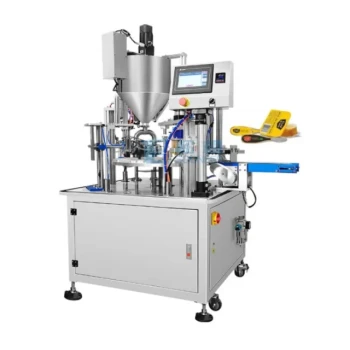
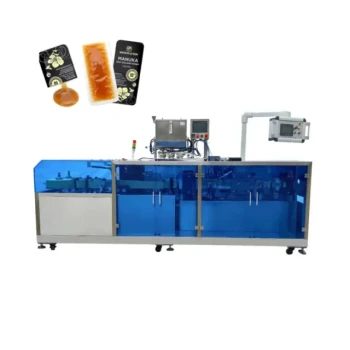
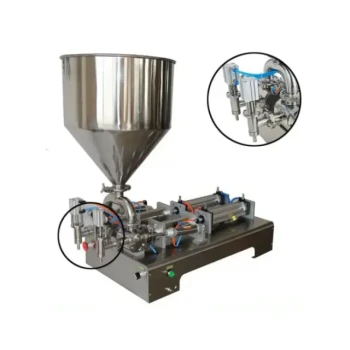
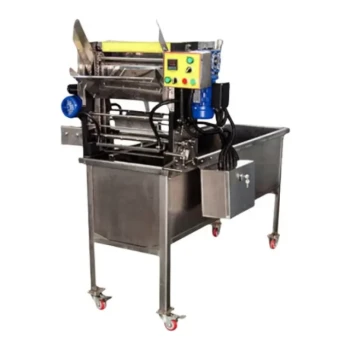
Automated honey-filling machinery acts as a critical defensive barrier against Small Hive Beetle (SHB) contamination by drastically reducing processing time and environmental exposure. By accelerating the transition from extraction to sealing in a closed-loop system, these machines prevent the specific fermentation and spoilage caused by beetle larvae waste before it can destroy the honey’s commercial value.
The core threat of the Small Hive Beetle is not just physical presence, but the yeast-laden waste excreted by larvae that causes rapid fermentation. Automated machinery neutralizes this threat by compressing the processing timeline, ensuring honey is filtered and sealed before biological spoilage can occur.
The Mechanism of Spoilage
The Biological Time Bomb
The Small Hive Beetle poses a unique threat compared to other pests. The larvae excrete waste that contains specific yeasts capable of triggering rapid fermentation in honey.
Irreversible Quality Loss
Once this fermentation process begins, the honey develops foul odors and a spoiled taste. This chemical change destroys the sensory quality of the product, rendering it unfit for commercial sale.
The Vulnerability Window
Honey is most susceptible immediately after harvesting. Once honey-filled supers are removed from the hive, they lose the protection of the bee colony, leaving them exposed to infestation if not processed immediately.
How Automation Preserves Quality
Speed as a Sanitation Factor
Time is the most critical variable in preventing SHB damage. Automated filling machinery significantly shortens the duration honey is exposed to the external environment.
Rapid Processing Cycles
By enabling high-speed extraction and filling, automation ensures the product is stabilized quickly. This prevents beetle larvae from having enough time to hatch or excrete significant amounts of waste into the harvested batch.
Closed-Loop Protection
Automated systems often utilize a closed-loop design. This isolates the honey from the open air during the filling process, physically preventing adult beetles or wandering larvae from entering the flow.
Rigorous Filtration
Modern automated machinery includes integrated filtration systems. These filters mechanically remove particulate matter, including any larvae or debris that may have entered during harvest, ensuring the final product meets strict food safety standards.
Understanding the Trade-offs
Machinery Cannot Fix Pre-Harvest Damage
It is vital to understand that automated filling is a preservation method, not a remediation method. If the honey has already fermented within the hive due to severe infestation, the machinery cannot reverse the chemical spoilage.
The Requirement for Strict Hygiene
While automation reduces external risks, the machinery itself requires rigorous cleaning. If beetle debris or wax accumulates within the machine's components, the equipment itself can become a source of cross-contamination.
Making the Right Choice for Your Goal
- If your primary focus is Food Safety Compliance: Prioritize machinery with closed-loop systems and multi-stage filtration to ensure the absolute removal of biological contaminants.
- If your primary focus is Economic Efficiency: Prioritize high-throughput machinery that minimizes the time gap between harvest and sealing to prevent volume loss due to fermentation.
Automated filling technology is not merely a tool for speed; it is a necessary sanitation control that secures the biological stability of your honey.
Summary Table:
| Feature | How it Combats Small Hive Beetles | Primary Benefit |
|---|---|---|
| Processing Speed | Shortens the window for larvae to excrete fermentation-causing waste | Prevents biological spoilage |
| Closed-Loop Design | Physically isolates honey from the environment during filling | Blocks entry of adult beetles/larvae |
| Integrated Filtration | Mechanically removes debris and particulate matter | Ensures food safety compliance |
| Rapid Sealing | Instantly stabilizes the product post-extraction | Maintains sensory quality and flavor |
Secure Your Apiary’s Commercial Value with HONESTBEE
Don't let Small Hive Beetle contamination ruin your harvest's biological stability. HONESTBEE empowers commercial apiaries and distributors with advanced, high-speed automated machinery designed to maintain the highest food safety standards.
Our comprehensive wholesale range includes:
- High-Precision Honey-Filling Machines: Minimize exposure and prevent fermentation.
- Professional Hive-Making Equipment: Build secure, durable environments for your colonies.
- Beekeeping Tools & Consumables: A full spectrum of specialized hardware for industry-scale operations.
Ready to enhance your processing efficiency and safeguard your honey quality? Contact our experts today to discover how our tailor-made equipment solutions can protect your business and boost your throughput.
References
- Ahmet Onur Girişgin, Yunus Emre YÖRÜK. Bal Arısında Küçük Kovan Kurdu Aethina tumida’nın Hipotetik Çalışması: Türkiye’ye Girişi İçin Riskler ve Olasılıklar. DOI: 10.9775/kvfd.2022.28027
This article is also based on technical information from HonestBee Knowledge Base .
Related Products
- Fully Automatic Honey Filling Packaging Machine for Processing Line
- Automatic Honey Filling and Filtering Machine for Beekeeping Bottle Filling
- Precision Durable Efficient HONESTBEE Rotary Honey Filling Machine
- Precision Automated Packaging Turntable Honey Spoon Filling Sealing Packing Machine
- Semi Automatic Small Honey Bottle Filling Machine Honey Filler
People Also Ask
- Why are fully automatic honey filling and packaging lines essential? Boost Your Honey's Market Value and Quality
- What is a fully-automatic honey filler? Streamline Your Production with High-Precision Automation
- How do automated honey filling and packaging machines affect profitability? Boost Margins with HONESTBEE Technology
- How do automated honey filling and packaging machines contribute to the market value of honey products? Maximize Your ROI
- How do industrial-grade automated honey filling and packaging machines mitigate the risk of physical contamination?