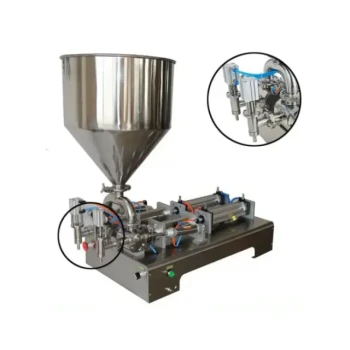
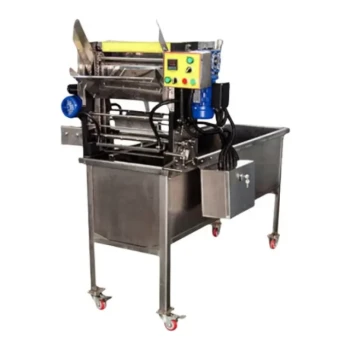
Automated honey filling equipment offers a distinct competitive advantage by delivering superior dosing precision and maintaining strict hygiene standards that manual methods cannot replicate. By automating the transfer of honey from storage to packaging, these systems significantly reduce labor costs, minimize product loss, and accelerate production workflows to meet commercial demands.
Core Takeaway While manual filling may suffice for hobbyists, automated equipment provides the technical foundation necessary for commercial scaling. It bridges the gap between artisanal production and mass retail by ensuring metrological consistency, hygiene compliance, and standardized packaging aesthetics.
Operational Efficiency and Cost Reduction
Minimizing Product Loss
Manual transfer of honey often results in spills, drips, and overfilling, which cumulatively represents significant financial waste.
Automated systems utilize precise flow controls and vacuum anti-drip mechanisms to ensure honey goes into the jar, not onto the production floor. This reduction in material waste directly improves the profitability of the operation.
Reducing Labor Dependencies
Manual filling is a time-intensive process that becomes a bottleneck as demand increases.
High-efficiency automated workflows dramatically reduce the time required to package large volumes of honey. This allows producers to lower labor costs or reallocate staff to higher-value tasks, rather than repetitive filling operations.
Hygiene and Quality Assurance
Preventing Secondary Contamination
The primary risk in honey packaging is the introduction of contaminants during the transfer phase.
Industrial-grade filling lines operate within enclosed environments designed to block external microbial contamination. This effectively safeguards the product from the hygiene risks inherent in human handling and open-air environments.
Preserving Sensory Qualities
Certain honey varietals, such as chestnut honey, possess high viscosity and specific physical properties that are difficult to handle manually without degrading quality.
Automated machines are engineered to handle these viscosities while reducing air incorporation during bottling. This preserves the honey's natural transparency and sensory profile, ensuring the final product looks and tastes as intended.
Extending Shelf Life
Standardized hygiene is not just about safety; it is about product longevity.
By ensuring a sterile packaging process, automated equipment helps extend the shelf life of honey products. This reliability is essential for maintaining brand reputation over time.
Market Access and Compliance
Meeting Metrological Standards
For commercial trade, "close enough" is not acceptable regarding net weight.
High-precision automated equipment ensures that every packaging unit is highly consistent, fulfilling strict international trade metrological compliance. This prevents legal issues and ensures customers receive exactly what is advertised.
Unlocking Retail Supply Chains
Supermarkets and large-scale retailers require uniform, professional packaging that manual labeling and filling often fail to provide.
Automated lines ensure the standardization and aesthetic appeal required to enter modern logistics networks. For beekeepers aiming to scale, this technology provides the necessary passport to transition from direct, short-chain sales to commercial retail shelves.
Understanding the Trade-offs
The Necessity of Scale
While automation offers immense benefits, it represents a shift in operational focus.
These machines are designed for producers aiming to scale operations significantly. For very small, boutique apiaries selling exclusively direct-to-consumer, the investment in industrial-grade infrastructure may outpace the immediate production volume needs.
Technical Implementation
Moving to automation requires establishing a "technical foundation."
Unlike manual filling, which requires little setup, automated lines require calibration and a standardized process to function correctly. Producers must be prepared to manage a more complex, albeit more efficient, production environment.
Making the Right Choice for Your Goal
To determine if automation is the right step for your facility, consider your immediate business objectives:
- If your primary focus is entering supermarkets: You must adopt automation to guarantee the metrological consistency and standardized packaging aesthetics that large retailers demand.
- If your primary focus is product quality and hygiene: Automation is the best path to prevent secondary contamination and minimize air bubbles in viscous varieties like chestnut honey.
- If your primary focus is cost efficiency: Automation is the solution for reducing labor overhead and eliminating product loss caused by manual drips and overfilling.
Embracing automated filling is not just a purchase of equipment; it is an investment in the consistency required to build a professional commercial brand.
Summary Table:
| Feature | Manual Filling | Automated Equipment |
|---|---|---|
| Dosing Precision | Low (prone to overfill/waste) | High (metrological compliance) |
| Hygiene Control | High contamination risk | Enclosed, sterile environment |
| Labor Intensity | High (time-consuming) | Low (autonomous operation) |
| Product Integrity | Risk of air bubbles/oxidation | Preserves transparency & profile |
| Market Readiness | Local/Artisanal only | Ready for Retail & Supermarkets |
Scale Your Apiary with HONESTBEE Precision Equipment
At HONESTBEE, we understand the unique challenges faced by commercial apiaries and distributors. Transitioning from manual to automated workflows is the key to unlocking global retail markets and maximizing your profitability.
Our value to your business includes:
- Comprehensive Solutions: From high-precision honey-filling and hive-making machines to essential beekeeping tools.
- Industry Expertise: We supply the full spectrum of machinery and consumables designed for high-volume commercial production.
- Global Standards: Our equipment ensures your honey meets strict international metrological and hygiene compliance.
Ready to transform your production line and eliminate product waste? Contact HONESTBEE today to discuss our wholesale offerings and industrial hardware tailored to your scaling needs.
References
- R.А. Mannapova, Zariya Zalilova. CALCULATION OF THE COST OF BIOLOGICAL ACTIVES BEEKEEPING PRODUCTS AS AN INSTRUMENT OF CONTROL. DOI: 10.17513/fr.40308
This article is also based on technical information from HonestBee Knowledge Base .
Related Products
- Fully Automatic Honey Filling Packaging Machine for Processing Line
- Automatic Honey Filling and Filtering Machine for Beekeeping Bottle Filling
- Precision Durable Efficient HONESTBEE Rotary Honey Filling Machine
- Semi Automatic Small Honey Bottle Filling Machine Honey Filler
- Precision Automated Packaging Turntable Honey Spoon Filling Sealing Packing Machine
People Also Ask
- Why are fully automatic honey filling and packaging lines essential? Boost Your Honey's Market Value and Quality
- What is a fully-automatic honey filler? Streamline Your Production with High-Precision Automation
- How do automated honey filling and packaging machines affect profitability? Boost Margins with HONESTBEE Technology
- How do automated honey filling and packaging machines contribute to the market value of honey products? Maximize Your ROI
- How do industrial-grade automated honey filling and packaging machines mitigate the risk of physical contamination?