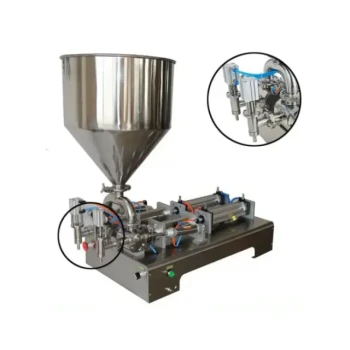
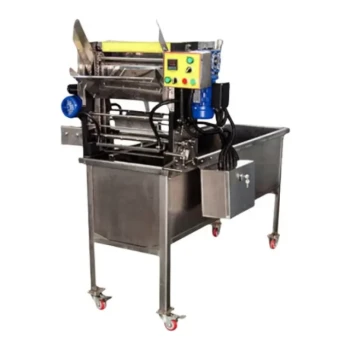
Automated honey-filling machines fundamentally lower production costs by directly targeting labor inefficiencies and maximizing throughput via high-speed, industrial-grade technology. By replacing manual handling with precision controls, apiaries and distributors can achieve large-scale standardization, drastically reducing the unit cost per jar to ensure price competitiveness in international markets.
By shifting from manual to automated processing, producers unlock the ability to scale volume without a linear increase in overhead. The core economic advantage lies not just in speed, but in the precision that prevents material waste and enables entry into higher-value global markets.
The Mechanics of Direct Cost Reduction
Reducing Labor Dependency
The most immediate impact of automation is the significant reduction in labor costs during post-harvest processing.
Manual filling is time-consuming and limits total output. Automated lines utilize high-speed packaging technology to handle volumes that would require a massive manual workforce, allowing producers to reallocate human resources to higher-value tasks.
Eliminating Material Waste
Manual filling often leads to "giveaway"—the accidental overfilling of containers—or product loss due to dripping.
High-precision honey filling machines address these quantitative errors with exact metering controls. By ensuring an accurate net weight for every container and eliminating drips, producers stop giving away free product and maximize the revenue generated from their raw supply.
Increasing Throughput and Efficiency
To compete economically, low productivity is a major barrier.
Industrial-grade filling lines facilitate the rapid transfer of honey from bulk storage to retail containers. This high-volume processing capability lowers the unit cost of production, making the final product viable for price-sensitive international markets.
Enhancing Value and Preventing Loss
Extending Shelf Life to Reduce Spoilage
Economic loss also occurs when product spoils or crystallizes prematurely.
Automated systems often incorporate vacuum or nitrogen-flush sealing. This creates a closed environment that prevents oxygen and moisture ingress, slowing crystallization and extending shelf life. Longer shelf life reduces inventory waste and allows for longer distribution cycles.
Transitioning to High-Value Markets
Profitability is not just about cutting costs; it is about increasing margins.
These machines enable the transition from selling low-margin bulk wholesale honey to differentiated, branded retail products. The ability to meet strict hygiene standards and apply consistent labeling allows enterprises to enter higher-value consumer markets and meet requirements for organic or safety certifications.
Understanding the Trade-offs
Operational Complexity vs. Simplicity
While automation reduces manual labor, it introduces a requirement for technical oversight.
Operators must be trained to manage high-precision controls and maintain the machinery. The shift is from managing a large workforce to managing complex, industrial-grade assets.
Standardization vs. Flexibility
Automated lines excel at standardized production.
To maximize the economic benefit, producers generally need to commit to specific container sizes and packaging standards. Frequent changes in packaging types can reduce the efficiency gains offered by high-speed continuous processing.
Making the Right Choice for Your Goal
To determine if this technology aligns with your specific production targets, consider the following:
- If your primary focus is lowering unit costs: Implement high-speed automated lines to maximize throughput and minimize the labor cost per jar for large-scale orders.
- If your primary focus is product consistency: Utilize machines with high-precision metering to eliminate weight variances and ensure uniform product appearance for retail shelves.
- If your primary focus is market expansion: Leverage the sterile, closed-environment packaging capabilities to meet international food safety standards and export requirements.
The implementation of automated filling is the decisive step that transforms a local apiary operation into a scalable, globally competitive manufacturing enterprise.
Summary Table:
| Feature | Impact on Production Costs | Economic Benefit |
|---|---|---|
| Labor Automation | Replaces manual handling with high-speed tech | Drastic reduction in labor overhead |
| Precision Metering | Eliminates overfilling and product "giveaway" | Maximizes revenue from raw supply |
| High-Volume Throughput | Lowers the unit cost per container | Price competitiveness in global markets |
| Vacuum/Sealing Tech | Extends shelf life and prevents spoilage | Reduces inventory waste and loss |
| Standardization | Ensures consistent hygiene and labeling | Enables entry into high-margin retail |
Transform Your Apiary into a Globally Competitive Enterprise
Rising production costs shouldn't limit your growth. At HONESTBEE, we specialize in empowering commercial apiaries and distributors with industrial-grade automation solutions designed to maximize your margins.
From high-precision honey-filling machines and specialized hive-making hardware to a full spectrum of beekeeping tools and consumables, our comprehensive wholesale offering is built to scale your operation. Whether you are looking to lower unit costs or expand into international retail markets, our team provides the machinery and expertise to help you succeed.
Ready to optimize your production? Contact HONESTBEE today to discover how our professional equipment can revolutionize your honey business!
References
- Burcu Erdal, Tolga Tipi. Time Series Forecasting of Honey Production in Turkey. DOI: 10.31590/ejosat.1066665
This article is also based on technical information from HonestBee Knowledge Base .
Related Products
- Fully Automatic Honey Filling Packaging Machine for Processing Line
- Automatic Honey Filling and Filtering Machine for Beekeeping Bottle Filling
- Precision Durable Efficient HONESTBEE Rotary Honey Filling Machine
- Precision Automated Packaging Turntable Honey Spoon Filling Sealing Packing Machine
- Semi Automatic Small Honey Bottle Filling Machine Honey Filler
People Also Ask
- Why are fully automatic honey filling and packaging lines essential? Boost Your Honey's Market Value and Quality
- What is a fully-automatic honey filler? Streamline Your Production with High-Precision Automation
- How do automated honey filling and packaging machines affect profitability? Boost Margins with HONESTBEE Technology
- How do automated honey filling and packaging machines contribute to the market value of honey products? Maximize Your ROI
- How do industrial-grade automated honey filling and packaging machines mitigate the risk of physical contamination?