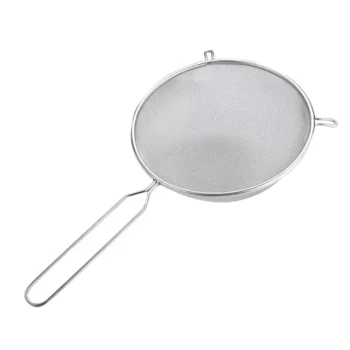
The primary function of a 0.5 mm mesh sieve in honey sample pretreatment is mechanical purification. Specifically, it is utilized to separate visible solid contaminants—such as beeswax particles, bee debris, and honeycomb fragments—from the liquid honey. This filtration is a prerequisite for accurate physical and chemical analysis, ensuring that the sample is homogenous without altering its fundamental composition.
The 0.5 mm aperture strikes a critical balance: it removes macroscopic debris that would interfere with analytical instruments, yet remains coarse enough to allow microscopic elements like pollen to pass through, preserving the honey's botanical signature.
The Role of Filtration in Analytical Accuracy
The decision to use a 0.5 mm sieve is not arbitrary; it is directly tied to the sensitivity of the instruments used in subsequent testing.
Preventing Optical Interference
Many standard honey tests rely on optical refractive measurements to determine moisture content and sugar concentration.
Particulate matter suspended in the sample can scatter light beams. This scattering distorts refractive index readings, leading to erroneous data regarding the honey's quality.
Ensuring Electrochemical Consistency
Honey analysis often involves electrochemical testing to assess acidity (pH) and electrical conductivity.
Solid impurities act as insulators or create irregular contact surfaces on sensor electrodes. By removing these solids, the sieve ensures the sensors interact solely with the liquid honey matrix, yielding precise results.
Optimizing Sample Integrity
Beyond protecting instruments, the 0.5 mm sieve ensures the sample remains representative of the original product while being clean enough for study.
Removal of Macroscopic Contaminants
Raw honey naturally contains "hive debris." This includes wax caps, fragments of the comb structure, and biological detritus.
The 0.5 mm mesh acts as a physical barrier to these coarse materials. It ensures that the weight and volume of the sample being analyzed consist of actual honey, not foreign matter.
Preservation of Microscopic Elements
Crucially, a 0.5 mm aperture is large enough to allow pollen grains to pass through into the filtrate.
This is essential for melissopalynology (the study of pollen in honey). It allows the analyst to remove the "noise" (wax and debris) while keeping the "signal" (pollen) intact for microscopic classification and counting.
Understanding the Trade-offs
While the 0.5 mm sieve is the standard for pretreatment, improper application can compromise the sample.
Viscosity and Flow Rate
Honey is highly viscous, which can make gravity filtration through a fine mesh slow.
There is often a temptation to force the honey through the mesh. However, applying excessive pressure can force soft deformable particles (like wax) through the mesh, defeating the purpose of filtration.
The Temperature Risk
To combat viscosity, analysts may heat the honey to improve flow through the sieve.
This presents a major risk. Excessive heat destroys heat-sensitive enzymes such as diastase. To maintain biological activity, "cold filtration" is preferred, even if it extends the preparation time.
Material Contamination
The sieve itself must be chemically inert, typically stainless steel.
Using reactive metals or plastics can introduce chemical contaminants into the sample. This would skew chemical indicator analysis, rendering the purification step counterproductive.
Making the Right Choice for Your Goal
The utility of the 0.5 mm sieve depends heavily on the specific parameter you intend to measure.
- If your primary focus is physicochemical analysis (Refraction/pH): Ensure the filtration is thorough to prevent solid particles from drifting across optical paths or fouling electrodes.
- If your primary focus is Pollen Analysis: Use the 0.5 mm sieve to remove obscuring debris, but do not use finer filters that might strip the pollen from the sample.
- If your primary focus is Enzyme/Nutritional Analysis: Prioritize the "cold filtration" method during sieving to prevent thermal degradation of biological components.
The 0.5 mm sieve is the gatekeeper of analytical validity, ensuring your data reflects the chemistry of the honey rather than the debris of the hive.
Summary Table:
| Function Category | Purpose in Pretreatment | Impact on Honey Quality |
|---|---|---|
| Mechanical Purification | Removes wax, bee debris, and comb fragments | Ensures sample homogeneity |
| Optical Accuracy | Prevents light scattering in refractometers | Precise moisture/sugar readings |
| Electrochemical Integrity | Protects electrodes from solid insulators | Consistent pH and conductivity data |
| Melissopalynology | Allows pollen grains to pass through mesh | Preserves botanical signature |
| Biological Preservation | Enables 'cold filtration' at 0.5 mm | Protects heat-sensitive enzymes |
Elevate Your Honey Processing with HONESTBEE Professional Equipment
At HONESTBEE, we understand that precision in the lab starts with quality in the field and the factory. As a premier partner for commercial apiaries and distributors, we provide a comprehensive wholesale range of beekeeping tools, advanced honey-filling machinery, and essential industry consumables. Whether you are looking for specialized hardware to manufacture hives or industrial-grade filtration solutions to maintain sample integrity, our portfolio is designed to enhance your operational efficiency.
Ready to scale your apiary or distribution business? Contact us today to explore our full spectrum of honey-themed cultural merchandise and professional-grade beekeeping equipment!
References
- Banshanborbah Kharkamni. Physicochemical properties of Honey from Traditional Beekeepers of Sohra. DOI: 10.17485/ijst/v14i25.1055
This article is also based on technical information from HonestBee Knowledge Base .
Related Products
- Professional Stainless Steel Honey Filter with Support Handle
- 0.5T Capacity Honey Dehumidifier Dryer with Vacuum Heating and Thickening Filtering Machine
- Stainless Steel Triangle Support Honey Strainer and Filters
- Stainless Steel Double Layer Honey Strainer Sieve Filters
- Conical Nylon Honey Strainer Filter Bag for Beekeeping and Honey Filtration
People Also Ask
- Why are stainless steel filters essential during the initial purification phase of honey processing? Ensure Purity
- What are the benefits of using a high-quality honey filter? Elevate Purity and Preserve Natural Flavor
- What is the primary purpose of honey filters? Achieve Professional Clarity & Pure Honey Quality
- What micron filter should I use for honey? Choose the Right Filter for Sales or Competitions
- Why do people filter honey? For Clarity, Stability, and Consumer Appeal