The primary function of Artificial Queen Cells is to act as a biological trigger that induces nurse bees to secrete royal jelly on a mass scale. These cells are specialized consumables that simulate the natural environment of a developing queen, prompting the colony to fill the cell bases with large quantities of jelly to feed the transferred larvae.
By simulating the natural conditions required for queen rearing, these cells effectively "hack" the hive's instinctual behavior. They transform the secretion of royal jelly from a rare, colony-survival event into a predictable, standardized industrial process.
The Biological Trigger Mechanism
Simulating the Queen Environment
In a natural hive, bees only rear queens—and thus secrete massive amounts of jelly—under specific survival conditions. Artificial queen cells (or cups) mimic the physical structure of natural queen cells.
Inducing the Nursing Instinct
When a worker larva is transferred (grafted) into this artificial cell, nurse bees perceive it as a future queen. This triggers an aggressive feeding instinct. The bees work to fill the cup with royal jelly to support the larva's rapid growth.
Commercial Viability and Control
Establishing Cycle Controllability
The use of artificial cells allows producers to dictate the production schedule. According to industry standards, the harvest cycle is typically set at exactly 72 hours after the larvae are transferred.
Standardization of Harvest
Unlike natural combs, which are irregular, artificial cells provide a uniform shape and size. This consistency allows for systematic, and often semi-mechanical, extraction of the jelly.
Ensuring Biological Consistency
By using a standardized container, beekeepers can manage the succession of the colony. This ensures the hive remains in a state conducive to heavy production without the chaos of natural swarming or accidental queen emergence.
Material Design and Hygiene
The Shift to Food-Grade Plastic
While wax cups mimic nature closely, modern production often utilizes food-grade plastic. These cups serve as both the housing for the larva and the collection pool for the jelly.
Contamination Prevention
Plastic cups prevent the royal jelly from absorbing impurities found in reused wax. They also facilitate the clean removal of the larva and the extraction of pure jelly, meeting food safety standards.
Understanding the Trade-offs
The Acceptance Barrier
Simply placing artificial cells in a hive does not guarantee production. If the colony detects that the cup is artificial or the larva is damaged, they will clean out the cell rather than fill it. High acceptance rates require precise simulation of the hive environment.
The Dependency on Grafting Precision
The system fails without precise input. The artificial cell is useless without a live larva of the exact right age. If the grafting process (moving the larva to the cup) is flawed, the bees will reject the cell entirely.
Making the Right Choice for Your Goal
To maximize the utility of artificial queen cells, align your usage with your specific production targets:
- If your primary focus is maximum yield: Adhere strictly to the 72-hour extraction cycle to harvest before the larva consumes the accumulated jelly.
- If your primary focus is product purity: Utilize food-grade plastic cell cups to ensure the jelly remains free of hive debris and wax contaminants.
- If your primary focus is scalability: Implement standardized frames holding multiple artificial cups to allow for batch processing and mechanical extraction.
The artificial queen cell is not just a container; it is the fundamental tool that bridges the gap between biological instinct and industrial efficiency.
Summary Table:
| Feature | Function in Production | Key Benefit |
|---|---|---|
| Biological Trigger | Mimics natural queen-rearing environment | Induces aggressive nursing instinct & jelly secretion |
| Standardization | Uniform size and shape (Food-grade plastic) | Enables semi-mechanical extraction & food safety |
| Cycle Control | 72-hour harvest window | Predictable, industrial-scale jelly collection |
| Hygiene Support | Prevents wax/debris contamination | Ensures product purity and consistency |
Elevate Your Commercial Apiary with HONESTBEE
Are you looking to scale your royal jelly production or optimize your distribution chain? HONESTBEE specializes in serving commercial apiaries and distributors with high-performance beekeeping solutions. From food-grade artificial queen cells to advanced honey-filling machines and specialized hardware, we provide the full spectrum of tools needed for industrial success.
Our value to you:
- Wholesale Excellence: Comprehensive inventory of beekeeping tools and essential consumables.
- Industrial Efficiency: Specialized hive-making and processing machinery.
- Diverse Portfolio: Everything from hardware to honey-themed cultural merchandise.
Ready to transform your production efficiency? Contact HONESTBEE today to discuss our wholesale offerings and industrial equipment tailored to your business goals.
References
- E. Nafea, Sawsan El Mohandes. DETERMINATION AND IDENTIFICATION OF ORGANIC ACIDS IN THREE TYPES OF ROYAL JELLY. DOI: 10.21608/jppp.2011.86618
This article is also based on technical information from HonestBee Knowledge Base .
Related Products
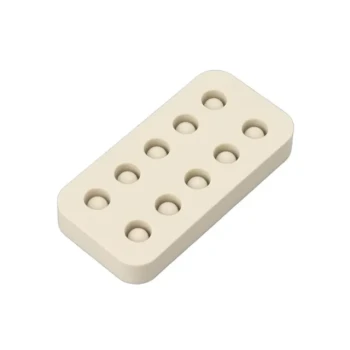
- 10-Cell Silicone Beeswax Bee Queen Cups Forming Mold
- JZBZ Type Wide Base Plastic Queen Cell Cups for Base Mounting and Queen Rearing
- Clear Black Plain Polystyrene Queen Bee Grafting Cell Cups No Lug for Bee Queen Cup
- JZBZ Push-In Queen Cell Cups for Beekeeping
- Brown Nicot Queen Cell Cups for Breeding Queen Bees Beekeeping
People Also Ask
- How do beeswax queen cell cups function? Optimize Queen Rearing with Biological Mimicry
- What is the biological function of beeswax queen cell cups? Boost Acceptance in Artificial Queen Rearing
- What role do specialized queen rearing tools play in developing mite-resistant honeybee stock? Master Genetic Selection
- What materials are used to make artificial queen cell cups for grafting? Beeswax vs. Plastic Guide
- What roles do specialized queen cell cups play in royal jelly production? Optimize Your Hive's Secretion and Yield