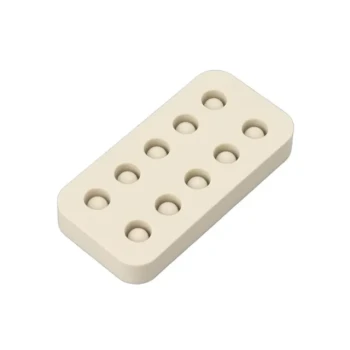
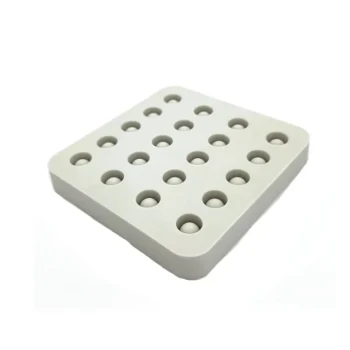
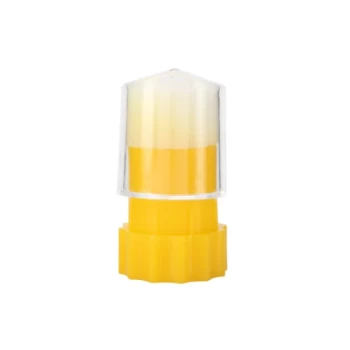
Artificial Queen Cups function as the primary interface between human intervention and biological instinct in commercial beekeeping. They are standardized vessels designed to simulate the structure of natural queen cells, holding 1-to-2-day-old worker larvae to compel nurse bees to secrete royal jelly. This targeted feeding process is the biological trigger that redirects an ordinary larva's development path to become a queen bee.
Core Takeaway Artificial Queen Cups act as a structural mimic that triggers the colony's natural rearing behaviors on a commercial scale. By providing a standardized physical environment for grafted larvae, they ensure consistent royal jelly deposition and facilitate the mass production of genetically selected queens.
The Mechanics of Queen Differentiation
Simulating the Natural Environment
In nature, bees construct dome-shaped wax cups when they require a new queen. Artificial cups are engineered to replicate this specific geometry and scale.
By mimicking these natural cell bases, the cups provide the necessary physical signal to the colony. This structure guides nurse bees to recognize the introduced larvae not as workers, but as potential queens requiring specialized care.
The Royal Jelly Trigger
The most critical function of the cup is to act as a foundation for nutrition. Once a larva is grafted into the cup, its structure dictates the volume of royal jelly nurse bees will deposit.
This intensive feeding is the mechanism of differentiation. The cup holds the larva in a bath of royal jelly, ensuring the "ordinary" worker larva undergoes the anatomical transformations necessary to become a fertile queen.
Orientation and Geometry
Artificial cups are designed to be mounted in a specific, downward-facing orientation. This aligns with the natural construction of queen cells, which differs significantly from the horizontal orientation of worker brood.
This orientation, combined with dimensions larger than standard cells, ensures the developing queen has ample physical space to grow. It prevents the physical stunting that would occur in a standard worker cell.
Commercial Standardization and Scalability
Enabling Mass Production
The primary reference highlights that these cups are essential for standardizing operations. Unlike natural cells, which are built sporadically and irregularly, artificial cups allow for batch processing.
Apiarists can graft hundreds of larvae simultaneously using these uniform containers. This uniformity allows for predictable scheduling of queen emergence, mating, and shipping.
Genetic Control and Propagation
These cups serve as the core tools for propagating superior maternal lines. They allow technicians to transfer larvae from specific, high-quality breeders into a neutral rearing environment.
This separates the genetic source of the queen from the nurse bees raising her. It ensures that the new generation of queens possesses stable, selected genetic traits rather than random characteristics.
Critical Considerations and Trade-offs
The Impact of Volume on Quality
Not all artificial cups yield equal results. The internal volume of the cup is a critical variable that directly impacts the quality of the resulting queen.
If a cup effectively simulates the structure but lacks adequate volume, it limits the storage capacity for royal jelly. This can lead to undernourished larvae and queens with lower reproductive vitality.
Acceptance Rates
While the cups mimic nature, they are essentially foreign objects introduced to the hive. Success relies on the nurse bees accepting the cup as a valid biological vessel.
If the material or scent of the cup is unfamiliar, bees may clean out the grafted larvae rather than feed them. High acceptance rates require cups that closely adhere to the biological expectations of the hive.
Optimizing Your Rearing Strategy
To maximize the effectiveness of artificial queen cups, align your usage with your specific production goals:
- If your primary focus is High-Volume Production: Prioritize standardized plastic cups that fit into automated or batch-grafting systems to streamline workflow and transport.
- If your primary focus is Queen Vitality: specific attention must be paid to the cup's internal volume to ensure maximum royal jelly storage for superior developmental quality.
- If your primary focus is Genetic Consistency: Use these cups to isolate larvae from selected breeder mothers, ensuring the physical rearing environment remains constant while genetics vary.
By acting as a standardized biological trigger, the artificial queen cup transforms the complex, variable process of natural swarming into a controlled, scalable production method.
Summary Table:
| Feature | Function in Queen Rearing | Impact on Production |
|---|---|---|
| Structural Mimicry | Replicates natural cell geometry | Triggers nurse bees to feed royal jelly |
| Standardized Volume | Holds grafting larvae and nutrients | Ensures consistent queen vitality and size |
| Downward Orientation | Aligns with natural biological growth | Prevents physical stunting of the queen |
| Batch Compatibility | Allows simultaneous grafting | Enables mass production and scheduling |
| Genetic Isolation | Transfers larvae from breeder lines | Ensures propagation of superior traits |
Elevate Your Apiary with HONESTBEE Professional Solutions
At HONESTBEE, we understand that commercial success in queen rearing depends on precision and reliability. As a leading provider for commercial apiaries and distributors, we offer a comprehensive wholesale range of high-performance beekeeping tools and machinery.
From standardized queen cups designed for maximum acceptance rates to advanced honey-filling machines and specialized hive-making equipment, our portfolio covers every essential industry consumable. Partner with us to access the hardware and cultural merchandise needed to scale your operations and ensure genetic consistency across your colonies.
Ready to optimize your production? Contact HONESTBEE today to discuss our wholesale offerings!
References
- Esmaeil Amiri, Olav Rueppell. Israeli Acute Paralysis Virus: Honey Bee Queen–Worker Interaction and Potential Virus Transmission Pathways. DOI: 10.3390/insects10010009
This article is also based on technical information from HonestBee Knowledge Base .
Related Products
- 10-Cell Silicone Beeswax Bee Queen Cups Forming Mold
- JZBZ Type Wide Base Plastic Queen Cell Cups for Base Mounting and Queen Rearing
- High-Efficiency 20-Cell Silicone Mold for Beeswax Bee Queen Cup Production
- Brown Nicot Queen Cell Cups for Breeding Queen Bees Beekeeping
- JZBZ Push-In Queen Cell Cups for Beekeeping
People Also Ask
- How do beeswax queen cell cups function? Optimize Queen Rearing with Biological Mimicry
- What is the biological function of beeswax queen cell cups? Boost Acceptance in Artificial Queen Rearing
- What role do specialized queen rearing tools play in developing mite-resistant honeybee stock? Master Genetic Selection
- What materials are used to make artificial queen cell cups for grafting? Beeswax vs. Plastic Guide
- What roles do specialized queen cell cups play in royal jelly production? Optimize Your Hive's Secretion and Yield