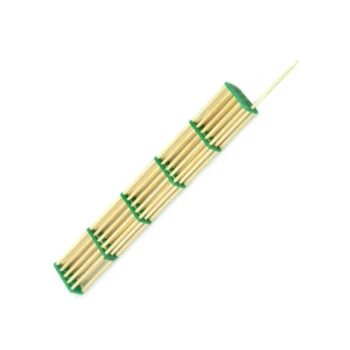
The primary purpose of a Varroa control box is to artificially induce a broodless period within the colony. By physically sequestering the queen inside the box, you effectively stop her from laying eggs, which eventually forces all Varroa mites out of capped brood cells and onto the bodies of adult worker bees.
By eliminating the capped brood—the mites' reproductive "safe harbor"—the control box synchronizes the colony so that 100% of the mite population is exposed and vulnerable to treatment.
The Mechanism of Induced Isolation
Restricting the Queen
The fundamental operation of the box is queen confinement.
By keeping the queen inside the box, she is physically prevented from accessing the comb to lay eggs.
Creating a Brood Gap
This restriction creates a specific window of time where no new larvae are developing.
Existing brood eventually emerges, leaving the hive completely free of capped cells.
Exposure of the Mite Population
Varroa mites reproduce inside capped brood cells, where they are protected from many external treatments.
With no capped brood available, the entire mite population is forced into the phoretic stage, meaning they must attach themselves to adult bees.
Enhancing Treatment Efficacy
Breaking the Reproductive Cycle
The control box acts as a mechanical interruption to the mites' biology.
By denying them a place to reproduce, you immediately halt the exponential growth of the mite population.
Maximizing Chemical Impact
Treatments are significantly more effective when mites are fully exposed.
According to technical protocols, this physical isolation significantly enhances the kill rate of agents such as lithium chloride or formic acid.
Understanding the Trade-offs
Disruption of Colony Growth
The most immediate downside is the temporary stagnation of the workforce.
Because the queen cannot lay, there is a generational gap in worker bees, which can impact honey production if timed incorrectly.
Management Intensity
Using a control box is not a passive solution.
It requires precise timing to release the queen before the colony population drops too low, demanding active monitoring by the beekeeper.
Making the Right Choice for Your Goal
To determine if a Varroa control box is the right strategy for your apiary, consider your current objectives:
- If your primary focus is maximizing treatment kill rates: Use the control box to force all mites onto adult bees before applying miticides like formic acid.
- If your primary focus is rapid colony expansion: Avoid the control box during peak flows, as the halt in egg-laying will temporarily stunt population growth.
Strategic timing of the broodless period is the key to balancing mite eradication with colony vitality.
Summary Table:
| Feature | Function & Benefit |
|---|---|
| Core Mechanism | Queen confinement to create an artificial brood gap. |
| Mite Impact | Forces all mites into the phoretic stage (on adult bees). |
| Treatment Synergy | Increases the kill rate of organic acids and chemical treatments. |
| Lifecycle Impact | Halts exponential mite reproduction by removing capped brood. |
| Beekeeper Control | Allows for synchronized, high-efficiency mite management. |
Scaling Your Apiary Operations with HONESTBEE
Are you looking to enhance your mite management efficiency or upgrade your commercial beekeeping infrastructure? HONESTBEE is the trusted partner for commercial apiaries and distributors worldwide.
We provide a comprehensive wholesale range of:
- Beekeeping Machinery: From hive-making to honey-filling machines.
- Management Tools: Specialized equipment like Varroa control boxes and high-precision hardware.
- Consumables & Merchandise: A full spectrum of essential industry supplies and honey-themed cultural goods.
Our solutions are designed to help you balance colony vitality with maximum productivity. Contact us today to discuss your bulk equipment needs and wholesale opportunities.
References
- Carolin Rein, Peter Rosenkranz. Lithium chloride treatments in free flying honey bee colonies: efficacy, brood survival, and within-colony distribution. DOI: 10.1007/s00436-023-08084-y
This article is also based on technical information from HonestBee Knowledge Base .
Related Products
- Professional Bamboo Queen Isolation Cage
- Compact Circular Bee Mite Treatment Dispenser
- Langstroth Screen Bottom Board for Beekeeping Wholesale
- Durable 12V Oxalic Acid Vaporizer for Varroa Mite Treatment Beehive Beekeeping Tool
- Adjustable Formic and Acetic Acid Dispenser for Bee Mite Treatment
People Also Ask
- Why are specialized queen bee cages used for the banking of mated queen bees? Maximize Commercial Apiary Storage Efficiency
- What is the mechanism of action for using temporary queen bee cages? Master Successful Queen Introduction
- How does the side ventilation design of a queen bee cage impact the safety of the queen during long-distance transport?
- What should you do if the queen is still in the cage and the worker bees have not accepted her? Protect Your Colony from Queen Rejection
- What technical precaution must be taken regarding the mesh or grill side of a queen bee cage? Ensure Queen Survival