The primary purpose of using small cell foundations measuring 5.1 mm or smaller is to implement a structural defense strategy against Varroa mites by simulating the natural architecture of wild honeybee nests. This physical alteration aims to shorten the development time of honeybee larvae, thereby narrowing the reproductive window available to the parasites and mechanically inhibiting their population expansion.
The use of 5.1 mm foundations is a physical intervention designed to mimic natural nest parameters. By reducing the size of the brood chamber, beekeepers aim to accelerate bee development and significantly reduce the number of Varroa mite eggs laid per cell.
The Mechanics of Structural Defense
Simulating Natural Parameters
Standard commercial foundations often encourage larger cell sizes, but wild honeybee nests naturally feature smaller dimensions.
Using foundations measuring 5.1 mm or smaller is intended to align the artificial hive environment with these natural wild structures.
Accelerating Larval Development
The theoretical basis for this strategy relies on the relationship between space and time.
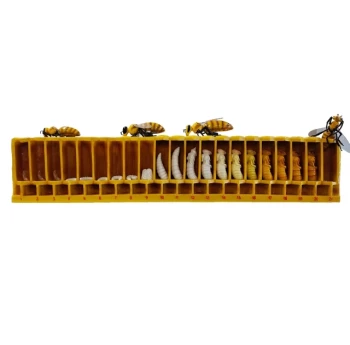
By providing a smaller brooding space, the physical development of the larva is accelerated. This effectively shortens the gestation period required for the worker bee to emerge.
Inhibiting Mite Reproduction
Varroa mites rely on the capped brood stage of the honeybee to reproduce.
Because the bee's development time is shortened in a small cell, the reproduction window for the Varroa mite is narrowed. This mechanical inhibition results in fewer mite eggs being laid per cell, suppressing the overall growth of the parasite population.
The Role of Hive Infrastructure
Guiding Efficient Construction
Beyond pest management, the foundation serves as a critical template for the colony.
It guides the bees to build neat and regular honeycombs, ensuring the internal space of the beehive is utilized with maximum efficiency. A standard hive box typically contains 8 to 10 of these frame-and-foundation units.
Structural Reinforcement
Foundations, whether plastic or wax, significantly increase the mechanical strength of the honeycomb.
This reinforcement makes the combs more resistant to breakage, particularly during high-speed centrifugal honey extraction, allowing the hardware to be reused repeatedly.
Understanding the Trade-offs
Theory vs. Guarantee
It is important to note that the primary reference describes this mechanism as "theoretical."
While the intention is to mechanically inhibit parasites, the strategy relies on biological responses that acts as a mechanical inhibition rather than a chemical guarantee. Beekeepers should view this as part of a holistic management system rather than a standalone cure.
Infrastructure Commitment
Adopting this method requires a commitment to specific hardware parameters.
The hive infrastructure must be consistently outfitted with specific wax molds or foundations to maintain the structural defense strategy across the colony's living area.
Making the Right Choice for Your Goal
To determine if small cell foundations are the right tool for your apiary, consider your management philosophy.
- If your primary focus is Natural Varroa Management: Prioritize 5.1 mm foundations to simulate wild nest conditions and theoretically shorten larval development times to suppress mite reproduction.
- If your primary focus is Mechanical Durability: Utilize high-quality wax or plastic foundations of any standard size to ensure comb strength during extraction and maximize spatial efficiency.
By manipulating the physical dimensions of the honeycomb, you transform the hive's architecture into an active component of colony defense.
Summary Table:
| Feature | Standard Foundations | Small Cell Foundations (≤ 5.1 mm) |
|---|---|---|
| Core Purpose | Maximize honey storage & bee size | Natural Varroa mite defense & management |
| Biological Effect | Standard development time | Accelerates larval development cycle |
| Mite Impact | Standard reproductive window | Inhibits mite reproduction via shorter capping |
| Structural Goal | Efficient space utilization | Mimics wild honeybee nest architecture |
| Hardware Benefit | High-speed extraction durability | Hive-wide structural defense strategy |
Elevate Your Apiary's Health with HONESTBEE
Looking to implement a more natural defense strategy for your honeybee colonies? HONESTBEE specializes in supporting commercial apiaries and distributors with the high-quality infrastructure needed to succeed. From precision-engineered hive-making machinery to premium wax and plastic foundations in various sizes, we provide the comprehensive wholesale solutions your business demands.
Whether you are scaling your operations or sourcing essential beekeeping consumables and honey-themed merchandise, our portfolio is designed to maximize your efficiency and colony resilience. Contact us today to discuss your wholesale needs and see how our expertise in beekeeping equipment can add value to your supply chain.
References
- Hannes Oberreiter, Robert Brodschneider. Austrian COLOSS Survey of Honey Bee Colony Winter Losses 2018/19 and Analysis of Hive Management Practices. DOI: 10.3390/d12030099
This article is also based on technical information from HonestBee Knowledge Base .
Related Products
- HONESTBEE AC Powered Wire Embedder with Alligator Clips
- Heavy-Duty Ergonomic Grip Galvanized Pollen Shovel
- Honey Bee Lifecycle Model: A Detailed Honeycomb Display of Bee Development
- Solar Beeswax Melter Easy Solar Wax Melter for Beeswax
- Premium Traditional Copper Bee Smoker with Bellows
People Also Ask
- How can combs be further strengthened? Embed Wires for Durable, High-Yield Hives
- What is an embedder in beekeeping? Essential Tool for Strengthening Wax Foundation & Hive Frames
- Why must strict sanitary and health prevention protocols be implemented for honeybee transport? Maximize Colony Survival
- What are the primary indicators of healthy honeybee colonies? Optimize Your Commercial Apiary for Peak Productivity
- Why must honeybee samples be stored in high-concentration ethanol and low temperatures? Ensure Genetic & Physical Integrity