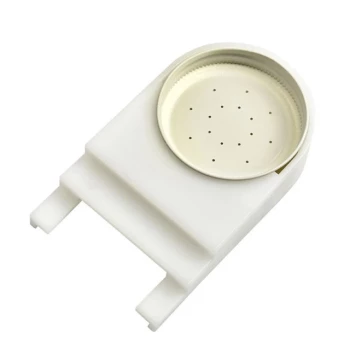
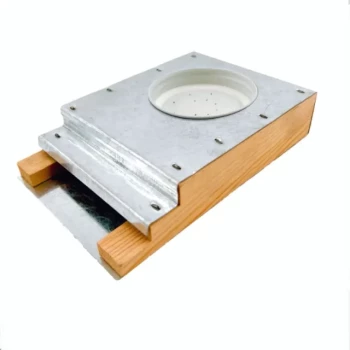
The primary role of a specialized bee feeding box is to establish a centralized, controlled station for observing foraging behaviors essential to colony tracking. By providing a reliable food source that allows bees to feed freely, technicians can capture individual bees to mark them and record critical data points—specifically flight direction and away time—which are necessary for estimating the precise location of the hive.
Effective colony localization relies on converting random foraging into predictable patterns. The specialized feeding box transforms a chaotic environment into a static data collection point, enabling the precise calculations required for hive estimation and precision trapping.
The Mechanics of Colony Localization
Establishing a Controlled Environment
In the wild, bee flight paths are erratic and difficult to track. A specialized feeding box acts as an anchor, creating a controlled feeding environment that draws bees to a specific location.
This centralization is critical. It ensures that the bees are stationary long enough for technicians to interact with them without disrupting the colony's natural workflow.
Enabling Individual Identification
Once bees are feeding freely at the box, they can be marked. This physical marking allows technicians to distinguish between individual foragers.
Identifying specific bees is a prerequisite for gathering accurate timing data, as it ensures you are tracking the round-trip journey of a single subject rather than the aggregate movement of the group.
Deriving Location from Behavioral Data
Analyzing Flight Direction
The most immediate indicator of a hive's location is the departure vector. After feeding, a bee will generally fly in a direct line toward its colony.
By recording the flight direction from the stationary box, technicians can plot a bearing line on a map.
Interpreting Away Time
The second critical metric recorded is the away time. This is the duration it takes for a marked bee to leave the box, offload food at the hive, and return to the box.
This time interval serves as a proxy for distance. By correlating the away time with the flight direction, technicians can estimate how far along the bearing line the hive is located.
Understanding the Operational Requirements
Reliance on Technician Interaction
While the box facilitates the process, it is not an automated solution. The method relies heavily on skilled technicians to manually mark bees and accurately record data.
The Scope of Utility
This equipment is designed specifically for estimating hive locations and aiding in precision trapping. It is a diagnostic tool for localization rather than a general apiary management device.
Making the Right Choice for Your Goal
To maximize the utility of a specialized bee feeding box, align its use with your specific objective:
- If your primary focus is Colony Estimation: Prioritize accurate recording of "away time," as this variable determines the distance calculation along the flight path.
- If your primary focus is Precision Trapping: Use the feeding box to habituate bees to a specific location, ensuring a high concentration of foragers before deploying trap mechanisms.
By controlling the feeding source, you remove the guesswork from the localization process.
Summary Table:
| Feature | Function in Localization | Key Data Point |
|---|---|---|
| Centralized Feeding | Creates a static station to anchor erratic bee flight paths | Controlled Environment |
| Bee Marking | Allows identification of individual foragers for timing | Subject Consistency |
| Flight Direction | Provides the direct vector from the box to the colony | Bearing Line |
| Away Time | Measures the duration of a round-trip journey | Distance Estimation |
Elevate Your Commercial Apiary with HONESTBEE
Precision is the backbone of successful commercial beekeeping and distribution. At HONESTBEE, we understand that whether you are tracking wild colonies or managing thousands of hives, you need equipment that delivers results.
We provide a comprehensive wholesale catalog including:
- Specialized Hardware: Hive-making machines and automated honey-filling systems.
- Field Equipment: Professional-grade bee feeding boxes and beekeeping tools.
- Consumables: Essential supplies for high-volume apiary maintenance.
From industrial machinery to honey-themed cultural merchandise, we empower distributors and large-scale operators to maximize their efficiency. Contact HONESTBEE today to discuss how our wholesale solutions can optimize your operations.
References
- Juliana Rangel, John W. Wenzel. Genetic diversity of wild and managed honey bees (Apis mellifera) in Southwestern Pennsylvania, and prevalence of the microsporidian gut pathogens Nosema ceranae and N. apis. DOI: 10.1007/s13592-020-00762-5
This article is also based on technical information from HonestBee Knowledge Base .
Related Products
- Twin Queen Styrofoam Honey Bee Nucs Mating and Breeding Box
- Australian Langstroth Beehive Boxes for Beekeeping Wholesales
- Styrofoam Mini Mating Nuc Box with Frames Feeder Styrofoam Bee Hives 3 Frame Nuc Box
- High-Performance Langstroth Bee Hives for Global Professional Beekeeping
- Langstroth Honey Bee Box Hive Boxes for Different Depths
People Also Ask
- What are the benefits of using double nuc boxes in beekeeping? Boost Apiary Resilience & Growth
- What are the practical advantages of a double nuc box? Maximize Efficiency with Standardized Beekeeping Gear
- What is the frame capacity of each side in a double nuc box? Master Queen Rearing & Colony Starts
- What are the advantages of double nuc boxes in winter? Boost Survival Rates & Apiary Resilience
- What is the purpose of exploring double nuc boxes in beekeeping? Boost Apiary Resilience & Growth