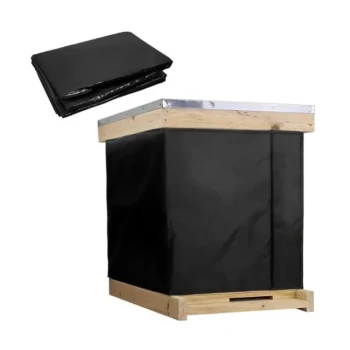
The primary role of thermal insulation coatings is to significantly strengthen the heat retention properties of the brood box during the critical transition from late winter to early spring. By mitigating the impact of low external temperatures, these coatings allow the colony to stabilize internal regulation, enabling the bees to enter the queen-rearing state earlier and more effectively.
By minimizing heat loss and maintaining a stable thermal environment, insulation allows the colony to redirect energy from survival heating to reproduction. This results in an earlier start to the season and measurable improvements in both the quantity and physical quality of the new queens.
The Mechanics of Thermal Regulation
Mitigating External Temperature Fluctuations
The fundamental function of thermal insulation coatings is to act as a barrier against the harsh, fluctuating climate of early spring.
Without this protection, external cold penetrates the hive, forcing bees to consume excessive resources to generate heat. Insulation effectively minimizes this heat loss.
Maintaining Critical Internal Temperatures
For successful reproduction, the internal environment of the nest is non-negotiable.
The colony must maintain a constant internal nest temperature of 34°C. Insulation ensures that the brood area retains this physiological high temperature, even when the outside weather remains cold.
Biological Impacts on Queen Rearing
Accelerating the Breeding Timeline
A well-insulated hive does not just survive; it progresses faster.
Because the internal climate is stabilized, the colony can enter the queen-rearing state earlier in the season. This head start is crucial for maximizing the productive period of the year.
Improving Physical Queen Quality
The benefits of thermal stability extend directly to the physical attributes of the emerging queens.
Data indicates that colonies with thermal coatings produce queens with greater initial birth weights. Furthermore, the physical length of the queen cells is significantly increased, suggesting a more robust development environment.
Increasing Reproductive Output
Thermal efficiency directly correlates to the quantity of offspring the colony can support.
Insulated environments lead to a significant increase in the number of queen cells. Additionally, the stable temperature allows the queen to consistently lay between 20 to 50 eggs per day, unhindered by cold snaps.
Understanding the Operational Context
The Window of Effectiveness
It is important to understand that the primary value of these coatings is realized during specific seasonal windows.
The greatest impact occurs during late winter and early spring. This is when the differential between internal needs (34°C) and external realities is most extreme.
Energy Allocation Trade-offs
The use of insulation changes the colony's energy economy.
Without insulation, the colony's "budget" is spent on thermal generation to prevent freezing. With insulation, that same energy is "traded" for biological production, resulting in consistent egg-laying and larger queens.
Making the Right Choice for Your Apiary
If you are managing colonies for early spring expansion, applying thermal insulation coatings is a strategic lever for success.
- If your primary focus is Season Timing: Insulation allows your colonies to enter the queen-rearing state earlier, giving you a competitive head start on the season.
- If your primary focus is Queen Quality: The thermal stability provided leads to longer queen cells and higher birth weights, resulting in more robust queens.
- If your primary focus is Colony Volume: Maintaining the critical 34°C threshold ensures the queen can consistently lay 20–50 eggs per day without interruption.
Ultimately, a stable thermal environment is the foundation for transforming a surviving colony into a thriving, reproductive one.
Summary Table:
| Feature | Impact on Queen Rearing | Key Benefit |
|---|---|---|
| Temperature Stability | Maintains constant 34°C internal nest temperature | Enables consistent egg-laying (20-50 eggs/day) |
| Energy Allocation | Redirects energy from heating to reproduction | Earlier start to the queen-rearing season |
| Developmental Quality | Increases queen cell length and birth weight | Produces more robust, high-quality queens |
| External Barrier | Mitigates late winter and early spring cold snaps | Reduces resource consumption for colony survival |
Maximize Your Apiary's Early Season Potential with HONESTBEE
Strategic thermal management is the foundation of a successful breeding season. At HONESTBEE, we specialize in supporting commercial apiaries and distributors with the high-performance tools and equipment needed to scale production. From advanced hive-making machinery to specialized thermal solutions, our comprehensive wholesale portfolio is designed to enhance your operational efficiency.
Ready to elevate your queen-rearing results and colony health? Contact HONESTBEE today to discover how our professional beekeeping equipment and industrial consumables can drive your business growth. Our experts are here to provide the hardware and support you need to lead the market.
References
- Rabeea F. Omar, H Salam. Effect of thermal insulation and feeding treatments on early spring honey bee queen rearing. DOI: 10.21608/assjm.2016.104126
This article is also based on technical information from HonestBee Knowledge Base .
Related Products
- Professional Insulated Winter Hive Wrap for Beekeeping
- Inner Beehive Cover for Beekeeping Bee Hive Inner Cover
- Professional Insulated Plastic Bee Hives
- Telescopic Beehive Outer Cover Lid Roof with Galvanised Sheeting for Langstroth Hive and Beehive Outer Cover
- Premium Three Layer Ventilated Bee Suit with Round Veil
People Also Ask
- What are the steps to properly wrap a beehive for winter? Ensure Your Colony Survives the Cold
- When is the best time to wrap a beehive for winter? A Guide to Perfect Winterization Timing
- How do professional insulation wraps provide protection for bee colonies? Optimize Winter Survival & Energy Efficiency
- What are the technical benefits of using winter wraps for beehive insulation? Boost Colony Survival & Hive Health
- What are the benefits of using insulated covers for hives? Ensure Colony Survival and Health