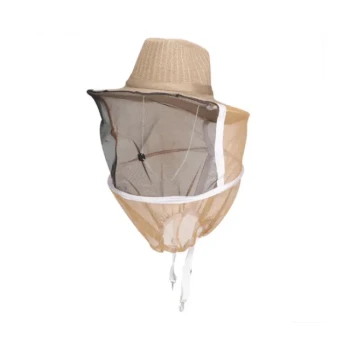
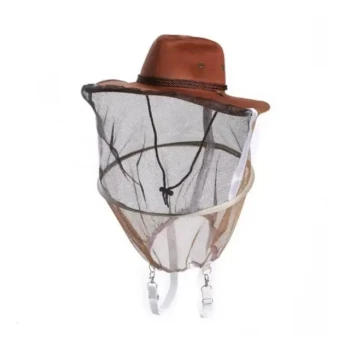
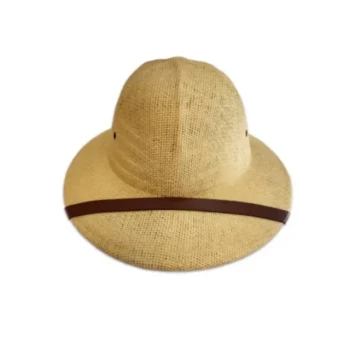
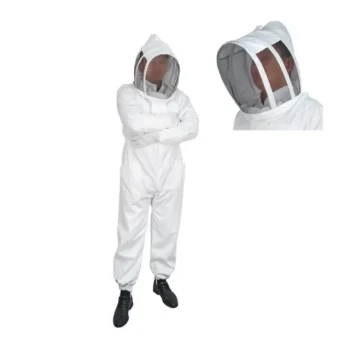
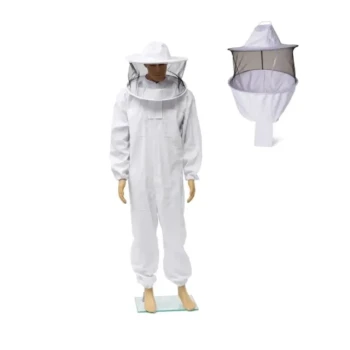
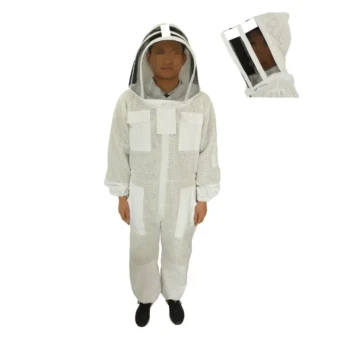
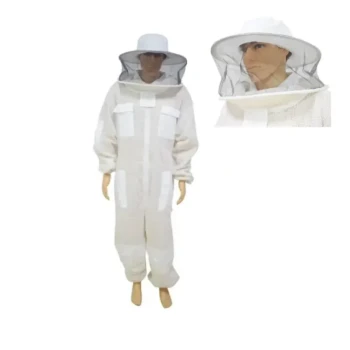
A beekeeper's hat and veil serve as the primary defensive barrier designed to protect the head, face, and neck from insect stings. This assembly typically consists of a wide-brimmed hat that supports a fine mesh screen, which drapes down to the shoulders to create a secure, breathable seal.
The Core Takeaway While full body suits offer comprehensive protection, the hat and veil are the most essential pieces of safety gear. They provide a critical "safe zone" for the highly sensitive face and neck areas, utilizing specialized mesh to block stings without compromising the visibility or airflow required for precise work.
The Core Purpose: Critical Protection
Shielding Vulnerable Areas
The primary function of the hat and veil is to shield the face and neck. These areas are not only sensitive to pain but are also dangerous locations for swelling in the event of a sting reaction.
Maintaining a Defensive Distance
The design does not just cover the skin; it creates a physical gap. By suspending the mesh away from the face, the gear prevents bees from landing directly on the skin to sting through the fabric.
Essential Usage Scenarios
Because the head is a primary target for defensive bees, this gear is considered mandatory. It is recommended for use during hive inspections, honey harvesting, or any interaction where the hive is disturbed.
Anatomy of the Design
The Wide-Brimmed Hat
The foundation of the system is a hat with a wide brim. This structural element is crucial because it holds the mesh netting away from the face, ensuring the protective gap is maintained even when the beekeeper moves.
The High-Visibility Mesh
The veil is constructed from a lightweight, fine mesh. This material is engineered to be "see-through" to ensure the beekeeper can clearly view eggs and larvae, while simultaneously allowing fresh air to circulate to prevent overheating.
The Shoulder Seal
To be effective, the mesh must hang down past the neck and rest on the shoulders. Many designs incorporate elastic shoulder straps or reinforced bottom brims to keep the veil securely in place, preventing bees from crawling under the netting.
Material Construction
These veils are typically crafted from a blend of premium cotton and synthetic materials. This combination offers a balance of durability for outdoor wear and comfort for the wearer during long inspections.
Versatility and Trade-offs
Beyond the Apiary
While designed for bees, the tight weave of the mesh makes this gear effective for other activities. It is frequently used for mosquito protection during gardening, fishing, hiking, and camping in wooded areas.
Design Limitations
While the mesh provides airflow, it naturally restricts it more than having no covering. Additionally, while "high-visibility" mesh is standard, the barrier will always slightly impede absolute visual clarity compared to the naked eye.
Integration Options
Beekeepers must choose between standalone and integrated systems. Some designs allow the hat and veil to detach from the jacket, offering flexibility, while others are permanently attached to ensure a gap-free seal.
Making the Right Choice for Your Goal
To select the right protective gear, assess your specific environment and needs:
- If your primary focus is Beekeeping Safety: Prioritize a veil with strong elastic shoulder straps or a zipper attachment to ensure no gaps exist where bees could enter.
- If your primary focus is General Outdoor Recreation: Look for a lightweight, standalone hat and veil made of breathable cotton/synthetic blends to protect against mosquitoes and gnats during hiking or fishing.
Ultimately, the beekeeper's hat and veil are the single most important investment for safe apiary work, transforming a potentially dangerous environment into a manageable workspace.
Summary Table:
| Feature | Design Detail | Primary Benefit |
|---|---|---|
| Wide-Brimmed Hat | Structural foundation | Keeps mesh away from the skin to prevent stings through fabric. |
| High-Visibility Mesh | Fine, lightweight weave | Provides clear visibility for hive inspections while allowing airflow. |
| Shoulder Seal | Elastic straps or reinforced brims | Creates a secure barrier to prevent bees from crawling under the veil. |
| Material Blend | Cotton and synthetic fibers | Balances long-term durability with comfort and breathability. |
Secure Your Apiary with Professional-Grade Gear
At HONESTBEE, we understand that safety is the foundation of a productive apiary. As a dedicated partner to commercial apiaries and distributors, we provide a comprehensive wholesale range of beekeeping essentials—from high-visibility protective veils and suits to advanced honey-filling machinery and hive-making equipment.
Whether you are scaling your operation or stocking a distribution network, our premium beekeeping tools and industry consumables ensure your team and your customers stay protected and efficient.
Ready to elevate your beekeeping standards? Contact us today to explore our wholesale solutions!
Related Products
- Beekeeper Cowboy Hat and Veil for Beekeeping
- Premium Cowboy Beekeeper Hat with Visibility Veil Outdoor Professional Beekeeping Protective Gear
- White Cotton Beekeeping Jacket and Veil for Bee Keepers
- High-Definition Beekeeper Hat with Round Veil Mesh for Beekeeping
- Rigid Pith Style Beekeeper Hat for Square Folding Veils
People Also Ask
- What is the correct way to wash a beekeeping hat and veil? Safe Hand-Washing Guide to Protect Your Gear
- What are the components and importance of a beekeeper's hat and veil? Essential Safety Gear for Apiary Success
- What are the differences between a separated and an attached beekeeping hat and veil? Security vs. Versatility
- What are the design specifications for an effective beekeeping hat and veil? Professional Standards for Protection
- What is the function of a beekeeping hat and veil? Essential Protection for Safe Hive Management