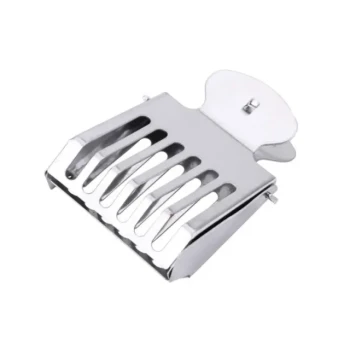
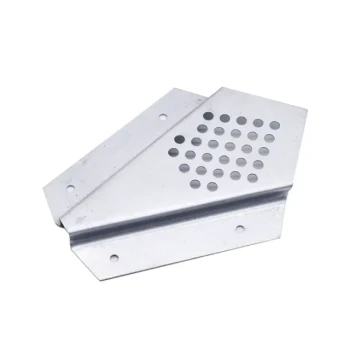
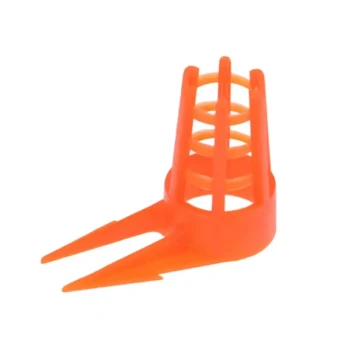
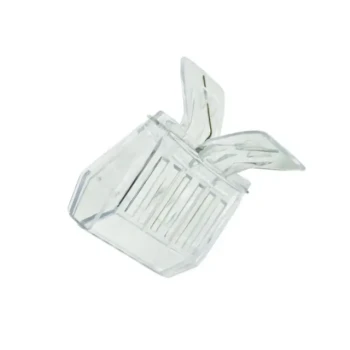
A queen excluder is a specialized management tool designed to compartmentalize the hive based on bee size. It acts as a physical barrier placed directly between the brood box (where the queen lays eggs) and the honey supers (where surplus honey is stored).
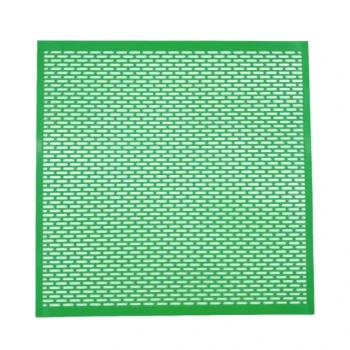
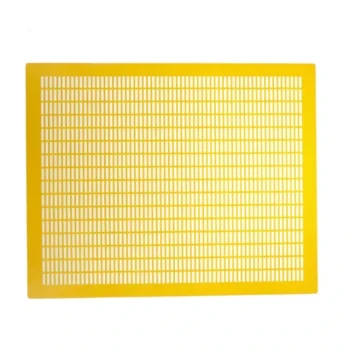
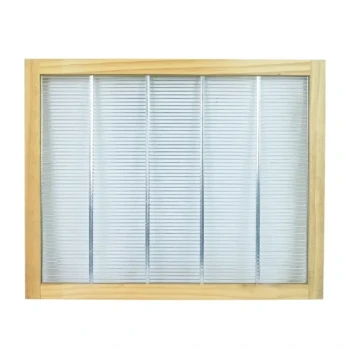
The device functions as a precision filter. It features a grid of metal or plastic slats spaced specifically to allow smaller worker bees to pass through freely while preventing the larger queen bee from entering the upper sections of the hive. This ensures the queen remains in the lower brood chamber, keeping the harvested honey in the supers free of eggs and developing larvae.
Core Insight By physically restricting the queen’s movement, an excluder creates a definitive boundary between the hive's "nursery" and its "pantry." This guarantees that frames removed for extraction contain 100% pure honey, without the contamination or structural complexity of brood.
The Mechanics of Separation
The Size Differential
The effectiveness of a queen excluder relies entirely on the biological size difference between castes. The queen is significantly larger than the worker bees, particularly in the thorax and abdomen.
The Gauged Grid
The excluder is essentially a flat rack made of gauged metal wires or molded plastic. The spacing of the grid is calibrated to a specific tolerance that acts as a gate for workers but a wall for the queen.
Vertical Zoning
In a standard vertical hive configuration, the excluder is placed above the deep hive bodies. This restricts the queen to the bottom boxes for reproduction, forcing the colony to utilize the upper boxes exclusively for resource storage.
Strategic Benefits for the Beekeeper
Ensuring Honey Purity
The primary purpose of the excluder is to keep the harvest clean. If a queen lays eggs in the honey supers, the extraction process becomes difficult and creates a risk of mixing larval fluids with honey.
Streamlined Inspections
When an excluder is in place, you know with certainty where the queen is not. You can remove, inspect, and harvest honey supers rapidly without the fear of accidentally injuring the queen or removing her from the colony.
Organized Hive Structure
The device enforces a logical organization within the hive. It prevents the chaotic spread of the brood nest, ensuring that brood rearing and food storage remain in their optimal, designated zones.
Understanding the Trade-offs
Potential for Flow Restriction
While effective, excluders are sometimes jokingly referred to as "honey excluders." If the grid is clogged with wax or propolis, or if the bees are reluctant to squeeze through it, it can slow down the rate at which workers store nectar in the supers.
The Necessity Factor
Not every hive configuration requires an excluder. In colonies using multiple deep hive bodies, the natural band of honey stored at the top of the brood nest often acts as a natural barrier that the queen is reluctant to cross, rendering the mechanical excluder optional.
Risk of Trapping Drones
Drones (male bees) are also larger than workers and cannot pass through the excluder. If an excluder is placed while drones are in the upper supers, they will be trapped and eventually die, which can cause stress to the colony and foul the area.
Making the Right Choice for Your Goal
Whether you use a queen excluder depends on your specific management philosophy and harvest goals.
- If your primary focus is pure, larval-free honey: Use a queen excluder to guarantee that your extraction frames are used solely for honey storage.
- If your primary focus is maximum nectar flow speed: You may choose to omit the excluder, relying on a "honey barrier" or double brood box system to naturally deter the queen from moving up.
- If your primary focus is ease of management: Use an excluder to simplify inspections, as it eliminates the need to hunt for the queen in the upper boxes during harvest.
Ultimately, the queen excluder is a tool for control, allowing you to dictate exactly how the colony utilizes its available space.
Summary Table:
| Feature | Queen Excluder Utility | Benefit for Beekeepers |
|---|---|---|
| Function | Physical barrier between brood box and honey supers | Guarantees 100% pure honey free of larvae |
| Mechanism | Precision-gauged grid (metal or plastic) | Allows workers through while restricting the queen |
| Management | Vertical zoning of the hive | Simplifies inspections and protects the queen |
| Efficiency | Designated storage zones | Streamlines the honey extraction process |
Elevate Your Apiary Efficiency with HONESTBEE
At HONESTBEE, we specialize in empowering commercial apiaries and distributors with the high-quality tools necessary for professional honey production. Whether you are seeking precision-engineered queen excluders, hive-making machinery, or honey-filling equipment, our comprehensive wholesale portfolio is designed to maximize your output and product purity.
Why partner with HONESTBEE?
- Full-Spectrum Supply: From specialized hardware to essential industry consumables.
- Commercial Scale: Tailored solutions for large-scale operations and distributors.
- Expert Support: We help you organize your hive structure for peak performance.
Ready to optimize your honey harvest and streamline your operations? Contact us today to explore our wholesale offerings!
Related Products
- High Performance Plastic Queen Excluder for Beekeeping and Apiary Management
- Professional Plastic Queen Excluder for Modern Beekeeping
- Lightweight Durable Plastic Queen Excluder Scraper for Beekeeping
- Metal Queen Bee Excluder for Beekeeping
- Premium Wood Framed Metal Wire Queen Bee Excluder
People Also Ask
- What are the characteristics of a plastic queen excluder? Key Benefits for Cost-Effective Beekeeping
- What are the operational and cost advantages of using plastic queen excluders over metal or wire excluders in commercial hive management? Discover how they reduce labor, prevent wing damage, and lower total costs.
- What types of queen excluders are available for beekeepers? Choose the Right Tool for Your Hive
- Why are standardized hive frames and queen excluders essential for maintaining honey purity and quality? Scale Your Purity
- Do plastic queen excluders work? A Cost-Effective Solution for Modern Apiaries