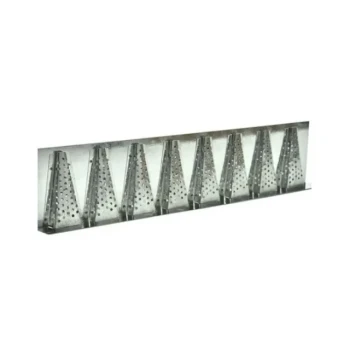
The fundamental purpose of an 8-mesh isolation metal screen is to establish a controlled environment for accurate parasite monitoring within the hive. Specifically, it acts as a horizontal physical barrier positioned between the active bee cluster and the debris on the hive floor.
Core Takeaway: By physically separating the colony from the bottom board, this screen prevents worker bees from cleaning away fallen mites. This ensures that the data collected represents the true levels of natural mite mortality and grooming behavior, uncorrupted by the bees' hygienic activity.
Ensuring Data Integrity in Mite Monitoring
To make informed decisions about hive health, you need accurate data. The 8-mesh screen is a precision tool designed to preserve the "evidence" dropping from the colony.
Creating a Selective Barrier
The screen functions as a one-way filter. The mesh size is calibrated to allow small particulates—specifically Varroa mites and debris—to fall through to the floor.
However, the mesh is tight enough to serve as a hard stop for the bees. It prevents the colony from accessing the space below the screen.
Preventing Hygienic Interference
Honeybees are naturally hygienic creatures. Without a barrier, worker bees will actively clean the hive floor, removing dead mites and debris.
If bees remove these mites before you count them, your infestation estimates will be artificially low. The screen effectively neutralizes this cleaning behavior regarding the collected samples.
Distinguishing Mortality Sources
Accurate monitoring requires analyzing the condition of the fallen mites. The screen preserves the mites in their original state on the floor.
This preservation allows you to distinguish between natural mite fall (mites that died of old age or other causes) and grooming-induced removal (mites that were bitten or damaged by bees).
Common Pitfalls and Distinctions
It is crucial to select the correct type of screen for your specific objective, as the terminology can be similar for vastly different tools.
Isolation Screen vs. Screen Excluder
Do not confuse the 8-mesh floor isolation screen with a screen excluder.
A screen excluder is designed for queen rearing and vertical partitioning. Its grid size allows worker bees to pass through to feed larvae while restricting the queen's movement.
In contrast, the 8-mesh isolation screen used on the floor must restrict all bees, including workers, to function correctly as a monitoring device.
Making the Right Choice for Your Goal
Selecting the correct hardware depends entirely on whether you are analyzing data or managing colony population dynamics.
- If your primary focus is Mite Monitoring: Install an 8-mesh isolation screen above the floor to prevent workers from tampering with mite fall data.
- If your primary focus is Queen Rearing: Use a screen excluder to partition the hive, allowing nurse bees access to larvae while confining the queen.
The accuracy of your pest management strategy relies on the physical integrity of your sampling method.
Summary Table:
| Feature | 8-Mesh Isolation Screen | Queen Rearing Screen Excluder |
|---|---|---|
| Primary Goal | Mite Monitoring & Data Integrity | Vertical Partitioning & Queen Control |
| Worker Bee Access | Restricted (Barrier to floor) | Allowed (Pass-through for nursing) |
| Placement | Horizontal (Above hive floor) | Vertical (Between hive bodies) |
| Key Benefit | Prevents removal of mite fall | Facilitates larval feeding without queen access |
Elevate Your Beekeeping Operations with HONESTBEE
As a professional in the beekeeping industry, your success depends on the precision of your tools. HONESTBEE specializes in catering to commercial apiaries and distributors by providing a comprehensive wholesale range of high-quality equipment.
From specialized 8-mesh isolation screens and essential hive hardware to advanced honey-filling machines and hive-making equipment, we supply everything needed to scale your business. Our portfolio also includes a unique array of honey-themed cultural merchandise to help you stand out in the market.
Ready to optimize your inventory or upgrade your apiary’s efficiency? Contact us today to discuss our wholesale offerings and discover how HONESTBEE can deliver the value and reliability your business deserves.
References
- Geraldo Moretto, José Carlos Vieira Guerra. Taxa de mortalidade do ácaro <em>Varroa destructor</em> de acordo com a quantidade de crias em colônias de abelhas africanizadas (<em>Apis mellifera L.</em>). DOI: 10.4025/actascibiolsci.v29i3.487
This article is also based on technical information from HonestBee Knowledge Base .
Related Products
- 8-Cone Galvanized Steel Bee Robber Guard
- 8 Frame and 10 Frame Propolis Trap Collector Screen for Propolis Collection
People Also Ask
- What protective functions do beehive entrance guards provide? Defend Your Hive Against Wasps and Moths
- What is the primary function of protective guards at hive entrances? Block Rodents & Boost Winter Survival Rates
- How do conical metal guards or rubber inner tubes function as pest control tools? Stop Ants with Mechanical Barriers
- What is the function of Hive Entrance Guards? Master Bee Colony Defense Against Small Hive Beetles
- How can hardware mesh be applied to a beehive entrance for winter protection? Secure Your Colony Against Pests