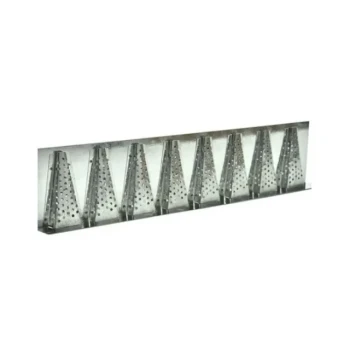
Conical metal guards and rubber inner tubes function as mechanical exclusion devices. They are installed directly on beehive stands to create a physical barrier that intercepts ground-dwelling pests, specifically ants, before they reach the colony. By leveraging difficult-to-climb geometric shapes and specific material properties, these tools effectively break the vertical path from the ground to the hive entrance.
Core Takeaway Ground-dwelling insects require a continuous path to invade a hive and raid its resources. These tools provide a passive, non-toxic defense line by rendering the hive stand legs impassable, forcing pests to turn back before they can access the colony.
The Mechanics of Physical Exclusion
Interrupting the Path
Beehives are typically elevated on stands to protect them from dampness and predators. However, the legs of these stands act as highways for crawling insects.
Guards and tubes serve as checkpoints on these legs. They disrupt the linear path an ant follows, forcing it to navigate a complex physical obstacle.
Geometric Defense (Conical Guards)
Conical metal guards utilize geometry as a deterrent. The cone shape often creates an overhang or an inverted slope.
To bypass this, an insect must climb upside down or navigate a sharp, slippery edge. This specific shape makes upward movement mechanically difficult for many ant species.
Material Barriers (Rubber Inner Tubes)
Rubber inner tubes rely on material properties to block pests. When installed on the stand legs, they create a physical separation distinct from the wood or metal of the stand.
The texture and width of the rubber can confuse the tracking pheromones used by ants. It creates a physical "dead zone" that disrupts the organized foraging trails of invasive insects.
Enhancing Effectiveness with Lubricants
The Role of Friction
In environments with high pest pressure, geometry alone may not be enough. Advanced applications involve modifying the surface of these barriers to remove traction.
Creating a Slippery Barrier
Beekeepers often apply grease, oil, or similar lubricants to the metal guard or rubber tube. This enhances the mechanical blocking effect.
Even if an insect can navigate the shape of the cone, it cannot grip the lubricated surface. The pest slips off the barrier, ensuring the colony remains isolated from infestation.
Understanding the Trade-offs
Maintenance Requirements
These tools are not "set and forget" solutions. Lubricants can dry out, wash away in rain, or become coated in dust.
If a lubricant becomes covered in debris, it can form a bridge for pests to cross. Regular inspection and re-application are necessary to maintain the barrier's integrity.
Environmental Degradation
Materials degrade over time. Rubber inner tubes are susceptible to UV damage and may crack or rot, creating gaps for pests.
Similarly, metal guards must be checked for corrosion or bending, which could provide a foothold for determined insects.
Making the Right Choice for Your Apiary
While both methods are effective, your choice depends on your specific environment and maintenance capacity.
- If your primary focus is long-term durability: Opt for conical metal guards, as they resist weathering better than rubber and maintain their geometric advantage longer.
- If your primary focus is high pest pressure: Implement a lubricated barrier system, combining the physical tool with grease to ensure zero traction for aggressive ants.
Effective pest exclusion protects the colony's resources, allowing the bees to focus their energy on honey production rather than defense.
Summary Table:
| Tool Type | Primary Mechanism | Key Material/Feature | Best Used For | Maintenance Needs |
|---|---|---|---|---|
| Conical Metal Guard | Geometric Deterrence | Inverted slope/Overhang | Long-term durability | Check for corrosion/bending |
| Rubber Inner Tube | Material Obstacle | Pheromone disruption | High pest pressure areas | Monitor for UV cracking/rot |
| Lubricated Barrier | Friction Removal | Grease or Oil coating | Absolute exclusion | Frequent re-application |
Elevate Your Apiary Management with HONESTBEE
Protecting your colonies from invasive pests is critical for maximizing honey production. HONESTBEE provides commercial apiaries and distributors with high-quality, professional-grade beekeeping equipment designed to withstand the rigors of the field.
From specialized hive-making machinery and honey-filling systems to essential beekeeping tools and industry consumables, we offer a comprehensive wholesale portfolio to scale your operations efficiently. Whether you are a large-scale commercial operation or a distributor seeking reliable hardware, we deliver the expertise and equipment you need to succeed.
Secure your colonies today. Contact HONESTBEE to explore our wholesale solutions and see how our tools can enhance your apiary's efficiency.
References
- Workneh Abebe, Ranjitha Puskur. Beekeeping sub sector challenges and constraints in Atsbi Wemberta District of eastern zone, Tigray Region, Ethiopia. DOI: 10.5897/jaerd.9000015
This article is also based on technical information from HonestBee Knowledge Base .
Related Products
- 8-Cone Galvanized Steel Bee Robber Guard
- Beehive Entrance Reducer Guardian Metal Hive Entrance for Bees
- Metal Hive Feet Bee Hive Stand for Ant Protection
- Metal Bee Hive Stand Bee Box Stand for Beekeeping
- Inner Beehive Cover for Beekeeping Bee Hive Inner Cover
People Also Ask
- What protective functions do beehive entrance guards provide? Defend Your Hive Against Wasps and Moths
- What is the primary function of protective guards at hive entrances? Block Rodents & Boost Winter Survival Rates
- What is the function of Hive Entrance Guards? Master Bee Colony Defense Against Small Hive Beetles
- How can hardware mesh be applied to a beehive entrance for winter protection? Secure Your Colony Against Pests
- What happens if you block the entrance to a bee hive? Avoid This Dangerous Mistake