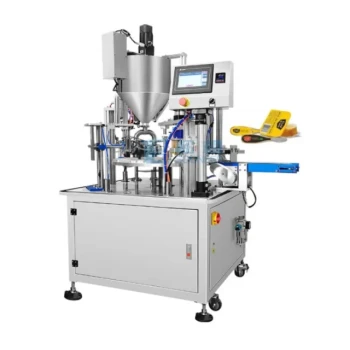
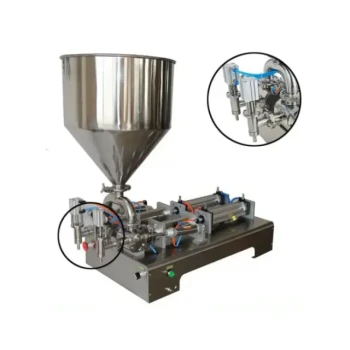
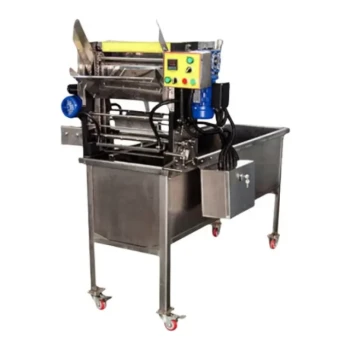
Automatic and semi-automatic honey filling systems act as the critical link between raw apiary production and the high-value commercial market. These technologies serve to standardize product presentation through precise measurement control while utilizing food-grade packaging materials to ensure safety and consistency. By integrating professional labeling, they enable brand identification and traceability, effectively distinguishing pure honey from adulterated competitors.
Core Takeaway: The primary value of automation in honey processing is the transformation of a raw bulk commodity into a trusted consumer brand. By ensuring precise weight, preventing contamination, and enabling clear labeling, these systems protect the product’s integrity and unlock access to premium retail markets.
Elevating Product Presentation and Standardization
Achieving Precise Measurement
Manual filling often leads to inconsistencies that can damage consumer trust or result in product giveaway. Automatic systems utilize high-precision metering and weighing technologies to guarantee consistent net weight in every container. This ensures compliance with commercial regulations and creates a uniform product for the shelf.
Professional Packaging Standards
To compete in modern retail environments, honey must be packaged in standardized, food-grade materials. These systems facilitate the use of durable containers that improve aesthetics and visual appeal. A standardized look is the first step in establishing a recognizable regional or commercial brand.
Enabling Traceability and Brand Identity
Integration with professional labeling systems allows producers to attach clear brand identification and traceability data to every unit. This transparency helps consumers verify the origin of the product. It effectively differentiates pure, high-quality honey from unfair competition posed by adulterated or lower-quality substitutes.
Protecting Quality and Shelf Life
Preventing Secondary Contamination
A critical role of these machines is maintaining a hygienic environment during the transition from bulk storage to retail vessels. Automated processes significantly minimize human contact and the risk of secondary contamination. This is vital for meeting strict food safety standards required for domestic and international markets.
Controlling Moisture and Fermentation
Honey is hygroscopic, meaning it absorbs moisture from the air, which can lead to fermentation and spoilage. Automated systems employ hermetic sealing technologies that lock out moisture and air. This preservation of the internal environment extends the product's shelf life and ensures stability during long-distance transport.
Preserving Sensory Characteristics
High-standard machinery is designed to process honey without degrading its natural qualities. By maintaining optimal processing conditions, these systems help preserve the honey's original color, crystallinity, and biochemical indicators, such as Hydroxymethylfurfural (HMF) levels. This ensures the consumer experiences the honey exactly as it was produced at the apiary.
Economic and Strategic Impact
Accessing High-End Markets
Retailers, supermarkets, and export markets require products that meet rigorous circulation standards. Professional processing allows apiaries to convert bulk honey into retail-ready goods that fit these channels. Consequently, producers can capture higher retail margins compared to selling honey in bulk containers.
Driving Rural Economic Growth
The introduction of packaging technology extends the value chain deep into rural production areas. This shift creates specialized jobs in processing, quality control, and warehousing. It moves the profit center closer to the source, driving sustainable economic growth in beekeeping communities.
Understanding the Trade-offs
Operational Complexity vs. Consistency
While automation ensures consistency, it introduces a layer of technical complexity. Operators must be trained to manage calibration, cleaning cycles, and minor troubleshooting. The shift from manual to automatic requires an investment in human capital, not just machinery.
Capital Investment vs. Volume
For very small producers, the initial cost of automated systems may be significant relative to their output. However, this cost must be weighed against the inability to scale or enter major retail markets without professional packaging. The investment is generally justified only when the goal is commercial expansion rather than local, direct-to-consumer sales.
Making the Right Choice for Your Goal
To select the right approach for your operation, consider your immediate strategic objectives:
- If your primary focus is Brand Protection: Prioritize systems with advanced labeling and traceability integration to distinguish your pure honey from adulterated competitors.
- If your primary focus is Export and Retail Access: Focus on machines that guarantee precise weight control and hermetic sealing to meet international shipping and shelf-life standards.
- If your primary focus is Economic Development: Implement user-friendly semi-automatic systems that create local processing jobs while upgrading the regional product from bulk to retail-ready.
Invest in packaging automation not just to fill bottles faster, but to secure the integrity and market value of every drop you produce.
Summary Table:
| Key Role | Primary Benefit | Technical Feature |
|---|---|---|
| Standardization | Precise weight & regulatory compliance | High-precision metering & weighing |
| Quality Control | Prevents contamination & fermentation | Hermetic sealing & food-grade materials |
| Brand Integrity | Combats adulteration & adds traceability | Integrated professional labeling systems |
| Market Access | Unlocks high-end retail & export margins | Professional, shelf-ready packaging |
| Economic Growth | Drives rural value chain development | Scalable processing for local communities |
Elevate Your Apiary with HONESTBEE Packaging Solutions
Transitioning from bulk production to a premium brand requires the right technology. HONESTBEE empowers commercial apiaries and distributors with a complete range of beekeeping tools, specialized hive-making machinery, and precision honey-filling systems designed to protect your product's integrity.
Whether you are scaling up for export or supplying honey-themed merchandise, we provide the industrial-grade equipment and consumables needed to dominate the retail shelf.
Ready to maximize your honey's market value?
Contact HONESTBEE Today to discuss our wholesale offerings and customized machinery solutions!
References
- Luís Antonio Saavedra-Jiménez, Vicente Homero González Álvarez. Características y necesidades tecnológicas de los apicultores de la región centro-sur de Jalisco. DOI: 10.15174/au.2022.3493
This article is also based on technical information from HonestBee Knowledge Base .
Related Products
- Semi Automatic Small Honey Bottle Filling Machine Honey Filler
- Fully Automatic Honey Filling Packaging Machine for Processing Line
- Precision Automated Packaging Turntable Honey Spoon Filling Sealing Packing Machine
- Automatic Single-Dose Snap & Squeeze Honey Sachets Packing Machine
- Precision Durable Efficient HONESTBEE Rotary Honey Filling Machine
People Also Ask
- What is a semi-automatic honey filler? Scale Your Honey Production with Precision and Efficiency
- What types of filling mechanisms are used in honey filling machines? Find the Best Tech for Your Viscosity
- What challenges can arise from packaging honey without a suitable filling machine? Optimize Your Production Today
- What are the different types of honey filling machines based on automation level? A Guide for Apiaries & Distributors
- How does a honey filling machine benefit small-scale honey processing businesses? Boost Efficiency & Brand Quality