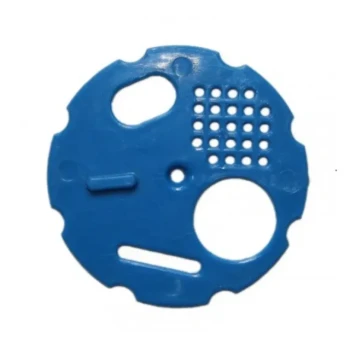
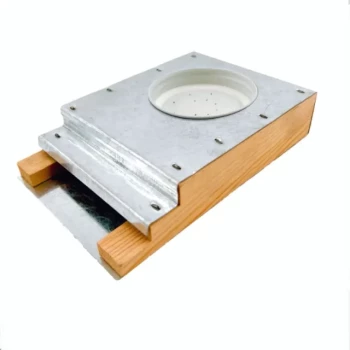
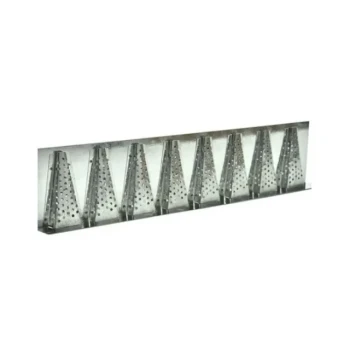
Beehive entrance size acts as the primary valve for regulating internal atmospheric conditions. By narrowing the entrance, you directly limit the rate of air advection, which is the exchange process between the humid air generated by the colony and the drier air outside the hive.
By maintaining a smaller entrance, a colony can trap moisture to sustain an absolute humidity level above 4.3 kPa. This specific high-humidity environment serves as a critical biological defense mechanism, effectively inhibiting the reproduction of Varroa destructor mites.
The Physics of Humidity Control
Controlling Air Advection
The size of the hive entrance dictates the volume of air exchange. A large entrance allows for rapid mixing of internal and external air masses.
Conversely, a smaller entrance restricts this flow. This restriction allows the colony to retain the moisture they generate through respiration and nectar evaporation, rather than losing it immediately to the drier external environment.
Reaching the Critical Threshold
The goal of restricting the entrance is not simply to make the hive damp, but to reach a specific metric: absolute humidity above 4.3 kPa.
The primary reference indicates that this specific pressure level is a tipping point for hive health. It represents a controlled microclimate that is distinct from the ambient weather outside.
The Biological Defense Mechanism
Inhibiting Varroa Destructor
The most significant implication of entrance-regulated humidity is its effect on parasites. The high-humidity environment created by a restricted entrance acts as a physical barrier to pests.
Specifically, Varroa destructor mites struggle to reproduce effectively in this high-humidity zone. By manipulating the entrance to maintain moisture, the colony gains a "biophysical" resilience against these pervasive threats without the need for chemical intervention.
Supporting Homeostasis
Beyond pest control, stable humidity is essential for general colony functions. As noted in the supplementary data, maintaining a consistent moisture balance is vital for larval development.
It also plays a role in the honey dehydration process, where the colony must carefully balance moisture retention for health against the need to evaporate water from nectar.
The Impact of Hive Material
Interaction with Moisture
The effectiveness of entrance regulation can depend on what the hive is made of. Wooden hives naturally absorb and release moisture, which can introduce variability into the internal humidity levels.
Polyurethane Stability
In contrast, polyurethane hives are hydrophobic (water-repelling). They do not interfere with internal moisture levels through absorption.
Because the material is inert regarding moisture, the physical design features—such as the entrance size and ventilation ports—become the sole drivers of humidity control, offering more predictable stability.
Understanding the Trade-offs
The Risk of Excessive Moisture
While high humidity inhibits mites, there is a delicate balance to maintain. Supplementary data suggests that excessive sealing, particularly in wooden hives, can lead to detrimental moisture buildup.
Balancing Dehumidification
Bees need high humidity for brood health and mite defense, but they also require air convection to dehydrate honey.
If the hive is sealed too tightly without regard for this balance, the internal environment may deteriorate. Monitoring sensors are often required to ensure the "high humidity" strategy does not cross the line into "stagnant dampness."
Making the Right Choice for Your Goal
When adjusting your hive entrance, consider your primary objective for the season:
- If your primary focus is Varroa Mite Control: Reduce the entrance size to minimize air exchange and maintain absolute humidity above 4.3 kPa to inhibit mite reproduction.
- If your primary focus is Honey Curing: Ensure that while the entrance is regulated, there is sufficient convection (potentially via top/bottom vents in synthetic hives) to allow for the necessary dehumidification of nectar.
Ultimately, the entrance is not just a door; it is a climate control dial that helps the colony build its own immune system.
Summary Table:
| Factor | Effect of Small Entrance | Effect of Large Entrance | Biological Impact |
|---|---|---|---|
| Air Advection | Low exchange; moisture is retained | High exchange; moisture is lost | Controls internal microclimate |
| Absolute Humidity | Maintains levels > 4.3 kPa | Lowers humidity to ambient levels | High levels inhibit Varroa reproduction |
| Pest Control | High biophysical defense | Lower natural defense | Reduces need for chemical treatments |
| Best Use Case | Wintering & Mite Management | Honey Curing & High Ventilation | Balances growth vs. production |
Maximize Your Colony Productivity with HONESTBEE
At HONESTBEE, we understand that precision in beekeeping leads to professional success. As a leading provider for commercial apiaries and distributors, we offer a comprehensive wholesale range of beekeeping tools, high-performance machinery, and essential consumables designed to optimize hive environments.
From high-stability hive-making and honey-filling machines to specialized hardware that supports precise climate control, our products empower you to maintain the perfect 4.3 kPa threshold for your colonies. Whether you are scaling an industrial operation or supplying the next generation of beekeepers, our portfolio provides the durability and innovation you need.
Ready to elevate your beekeeping business? Contact us today to explore our wholesale solutions and discover how HONESTBEE can streamline your operations and enhance hive resilience.
References
- Derek Mitchell. Nectar, humidity, honey bees ( <i>Apis mellifera</i> ) and varroa in summer: a theoretical thermofluid analysis of the fate of water vapour from honey ripening and its implications on the control of <i>Varroa destructor</i>. DOI: 10.1098/rsif.2019.0048
This article is also based on technical information from HonestBee Knowledge Base .
Related Products
- Beehive Entrance Discs Plastic Bee Entrance Disc for Bee Hives
- Professional Reversible Beehive Hive Entrance
- Steel Round Disc Entrance Reducer for Flexzion Bee Hive Nuc Box Gate
- Multi-Functional Sliding Hive Entrance for Beekeeping
- Multi-Functional Rotary Hive Entrance Disc for Beekeeping
People Also Ask
- What is the best entrance for a bee hive? Maximize Colony Health & Honey Production
- What happens if you block the entrance to a bee hive? Avoid This Dangerous Mistake
- How does entrance configuration vary seasonally for beekeepers? A Guide to Year-Round Hive Health
- Why adjust beehive entrance size for humidity? Boost Honey Ripening and Varroa Control in Commercial Apiaries
- How big should a beehive entrance be? Optimize for Colony Health & Honey Production