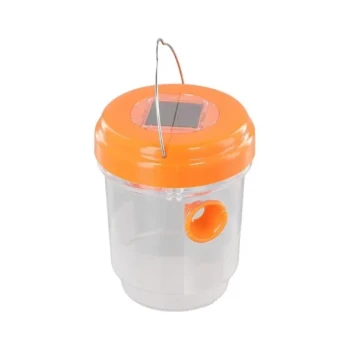
The scientific efficacy of light traps relies on the biological phenomenon of positive phototaxis. Small Hive Beetles (SHB) possess an innate, powerful attraction to light, specifically within the near-ultraviolet spectrum. By utilizing light sources at approximately 390nm, beekeepers can exploit this sensory vulnerability to capture beetles displaced during honey extraction.
Adult Small Hive Beetles and wandering larvae are biologically hardwired to move toward light sources at the 390nm wavelength. Implementing traps with this specific frequency in enclosed workshops converts a pest's natural survival instinct into an effective control mechanism, preventing secondary infestations.
The Biological Mechanism: Phototaxis
Understanding the Attraction
The primary driver for these traps is strong phototaxis. This is a biological mechanism where an organism automatically moves toward a light source.
Both adult beetles and wandering larvae exhibit this behavior. They do not merely wander randomly; they are actively seeking light, which allows facility managers to predict their movement patterns.
The Specificity of 390nm
Not all light is equally effective. Scientific observation indicates that Small Hive Beetles are particularly sensitive to light at a wavelength of approximately 390nm.
This wavelength falls within the near-ultraviolet range. By tuning traps to this specific frequency, you create a stimulus that is far more attractive to the beetle than standard ambient lighting.
Application in Honey Processing
Capturing Displaced Pests
During the honey extraction process, beetles hiding within frames are often disturbed and displaced.
Once separated from the comb, these beetles seek refuge or an exit. A light trap provides a centralized "lure," drawing these displaced pests away from dark corners and into a containment device.
Controlling Multiple Life Stages
It is critical to note that this sensitivity applies to both adults and wandering larvae.
Larvae often wander in search of soil to pupate. By intercepting them with light traps in the processing area, you break their reproductive cycle before they can leave the facility.
Preventing Escape and Re-infestation
Processing facilities often have small gaps or unsealed areas.
Beetles left unchecked will attempt to escape through these gaps to return to the environment. Light traps act as a net, capturing these pests inside the enclosed area before they can establish secondary infestations outside.
Limitations and Trade-offs
Context is Critical
Light traps are a sanitation tool for enclosed processing areas, not a cure for hive infestation. They manage beetles that have already been brought into the facility, but they do not reduce the population inside living colonies in the apiary.
Competition with Other Light Sources
Because the mechanism is based on attraction, competing light sources can reduce efficacy.
If a workshop has bright sunlight streaming through windows or intense standard lighting, the specific pull of the 390nm trap may be diluted. These traps are most effective when they are the dominant or most intense source of attractive light in the room.
Implementing the Strategy
To effectively use light traps in your honey house, consider your specific containment goals.
- If your primary focus is Sanitation: Ensure traps are active during and immediately after extraction to catch beetles displaced from supers.
- If your primary focus is Containment: Place traps near potential exits or gaps to prevent beetles from escaping back into the wild.
By aligning your sanitation protocols with the beetle's biological attraction to 390nm light, you turn the processing room from a potential breeding ground into a final stop for the pest.
Summary Table:
| Feature | Specification/Mechanism | Impact on Pest Control |
|---|---|---|
| Biological Driver | Positive Phototaxis | Forces beetles to move toward a controlled light source automatically. |
| Optimal Wavelength | ~390nm (Near-UV) | Maximizes attraction by targeting the SHB's specific visual sensitivity. |
| Target Life Stages | Adults & Wandering Larvae | Interrupts the reproductive cycle by capturing pests before pupation. |
| Ideal Environment | Enclosed Processing Areas | Captures beetles displaced during extraction, preventing re-infestation. |
| Efficiency Factor | Light Dominance | Most effective when 390nm is the primary light source in a dark room. |
Maximize Your Facility's Hygiene with HONESTBEE
Protect your honey production from Small Hive Beetle infestations with professional-grade sanitation and processing solutions. HONESTBEE specializes in supporting commercial apiaries and distributors by providing a full spectrum of high-performance beekeeping tools, honey-filling machinery, and essential consumables.
Whether you are looking for advanced hive-making equipment or wholesale beekeeping supplies to optimize your operations, our team is here to provide the expertise and hardware you need to succeed.
Ready to elevate your apiary's efficiency? Contact us today to explore our wholesale offerings
References
- . Panel On Animal Health And Welfare. Survival, spread and establishment of the small hive beetle (Aethina tumida). DOI: 10.2903/j.efsa.2015.4328
This article is also based on technical information from HonestBee Knowledge Base .
Related Products
- Reusable Aluminium Beetle Trap for Small Hive Beetles Silver Bullet
- Removable Washable Hive Beetle Trap Attractants for Small Hive Beetles
- Reusable Clear Small Hive Beetle Traps for Beehives Beetle Trapping Tools
- Black Plastic Beetle Barn Hive Beetle Trap for Beehives
- Plastic Beetle Blaster Trap Beekeeping Tools and Supplies
People Also Ask
- How should powdered substances be used in beetle traps for hive beetle control? Expert Guide for Maximum Colony Protection
- Why are beetle traps less effective during winter? Seasonal Shifts in Pest Control Explained
- When is the best time to use small hive beetle traps in cold climates? Protect Your Honeybee Winter Stores Now
- When and how should disposable traps for small hive beetles be removed? Master Hive Hygiene and Efficiency
- How do small hive beetle traps contribute to colony management? Enhance Diagnostic Accuracy and Protect Hive Health