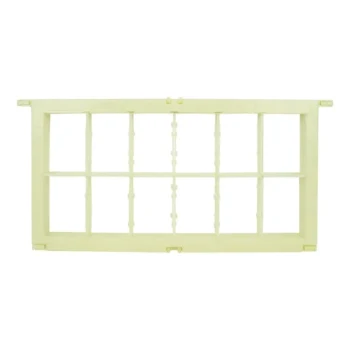
Standardized brood frames function as the universal interface for nomadic beekeeping. They ensure complete compatibility across equipment as colonies are moved between changing geographical locations and nectar flows, allowing beekeepers to instantly swap frames to balance colony strength and optimize hive structure.
Core Takeaway Standardization is not merely an operational convenience; it is a biological necessity for mobile apiaries. By enabling the seamless exchange of resources between hives, standardized frames provide the critical hardware support needed to secure high overwintering survival rates and drive rapid population buildup in the spring.
Enhancing Operational Agility
Universal Compatibility
In nomadic operations, colonies traverse vast distances to chase nectar flows. Standardized frames ensure that every component fits every hive, regardless of location.
This elimination of hardware variables allows apiarists to focus on the bees rather than struggling with mismatched equipment during critical transport windows.
Dynamic Resource Balancing
The primary operational advantage is the ability to quickly swap frames based on colony need.
If one colony is weak and another is strong, a beekeeper can transfer a frame of brood or honey to the weaker hive. This equalizes colony strength across the apiary, ensuring more units are production-ready.
Optimizing Colony Biology
Supporting Rapid Spring Buildup
Timing is everything in nomadic beekeeping. Standardized frames provide the structural support necessary for a colony to expand its population quickly when spring arrives.
By providing a familiar, uniform structure, the hardware facilitates an efficient laying pattern for the queen and optimized space for nurse bees.
Maximizing Overwintering Success
The primary reference identifies standardized frames as vital hardware support for winter survival.
A well-organized hive structure, maintained through standardized equipment, allows the cluster to move efficiently through food stores during cold months, directly impacting survival rates.
Facilitating Industrial Scale
Streamlining Hive Inspections
Interchangeable frames significantly reduce the time required for management tasks.
Because the frames are uniform, beekeepers can perform inspections, artificial swarming, and pest control without navigating unique structural quirks in individual hives.
Enabling Mechanization
Standardization is the prerequisite for modern, scalable production.
Uniform frames allow for mechanized honey extraction and processing. This protects the comb structure from damage during harvest, allowing it to be reused—a critical factor for efficiency in commercial operations.
Understanding the Trade-offs: The Vector Risk
The Risk of Disease Transmission
While standardization allows for resource balancing, it introduces a specific biological risk: human-mediated disease transfer.
When you move a frame from one hive to another to strengthen it, you may inadvertently transfer parasitic larvae, eggs, or pathogens.
Accelerating Social Parasitism
Standardized frames can act as vectors for social parasitism. By moving frames, beekeepers bypass the natural "invasion stages" of parasitic bees, depositing them directly into a healthy host colony.
This accelerates the spread of infestation, turning an operational asset into a biosecurity liability if hives are not properly screened before resources are shared.
Making the Right Choice for Your Operation
To leverage standardization effectively while mitigating risks, assess your specific operational goals:
- If your primary focus is Rapid Expansion: Prioritize full standardization to facilitate aggressive frame swapping, which balances colony strength for immediate nectar flows.
- If your primary focus is Biosecurity: Implement a "quarantine protocol" where frames are only swapped within designated sub-groups of hives to prevent apiary-wide cross-contamination.
- If your primary focus is Efficiency: Utilize standardized frames to enable mechanized extraction, reducing labor costs and preserving comb for future seasons.
Standardization turns the brood frame from a static container into a dynamic, exchangeable asset that powers the entire nomadic operation.
Summary Table:
| Feature | Operational Impact | Biological Benefit |
|---|---|---|
| Universal Compatibility | Eliminates hardware variables during transport | Reduces colony stress during hive moves |
| Frame Swapping | Allows instant balancing of colony strength | Supports rapid spring buildup & weak hive recovery |
| Uniform Structure | Enables mechanized honey extraction & processing | Optimizes queen laying patterns & overwintering |
| Comb Preservation | Reduces labor costs and material waste | Allows bees to reuse wax, saving energy for honey production |
| Scalability | Simplifies inspections and artificial swarming | Facilitates large-scale commercial management |
Scale Your Commercial Apiary with HONESTBEE
At HONESTBEE, we understand that in nomadic beekeeping, precision and standardization are the keys to profitability. As a premier provider for commercial apiaries and global distributors, we offer a comprehensive wholesale catalog designed to streamline your operations and maximize yields.
Our value to your business includes:
- Precision Hardware: Standardized brood frames and hive components that ensure perfect interchangeability.
- Industrial Machinery: High-efficiency honey-filling and hive-making machines to automate your production line.
- Complete Consumables: A full spectrum of beekeeping tools and essential supplies for every season.
- Cultural Merchandise: Unique honey-themed products to diversify your retail portfolio.
Ready to enhance your efficiency and secure higher overwintering survival rates? Partner with the industry experts.
Contact HONESTBEE Today to Discuss Wholesale Solutions
References
- Ethem Akyol, İbrahim Çakmak. An observation study on the effects of queen age on some characteristics of honey bee colonies. DOI: 10.4081/ijas.2008.19
This article is also based on technical information from HonestBee Knowledge Base .
Related Products
- Assembled Wooden Bee Frames with Plastic Foundation for Durability and Convenience by HONESTBEE
- Professional Galvanized Steel Frame Rest for Beehives
- JZBZ Langstroth Queen Rearing Frame for Beekeeping
- Assembled Wooden Bee Frames with Beeswax Foundation Ready to Use by HONESTBEE
- Professional Sectional Comb Honey Frame with 250g Cassette System for Beekeeping
People Also Ask
- When should frames with new foundation be given to colonies? Master Timing for a Thriving Hive
- What types of bee frames can be cleaned and returned to service? A Guide to Safe Apiary Refurbishment
- What are bee frames and how are they sized? A Professional Guide to Standardization & Material Choice
- How do you re-wax bee frames? A Simple Guide to Faster Comb Building
- Do you have to wire bee frames? Essential Guide to Frame Strength & Honey Harvesting