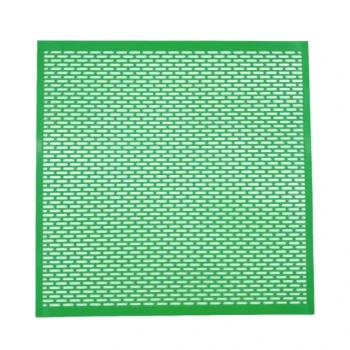
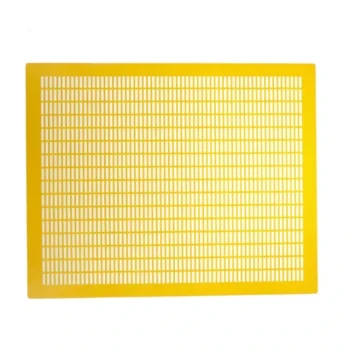
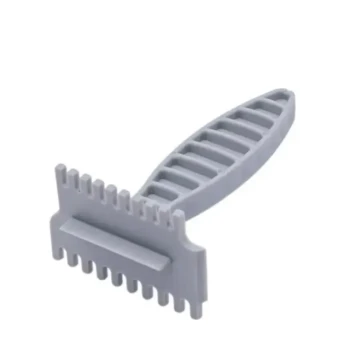
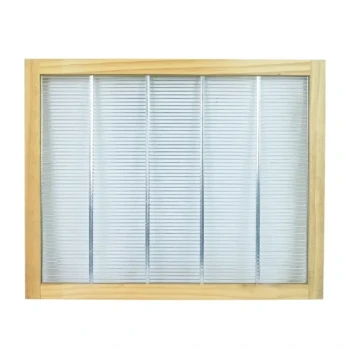
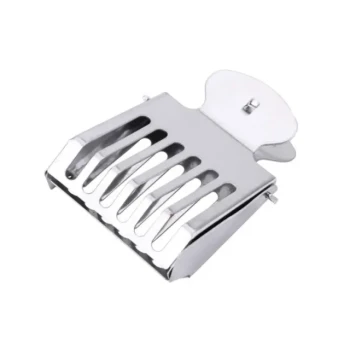
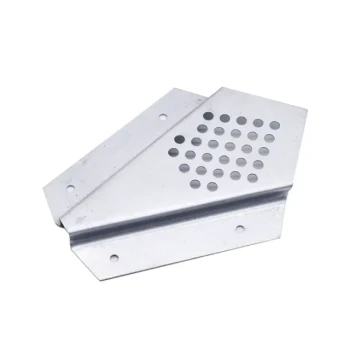
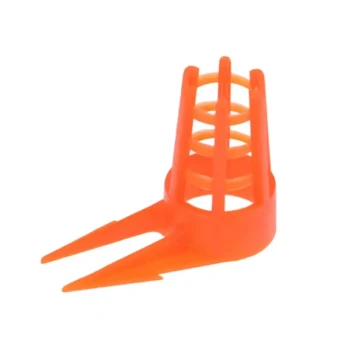
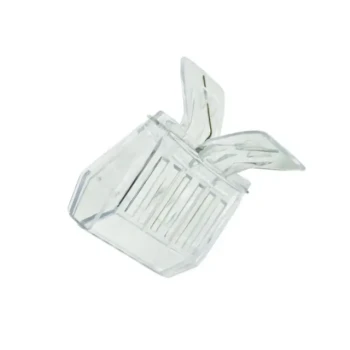
A Queen Excluder acts as a precision physical barrier that fundamentally organizes the hive by filtering bees based on their anatomy. It exploits the natural size difference between the larger queen bee and the smaller worker bees to create distinct functional zones within the colony.
The core function of a Queen Excluder is to strictly confine the queen to the brood chamber. This separation ensures that honey storage areas remain free of eggs and larvae, a requirement for producing commercial-grade, high-purity honey.
The Mechanics of the Barrier
Utilizing Size Differentials
The excluder functions as a filter with precisely spaced grids. These gaps are calculated to be large enough to allow smaller worker bees to pass through freely to attend to hive duties.
Simultaneously, the gaps are too narrow for the larger queen bee. This effectively traps her in a specific section of the hive, usually the lower brood chamber.
Creating Distinct Hive Zones
By restricting the queen's movement, the excluder enforces a physical separation between reproduction and production.
The area below the excluder becomes the dedicated nursery for raising new bees. The area above the excluder (the honey supers) is reserved exclusively for food storage.
The Significance for Honey Quality
Preventing Contamination
Without a physical barrier, a queen will naturally move upward to lay eggs wherever space is available, including in honey frames.
The excluder prevents this by stopping the queen from accessing the honey supers. This guarantees that the honey harvested is free from larvae, eggs, or "bee bread" (pollen stored for brood).
Ensuring Commercial Standards
For professional beekeepers, purity is non-negotiable. Consumers and processors demand clean, liquid honey.
Using an excluder ensures the final harvest consists only of pure, capped honey. This eliminates the labor-intensive need to sort through frames to separate brood from honey during extraction.
Operational Trade-offs
The Necessity of Confinement
While the excluder increases efficiency, it does so by imposing an artificial limit on the queen.
The trade-off is a restriction of the queen's natural instinct to expand the brood nest upward. You are prioritizing resource management and harvest purity over the colony's natural expansive behavior.
Making the Right Choice for Your Goal
To maximize the utility of a Queen Excluder, align its use with your specific production targets:
- If your primary focus is Commercial Sales: Use the excluder to guarantee that your honey supers meet the "clean" standard required for high-grade bottling.
- If your primary focus is Processing Speed: Implement the excluder to streamline harvesting, ensuring you never have to waste time checking honey frames for misplaced brood.
Strategic use of the physical barrier transforms a hive from a mixed-use colony into an efficient honey production facility.
Summary Table:
| Feature | Physical Barrier Mechanism | Impact on Beekeeping Management |
|---|---|---|
| Sizing Logic | Precisely spaced grids (worker size vs. queen size) | Allows workers free movement while confining the queen. |
| Zoning | Separation of brood chamber and honey supers | Creates dedicated areas for reproduction vs. food storage. |
| Purity Control | Prevents queen from laying eggs in honey frames | Guarantees honey is free from larvae, eggs, and bee bread. |
| Efficiency | Eliminates the need for manual frame sorting | Streamlines the extraction process for high-volume production. |
Elevate Your Apiary’s Commercial Output with HONESTBEE
As a professional beekeeper or distributor, achieving peak honey purity and operational efficiency is critical to your success. HONESTBEE specializes in supporting commercial apiaries with a comprehensive wholesale range of high-performance beekeeping tools and machinery.
From precision-engineered queen excluders that ensure your harvest meets premium standards to advanced honey-filling and hive-making machines, we provide the industrial-strength equipment you need to scale. Our portfolio also includes essential consumables and unique honey-themed cultural merchandise to diversify your brand.
Ready to optimize your production and maximize your honey quality?
Contact HONESTBEE today to explore our wholesale solutions and see how our expertise can drive your business growth.
References
- William F. Tchuenbou, Marc K. Kouam. Health, Socio- Technical, and Economic Constraints of Beekeeping in Bamboutos, Western Highlands of Cameroon. DOI: 10.55529/ijaap.51.1.13
This article is also based on technical information from HonestBee Knowledge Base .
Related Products
- High Performance Plastic Queen Excluder for Beekeeping and Apiary Management
- Professional Plastic Queen Excluder for Modern Beekeeping
- Lightweight Durable Plastic Queen Excluder Scraper for Beekeeping
- Metal Queen Bee Excluder for Beekeeping
- Premium Wood Framed Metal Wire Queen Bee Excluder
People Also Ask
- What are the characteristics of a plastic queen excluder? Key Benefits for Cost-Effective Beekeeping
- What are the operational and cost advantages of using plastic queen excluders over metal or wire excluders in commercial hive management? Discover how they reduce labor, prevent wing damage, and lower total costs.
- What types of queen excluders are available for beekeepers? Choose the Right Tool for Your Hive
- Why are standardized hive frames and queen excluders essential for maintaining honey purity and quality? Scale Your Purity
- Do plastic queen excluders work? A Cost-Effective Solution for Modern Apiaries