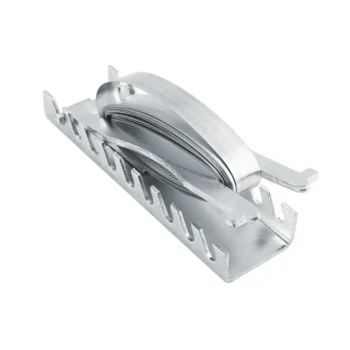
The technical purpose of a protective metal mesh cover is to prevent "propolization"—the natural instinct of honeybees to seal foreign objects with wax and propolis. By acting as a physical barrier, the mesh ensures that sensor probes remain clear of biological obstructions while allowing air, sound, and gas to diffuse freely for accurate data collection.
This protective component is a critical consumable that bridges the gap between sensitive electronics and the harsh biological environment of a beehive, ensuring long-term data integrity and hardware survival.
Preventing Sensor Failure via Propolization
The Biological Challenge of Hive Monitoring
Honeybees naturally identify sensor nodes as foreign intrusions and attempt to neutralize them by coating the surfaces with propolis (bee glue) or beeswax. Without a mesh barrier, sensor ports are rapidly sealed, rendering high-precision probes for temperature, humidity, and gas composition completely inoperable.
Preserving Data Sensitivity and Accuracy
The mesh provides essential physical isolation that allows sound waves and gas molecules to reach the sensor without obstruction. This ensures the hardware maintains high sensitivity to hive acoustics and environmental fluctuations throughout monitoring cycles that can last over a year.
Engineering for Optimal Diffusion
High-quality protective covers utilize a specific mesh count and aperture size (typically smaller than 0.2mm) to balance protection with performance. This precise engineering prevents bee contact while ensuring that the internal microclimate readings remain representative of the actual hive conditions.
Hardware Longevity and Maintenance Efficiency
Physical Shielding from Mechanical Damage
Beyond chemical sealing, honeybees may attempt to chew or dismantle foreign components within the hive. The metal wire mesh acts as a rugged shield, protecting delicate electronic components and microphone diaphragms from direct physical damage and structural degradation.
Extending Commercial Service Intervals
For large-scale commercial operations, the mesh significantly extends the maintenance cycle of monitoring equipment. By preventing the immediate "clogging" of sensors, it reduces the frequency of manual hive interventions, which saves labor costs and minimizes colony disruption.
Spatial and Signal Isolation
Advanced mesh covers can also provide spatial signal isolation, helping the sensor array focus on specific areas of the hive, such as the "dance floor." In some configurations, grounded metal mesh helps mitigate irrelevant electrostatic signals, improving the accuracy of social signal identification.
Understanding the Trade-offs
The Risk of Mesh Clogging
While the mesh protects the sensor, the mesh itself can eventually become coated in propolis over long durations. This requires the mesh to be treated as a replaceable consumable to ensure that airflow and acoustic transparency are not permanently compromised.
Signal Attenuation and Calibration
The presence of a metal barrier can slightly attenuate high-frequency sound waves or affect local thermal conductivity. Professional-grade sensor nodes must be calibrated with the mesh in place to account for these physical properties and ensure the reported data is technically sound.
Material Selection and Corrosion
The hive is a high-humidity environment where organic acids are present. Using inferior metals can lead to oxidation or corrosion, which may contaminate the hive or degrade the mesh; therefore, sourcing high-grade, corrosion-resistant alloys is essential for hardware reliability.
Sourcing the Right Solution for Your Portfolio
As a dedicated partner in high-tech apiculture, we understand that distributors require a full-spectrum product portfolio that includes high-performance consumables. Our expertise ensures that every component, from the sensor node to the protective mesh, meets rigorous technical standards for global export.
- If your primary focus is maximize hardware lifespan: Prioritize sourcing corrosion-resistant stainless steel mesh covers with reinforced edges to withstand long-term biological exposure.
- If your primary focus is data precision for research clients: Select mesh covers with a verified aperture of less than 0.2mm to ensure optimal gas diffusion and acoustic transparency.
- If your primary focus is supply chain efficiency: Utilize our rapid-response trading services and ultra-fast delivery to maintain consistent stock of these essential monitoring consumables.
By integrating these specialized protective components into your inventory, you provide your clients with the technical reliability necessary for successful, modern hive management.
Summary Table:
| Feature | Primary Technical Purpose | Key Specification |
|---|---|---|
| Biological Barrier | Prevents "propolization" (sealing with bee glue) | Physical isolation of sensor ports |
| Data Integrity | Ensures gas and acoustic diffusion | Optimal aperture size (< 0.2mm) |
| Physical Shielding | Protects from chewing and mechanical damage | High-grade metal wire mesh |
| Maintenance | Extends commercial service intervals | Treated as a replaceable consumable |
| Signal Clarity | Reduces electrostatic interference | Grounded corrosion-resistant alloys |
Elevate Your Smart Beekeeping Inventory with HONESTBEE
As a global leader in high-tech apiculture solutions, HONESTBEE empowers distributors, wholesalers, and B2B resellers with a comprehensive one-stop sourcing experience. From high-precision monitoring consumables like protective mesh covers to industrial honey-filling machines and specialized hive hardware, our full-spectrum portfolio is designed for commercial success.
Why Partner with HONESTBEE?
- Deep Industry Expertise: Technical reliability that meets global export standards.
- One-Stop Sourcing: Access everything from machinery to honey-themed cultural merchandise.
- Rapid Fulfillment: Ultra-fast delivery and dedicated customer service to keep your supply chain moving.
- Competitive Edge: High-performance products that maximize profit margins and reliability for your clients.
Ready to scale your business with the industry's most trusted trading partner?
Contact Our Expert Team Today!
References
- Martin Bencsik, Michael I. Newton. A Monitoring System for Carbon Dioxide in Honeybee Hives: An Indicator of Colony Health. DOI: 10.3390/s23073588
This article is also based on technical information from HonestBee Knowledge Base .
Related Products
- Inner Beehive Cover for Beekeeping Bee Hive Inner Cover
- Professional Insulated Winter Hive Wrap for Beekeeping
- Telescopic Beehive Outer Cover Lid Roof with Galvanised Sheeting for Langstroth Hive and Beehive Outer Cover
- Metal Hive Feet Bee Hive Stand for Ant Protection
- Professional Square Folding Wire Mesh Beekeeping Veil
People Also Ask
- What is the purpose of the inner cover in a beehive? A Key to Hive Health & Easy Management
- What is the function and placement of an inner cover in a beehive? Essential Hive Management Guide
- What is the purpose of the inner and outer covers in a beehive? Essential for Hive Health & Management
- What is a beehive's inner cover and how is it used? Essential Guide for Hive Insulation and Ventilation
- What are the functions of the inner and outer covers on a beehive? Essential Guide for Hive Protection and Management