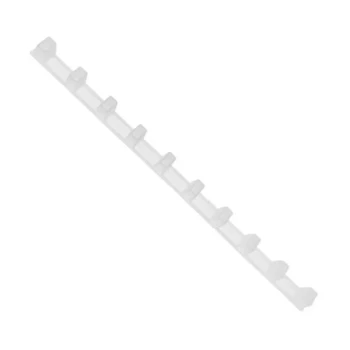
Precision through segmentation is the fundamental technical purpose of this measurement strategy. By dividing a hive frame into five horizontal sections on each side—creating a total of ten distinct zones—researchers can convert subjective visual observations into precise surface area data. This methodology is essential for standardizing measurements of adult bee populations, brood viability, and resource storage.
This segmentation method transforms qualitative hive inspections into objective, quantitative datasets. It establishes the standardized baseline necessary for statistically analyzing critical traits like colony development speed and overwintering viability.
Transforming Observation into Data
From Abstract to Concrete
Standard beekeeping inspections often rely on "abstract observations" or general estimates. Dividing the frame creates a specific grid, allowing breeders to assign a numerical value to biological activities. This converts a visual check into calculable surface area.
Standardization for Statistical Analysis
Breeding experiments require rigorous comparison between colonies. By utilizing a fixed ten-section grid, you create a reliable quantitative baseline. This standardization is the prerequisite for performing valid statistical analyses across different hives and time periods.
Critical Metrics in Breeding
Measuring Adult Bee Coverage
The ten-section split provides an accurate count of adult bee density. This metric is crucial for determining the current workforce and the colony's immediate ability to thermoregulate and forage.
Assessing Brood Area
Future colony strength is determined by the brood (eggs, larvae, and pupae). Measuring brood area via these sections allows breeders to predict spring development speed, a key genetic trait for productivity.
Tracking Resource Storage
The grid system applies equally to honey and pollen stores. mapping these resources allows researchers to correlate food availability with colony survival rates and overwintering strength.
Understanding the Methodological Trade-offs
Time Investment vs. Data Quality
While this method offers superior data, it requires significantly more time than a standard visual inspection. Researchers must meticulously evaluate all ten sections of every frame, which can prolong hive opening times and disturb the colony.
The Limits of Resolution
Dividing a frame into ten sections increases precision, but it is still a form of estimation. If a section is partially filled, the observer must still make a judgment call, meaning observer consistency remains a variable that must be managed.
Making the Right Choice for Your Goal
This methodology is designed for scenarios where data integrity outweighs speed.
- If your primary focus is rigorous genetic selection: Adopt the ten-section division to generate the statistical data needed to isolate traits like rapid spring buildup.
- If your primary focus is general apiary management: Recognize that this level of granularity may be unnecessary for routine health checks where broad estimates suffice.
Systematic quantification is the bridge between observing a hive and scientifically improving it.
Summary Table:
| Metric Category | Measurement Purpose | Key Breeding Insight |
|---|---|---|
| Adult Bee Coverage | Population density & workforce | Thermoregulation & foraging capacity |
| Brood Area | Egg, larvae, and pupae count | Predicted spring development speed |
| Resource Storage | Honey and pollen mapping | Overwintering viability & survival rates |
| Data Format | Quantitative surface area | Statistical baseline for genetic selection |
Elevate Your Apiary with Scientific Precision
At HONESTBEE, we understand that high-performance beekeeping requires more than just observation—it requires the right tools. We cater to commercial apiaries and distributors by providing a comprehensive wholesale range, from specialized hive-making machinery to essential beekeeping consumables.
Whether you are scaling up your breeding program or outfitting a commercial operation, our portfolio of hardware and honey-themed merchandise is designed to support your growth. Contact us today to discover how our premium equipment and industry expertise can optimize your honey production and colony management.
References
- Nebojša Nedić, Kazimir Matović. Variability of production characteristics of distinguished lines of bees in western Serbia. DOI: 10.2298/bah1103379n
This article is also based on technical information from HonestBee Knowledge Base .
Related Products
- Wooden Bee Hive Frames for Beekeeping and Wholesale
- Heavy-Duty Stainless Steel Clip-On Frame Perch
- Assembled Wooden Bee Frames with Plastic Foundation for Durability and Convenience by HONESTBEE
- Professional Galvanized Steel Frame Rest for Beehives
- HONESTBEE Wired and Assembled Wooden Bee Frames Foundation for a Thriving Hive
People Also Ask
- How does balancing the number of frames impact hive productivity? Optimize Your Apiary's Biological Output
- How do wooden and plastic hive frames compare in terms of durability? Wood vs. Plastic Longevity & Repairability
- What are the main considerations when choosing between wooden and plastic bee hive frames? Optimize Your Apiary's Efficiency
- How should beehive frames be maintained to prolong their lifespan? 5 Pro Tips for Durable Beekeeping Equipment
- How are plastic frames different from traditional wooden frames? Choose the Right Frame for Your Apiary