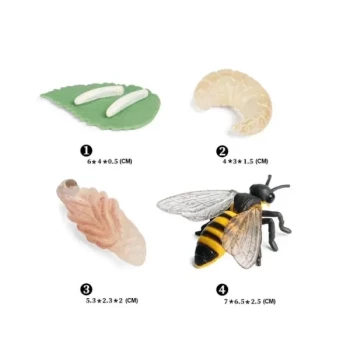
High-simulation biome models serve as critical visualization tools that bridge the gap between abstract ecological theory and practical apiary management. Their primary technical value lies in their ability to explicitly demonstrate the causal link between specific vegetation distributions and the resulting botanical origin of honey, providing concrete evidence of how environmental factors dictate production outcomes.
These models transform complex ecological data into actionable insights, proving that maintaining local biodiversity is not merely an environmental goal, but a technical requirement for ensuring stable and consistent hive product yields.
Visualizing the Ecological Supply Chain
Decoding Honey Origins
The core function of these models is to demystify the botanical origin of honey. In traditional beekeeping, the source of nectar can often be a matter of speculation.
High-simulation models remove this ambiguity. They visually map the specific flora within a foraging radius to the honey produced. This allows producers to see exactly which plants are driving their production volume and quality.
The Link Between Flora and Stability
Beyond identifying sources, these tools illustrate the stability of yields.
The models demonstrate that reliance on a single crop can lead to "boom and bust" cycles. By simulating various biomes, they show that diverse vegetation ensures a continuous nectar flow, stabilizing hive productivity throughout the season.
Educational and Promotional Applications
Bridging the Knowledge Gap
For students and novice beekeepers, ecological links are often theoretical concepts that are hard to visualize in the field.
Biome models provide a high-fidelity simulation of these invisible interactions. They allow learners to "see" the connection between a specific plant species and the health of the hive, accelerating the learning curve regarding ecosystem management.
Promoting Sustainable Technology
In technology promotion, these models act as proof-of-concept tools.
They move the conversation from abstract conservation appeals to data-driven production strategies. By showing the direct correlation between biodiversity and yield, they provide a technical justification for adopting sustainable land management practices.
Understanding the Trade-offs
The Simulation vs. Reality Gap
While valuable, it is critical to remember that a model is a representation, not the territory itself.
High-simulation models rely on input data regarding vegetation. If the underlying data regarding plant density or nectar secretion rates is inaccurate, the model's predictions regarding honey origin will be flawed.
Complexity Management
These tools can sometimes oversimplify the chaotic variables of nature.
Factors such as sudden weather changes, soil health variations, or competing pollinators may not always be fully captured. Users must treat these models as strategic guides rather than absolute predictors of harvest volume.
Making the Right Choice for Your Goal
To derive the most value from high-simulation biome models, align their use with your specific objective:
- If your primary focus is Education: Use the models to visualize the "invisible" nectar flow, helping students grasp how local flora directly impacts hive survival.
- If your primary focus is Production Management: Use the models to audit your forage area, identifying gaps in biodiversity that could threaten yield stability.
True technical mastery in beekeeping comes from understanding that the hive is only as strong as the biome that supports it.
Summary Table:
| Feature | Technical Value & Impact | Application Focus |
|---|---|---|
| Honey Origin Decoding | Maps specific flora to nectar sources | Production Management |
| Yield Stability Analysis | Visualizes nectar flow across diverse biomes | Risk Assessment |
| High-Fidelity Simulation | Bridges the gap between theory and practice | Education & Training |
| Proof-of-Concept | Justifies sustainable land management data | Technology Promotion |
| Ecological Mapping | Identifies gaps in local biodiversity | Resource Planning |
Elevate Your Apiary Operations with HONESTBEE
At HONESTBEE, we understand that technical mastery in beekeeping requires both advanced tools and ecological insight. As a dedicated partner to commercial apiaries and distributors, we provide the comprehensive wholesale solutions you need to scale your success.
From high-performance honey-filling and hive-making machinery to a full spectrum of specialized beekeeping tools and industry consumables, our portfolio is designed to enhance efficiency at every stage of production. Beyond hardware, we offer unique honey-themed cultural merchandise to help you diversify your brand's appeal.
Ready to optimize your production and secure your supply chain?
Contact HONESTBEE Today to explore our wholesale offerings and discover how our expertise can drive your business forward.
References
- Marcelo Fernandes Pacheco Dias, Eliane Macedo Sobrinho Santos. Knowing in Order to Value: Strategies To Publicize Beekeeping Activities in the Jequitinhonha River Valley. DOI: 10.24857/rgsa.v19n4-056
This article is also based on technical information from HonestBee Knowledge Base .
Related Products
- Honey Bee Lifecycle Model: A Detailed Honeycomb Display of Bee Development
- HONESTBEE Anatomy Bee Model Detailed Anatomical Display for Education and Study
- Honey Bee Life Cycle Model 4 Stage Educational Set for Kids Learning
- Premium Traditional Copper Bee Smoker with Bellows
- HONESTBEE AC Powered Wire Embedder with Alligator Clips
People Also Ask
- Are honey bees good to have around? The Essential Role and Ecological Impact of Bees
- Why does standardized equipment lower honey bee winter loss? Master Large-Scale Beekeeping Success
- Do honey bees leave their hives? Understanding the Critical Role of Swarming
- What activities require a lot of energy for honey bees? Understanding the Colony's Energy Budget
- How do honey bees develop from egg to adult? The Complete 4-Stage Metamorphosis Guide