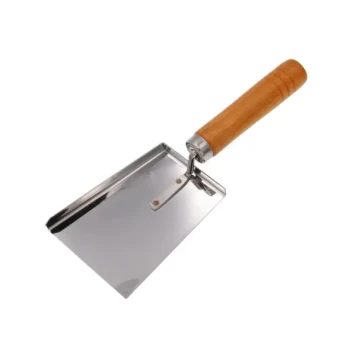
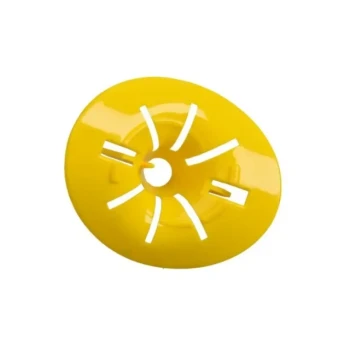
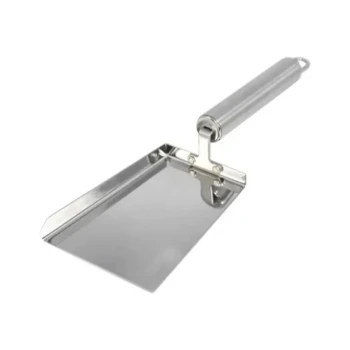
A professional pollen trap acts as a precision mechanical filter installed directly at the beehive entrance. By forcing returning foragers to navigate through a calibrated mesh, the device gently dislodges pollen pellets from the bees' rear legs, capturing the material for analysis or commercial use without harming the insect.
Core Takeaway: This device transforms a standard beehive into a biological sampling station. It allows for the systematic collection of pollen not just as a commercial product, but as a critical dataset for evaluating local vegetation resources and detecting environmental contaminants.
The Mechanics of Operation
Specific Mesh Sizing
The trap functions by partially restricting the hive entrance with a specialized grid or mesh. This mesh contains holes precisely sized to allow a worker bee to squeeze through, but with very little clearance.
Dislodging the Payload
As foraging bees scramble through these narrow openings to re-enter the hive, the physical friction affects the pollen baskets on their hind legs. The pollen pellets are gently scraped off the bee during passage.
The Collection Tray
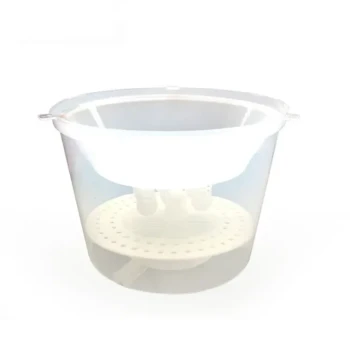
Once dislodged, the pellets fall through a lower screen into a protected collection tray beneath the entrance. This separates the pollen from the bees, allowing the beekeeper to harvest the material without opening the hive body.
Applications in Monitoring and Commerce
Evaluating Vegetation Resources
The trap provides a direct physical record of foraging behavior. by analyzing the color and type of pollen collected, beekeepers can identify exactly which plant species the colony is utilizing in the surrounding area.
Monitoring Environmental Residues
The collected pollen serves as a bio-indicator for environmental health. Because bees cover a wide radius, analyzing these pellets allows for the detection of pesticides, pollutants, or other residues present in the local ecosystem.
Commercial Pollen Collection
Beyond data, the trap is the primary tool for harvesting high-value commercial pollen. This "bee bread" is collected, cleaned, and sold as a nutritional supplement or food ingredient.
Understanding the Trade-offs
Impact on Hive Traffic
Because the trap restricts the entrance, it creates a bottleneck for returning foragers. This can slow down hive activity and potentially cause congestion at the entrance during peak foraging hours.
Nutritional Balancing
Pollen is the hive's primary protein source. Leaving a trap on indefinitely can deprive the colony of essential nutrition, so usage must be managed carefully to ensure the bees retain enough pollen for their own survival.
Making the Right Choice for Your Goal
- If your primary focus is Environmental Monitoring: Use the trap intermittently to gather samples for laboratory analysis regarding pesticides or local flora diversity.
- If your primary focus is Commercial Production: Implement a rotation schedule (e.g., trap on for two days, off for five) to harvest volume while allowing the colony to replenish its stores.
The professional pollen trap is a dual-purpose instrument that bridges the gap between agricultural production and environmental science.
Summary Table:
| Feature | Mechanical Detail | Application/Benefit |
|---|---|---|
| Sizing Grid | Calibrated mesh for bee passage | Gently dislodges pollen pellets from hind legs |
| Collection Tray | Protected lower screen | Gathers clean pollen without hive disturbance |
| Bio-Monitoring | Physical record of flora | Detects pesticides and maps local vegetation |
| Commercial Use | Systematic harvesting | Produces high-value nutritional supplements |
| Traffic Control | Entrance restriction | Managed via rotation to ensure colony nutrition |
Elevate Your Apiary Operations with HONESTBEE
At HONESTBEE, we empower commercial apiaries and distributors with high-performance beekeeping technology. Whether you are scaling up commercial pollen production or conducting environmental research, our professional-grade pollen traps and hive-making machinery provide the precision you need.
Our value to your business:
- Comprehensive Wholesale: Full spectrum of tools, from specialized hardware to essential industry consumables.
- Advanced Machinery: Reliable honey-filling and hive-making equipment designed for industrial efficiency.
- Market Growth: Boost your revenue with our honey-themed cultural merchandise and specialized hardware.
Ready to optimize your yield and data collection? Contact HONESTBEE today to discuss our wholesale solutions and how we can support your commercial success.
References
- G. Christopher Cutler, Larry W. Brewer. A large-scale field study examining effects of exposure to clothianidin seed-treated canola on honey bee colony health, development, and overwintering success. DOI: 10.7717/peerj.652
This article is also based on technical information from HonestBee Knowledge Base .
Related Products
- Removable Plastic Pollen Trap With Ventilated Tray for Bees Pollen Collector
- 30 cm Plastic Entrance Hole Bee Pollen Trap and Collector
- Plastic Bee Pollen Trap Strips Comb Catcher Collector
- High-Efficiency Diamond Maze Bee Escape for Clearing Supers
- Professional Bucket Style Wasp and Moth Pheromone Trap
People Also Ask
- What are the design principles and advantages of pollen traps in the collection of bee pollen? Boost Your Apiary Yield
- What is the function of professional pollen traps in evaluating honey plants? Quantifying Pollination and Crop Potential
- What functions do pollen traps serve for bee bread production? Optimize Your Raw Material Collection
- What maintenance and pest prevention measures should be taken for pollen traps? Protect Your Hive and Harvest Quality
- How does the use of pollen traps in honeybee hives enhance crop fertilization? Boost Your Yield Through Induced Activity