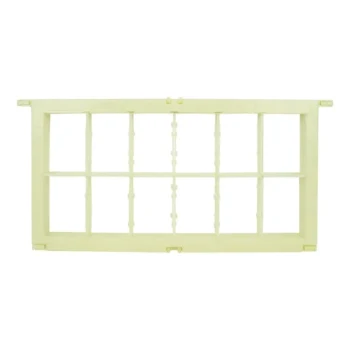
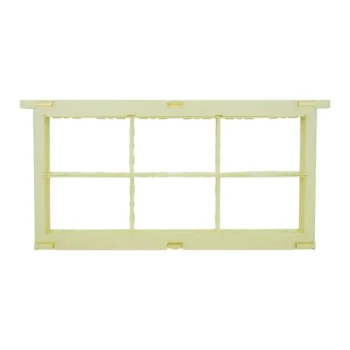
The material used is a specialized, certified plastic. These frames utilize a synthetic construction for the partially-formed honeycomb, specifically engineered to be free of Bisphenol-A (BPA) and Bisphenol-S (BPS).
The honeycomb within these frames is constructed from plastic that is certified BPA- and BPS-free, ensuring the foundation meets specific chemical safety standards while providing a pre-formed structure.
Material Composition and Safety
The Core Component
The structural foundation of the honeycomb is manufactured from plastic.
Unlike traditional foundationless frames or pure beeswax sheets, these specialized frames rely on a synthetic material to establish the partially-formed cells.
Chemical Safety Certifications
A critical specification of this plastic is its chemical profile. The material is explicitly certified free of BPA (Bisphenol-A).
Additionally, the certification extends to exclude BPS (Bisphenol-S). This dual certification ensures that the two most common plasticizers often scrutinized for health safety are absent from the hive environment.
Understanding the Trade-offs
Synthetic vs. Natural Wax
While the material is chemically certified, it remains a synthetic introduction to the hive.
Beekeepers preferring a strictly all-natural or organic approach must weigh the utility of the pre-formed plastic structure against the use of natural beeswax.
Specificity of Certification
The safety guarantee is specific to BPA and BPS.
While this covers the primary chemical concerns regarding plastics, it is important to recognize that the material is defined by what it lacks (these specific bisphenols) rather than a specific polymer name (e.g., polypropylene or polyethylene) provided in the source data.
Assessing Suitability for Your Apiary
To determine if this material aligns with your management goals, consider the following:
- If your primary focus is chemical safety: Rely on the specific BPA and BPS-free certifications to ensure the plastic meets high safety standards for food contact.
- If your primary focus is structural stability: The plastic construction provides a rigid, partially-formed base that natural wax cannot replicate.
The choice ultimately depends on balancing the convenience of a durable, pre-formed plastic matrix with the requirement for certified chemical safety.
Summary Table:
| Feature | Specification |
|---|---|
| Core Material | Specialized Synthetic Plastic |
| Safety Certification | BPA-Free & BPS-Free Certified |
| Structure Type | Rigid, Partially-Formed Honeycomb |
| Best For | Commercial Apiaries & Food-Safe Production |
Elevate Your Commercial Apiary with HONESTBEE
Looking for durable, high-performance beekeeping solutions that don't compromise on safety? HONESTBEE specializes in serving commercial apiaries and distributors with a comprehensive wholesale catalog. From specialized hardware like hive-making and honey-filling machines to advanced frames and industry-essential consumables, we provide the tools you need to scale efficiently.
Why partner with HONESTBEE?
- Comprehensive Wholesale Range: One-stop shop for all tools, machinery, and equipment.
- Industry-Standard Quality: Focus on BPA-free materials and durable engineering.
- Global Support: Dedicated service for large-scale operations and distributors.
Ready to upgrade your equipment? Contact us today to discuss your wholesale needs!
Related Products
- Professional Sectional Comb Honey Frame with 250g Cassette System for Beekeeping
- Professional 500g Sectional Comb Honey Frame System for Beekeeping
- Heart-Shaped Comb Honey Frame and Honeycomb Cassette
- Plastic Honey Comb Frames Cassette Box for Honey
- Heavy Duty Castellated Iron Frame Spacer for Honey Supers
People Also Ask
- How are honeybee combs utilized for non-destructive colony monitoring? Master Population Density Tracking
- What is the technical purpose of exchanging honeycomb frames? Master Apiary Equalization for Growth
- What frame to use for honeycomb? Choose the Right System for Pure, Edible Comb
- What is a honeycomb frame? The Key to Modern, Sustainable Beekeeping
- What are the recommended temperature and duration settings for freezing honey frames? Ensure Pest-Free Comb Storage