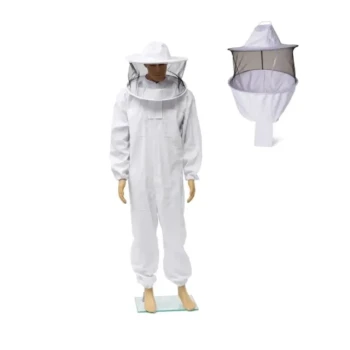
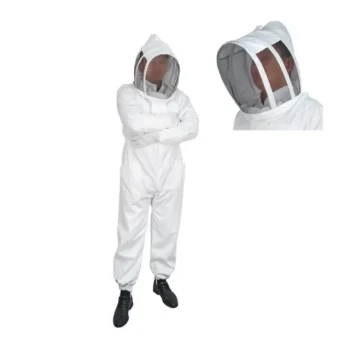
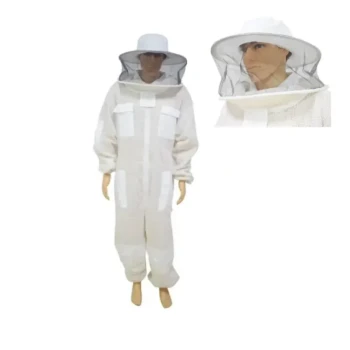
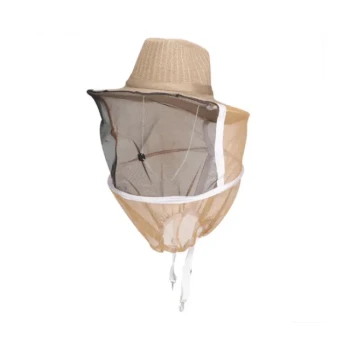
Professional bee veils and suits provide a critical dual-layer defense system for industrial beekeepers, combining physical sting prevention with essential contamination control. The veil utilizes high-visibility mesh to isolate the most sensitive areas—the head and neck—while the suit employs tightly woven, light-colored fabrics that stop stings from penetrating and protect personal clothing from difficult-to-remove hive byproducts.
Core Takeaway While the primary function of this gear is physical safety, its deeper value lies in operational continuity. By eliminating the fear of stings, protective equipment enables the calm, steady motor control required to inspect hives efficiently without agitating the colony or crushing bees.
The Mechanics of Physical Protection
Sting Barrier Technology
The fundamental benefit of the bee suit is its construction from tightly woven fabrics. This weave is specifically designed to be impenetrable to bee stings, acting as a complete physical shield for the operator’s body.
Critical Zone Isolation
Professional veils address the beekeeper's most vulnerable points: the head and neck. By using high-visibility mesh, the veil creates a safe zone that prevents stings to these sensitive areas without compromising the sightlines necessary for detailed visual inspections.
Contamination Control
Beyond sting safety, these suits serve a vital hygiene function referenced in primary industrial standards. They act as a sacrificial layer, preventing hive products—specifically sticky propolis, wax, and honey—from ruining the operator's personal clothing.
Operational Impact on Workflow
Enhancing Precision and Motor Control
High-performance suits provide the psychological security needed to maintain composure. When the fear of stings is removed, operators can utilize fine motor skills to lift frames and open hives with precision, avoiding clumsy movements that might crush bees or incite a defensive response.
Reducing Colony Disturbance
Sudden, jerky movements caused by fear or reaction to a sting can trigger alarm in a hive. By allowing the beekeeper to move calmly and steadily, protective gear helps maintain the colony's stability during inspections, preventing the release of alarm pheromones associated with agitation.
Ensuring Task Continuity
For high-intensity apiary management, interruption is costly. Full-body protection allows operators to work at close range for extended periods—conducting disease control or harvesting honey—without the risk of process stoppages caused by injury or the need to retreat from defensive bees.
Understanding the Limits of Protection
The Necessity of Integrated Safety
While suits provide a formidable barrier, they should not be viewed as a standalone solution for aggressive colonies. They function best when paired with tools like beekeeping smokers, which disrupt alarm pheromones.
Visibility vs. Protection
The mesh of a veil must balance protection with clarity. If the mesh is too dense, it obscures the view of eggs and larvae; if too open, it risks entry. Professional gear is calibrated to optimize this trade-off, but users must ensure their specific veil maintains this delicate balance for safe operation.
Making the Right Choice for Your Goals
Beekeeping requires balancing operator safety with the biological needs of the hive. Consider your primary objective when selecting and utilizing this gear:
- If your primary focus is Occupational Health: Prioritize suits with tightly woven, verified sting-proof fabrics to mitigate risks such as anaphylactic shock and ensure total physical isolation.
- If your primary focus is Colony Productivity: Focus on the psychological benefit of the gear; use the confidence it provides to move slowly and deliberately, minimizing bee mortality and hive disruption during inspections.
Ultimately, professional protective gear transforms beekeeping from a defensive struggle into a controlled, precise industrial operation.
Summary Table:
| Feature | Primary Benefit | Operational Impact |
|---|---|---|
| Tightly Woven Fabric | Sting Barrier | Prevents injuries and minimizes occupational health risks. |
| High-Visibility Mesh | Head & Neck Protection | Ensures clear visibility for inspections while isolating sensitive areas. |
| Dual-Layer Defense | Contamination Control | Protects personal clothing from sticky propolis, wax, and honey. |
| Psychological Shield | Improved Motor Control | Enables calm, steady movements to reduce colony agitation and bee mortality. |
Elevate Your Commercial Apiary with HONESTBEE
Maximize your team's safety and operational continuity with HONESTBEE. As a premier provider for commercial apiaries and distributors, we offer a comprehensive wholesale range of professional beekeeping suits, high-visibility veils, and advanced machinery.
Whether you need hive-making equipment, honey-filling machines, or essential industrial consumables, HONESTBEE delivers the quality and durability your business demands.
Ready to scale your production and protect your workforce? Contact our team today to discuss wholesale solutions
References
- Milorad Vojvodić, Dragan Bubalo. Rad na siguran način u pčelarskoj proizvodnji. DOI: 10.31306/s.59.4.6
This article is also based on technical information from HonestBee Knowledge Base .
Related Products
- Professional Beekeeper Suit with Square Folding Cotton Veil
- Professional Cotton Beekeeper Suit with Round Veil Design for Commercial Apiaries
- Premium Cotton Beekeeper Suit with Reinforced Fencing Veil
- White Cotton Beekeeping Jacket and Veil for Bee Keepers
- Premium Three Layer Ventilated Bee Suit with Round Veil
People Also Ask
- What material and design specifications are recommended for a high-quality beekeeper suit? Top Gear Selection Guide
- Why is mobility crucial when wearing a beekeeping suit? Essential Fit Guide for Optimal Safety and Performance
- How does climate influence the choice of a beekeeping suit? Stay Safe and Comfortable in Any Weather
- Why do beekeepers often wear white clothing? The Science Behind Bee Calm and Keeper Safety
- How should a beekeeping suit be dried after it has been cleaned? Essential Tips to Preserve Your Protective Gear