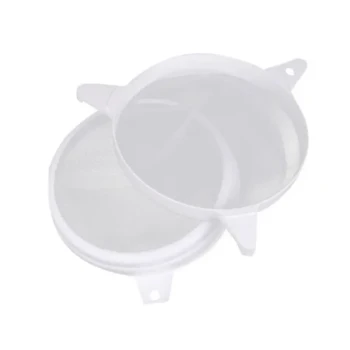
Durable buckets serve as the critical, immediate containment system for securing your harvest. They are specifically engineered to hold raw honeycomb or filtered honey the moment it leaves the hive or extractor. Beyond simple storage, their primary role is to provide a high-strength physical barrier that protects the harvest during transit, while food-grade sealing mechanisms rigorously prevent contamination from environmental dust and insects.
Core Takeaway The durable bucket is not merely a transport tool; it is a preservation device. By combining impact-resistant materials with airtight sealing, these vessels safeguard the purity and quality of raw honey during its most vulnerable transition—from the open field to the processing facility.
The Guardian of Harvest Integrity
The transition from the apiary to the processing room is a high-risk period for honey. Durable buckets mitigate these risks through specific design features.
Immediate Containment
The bucket is the first vessel the product enters after harvesting.
Whether you are collecting raw honeycomb directly from the frames or catching liquid honey flowing from a mechanical extractor, the bucket serves as the primary receiving reservoir.
Physical Protection During Transit
Honey is dense and heavy; a full container undergoes significant stress during transport.
Durable buckets are constructed with high physical strength to withstand the rigors of moving from the field to the honey house. This structural integrity prevents the bucket from buckling, cracking, or spilling, which would result in the loss of valuable product.
Preserving Sanitary Standards
Once honey is removed from the protective environment of the hive, it becomes susceptible to external contaminants.
The Sealing Mechanism
A standard lid is insufficient for high-quality honey production.
Durable buckets feature food-grade sealing systems. This ensures that once the harvest is inside, it is hermetically isolated from the outside environment, maintaining the raw quality of the honey.
Preventing Biological Contamination
The scent of fresh honey instantly attracts local insects, including robber bees, ants, and wasps.
The sealing mechanism plays a vital defensive role by blocking insect entry. Furthermore, it prevents invisible contaminants, such as field dust or pollen debris, from settling into the honey before it can be filtered or bottled.
Integration with the Harvesting Workflow
Buckets do not operate in a vacuum; they function as the connector between various harvesting technologies.
Complementing Mechanical Extraction
Honey extractors utilize centrifugal force to spin honey from frames without damaging the wax.
Once the extractor has separated the liquid, the honey must flow somewhere. The durable bucket fits beneath the extractor gate, capturing the yield while allowing the beekeeper to return the empty, undamaged combs to the honey super for immediate reuse.
Supporting Vacuum Harvesting
In stingless bee beekeeping, portable vacuum equipment uses negative pressure to extract honey from small pots.
This method relies on a closed loop to prevent oxidation and contamination. The durable bucket acts as the sealed collection chamber in this setup, ensuring the hygiene established by the vacuum process is maintained until the bucket is opened for bottling.
Understanding the Trade-offs
While durable buckets are essential for quality control, they introduce specific logistical considerations that beekeepers must manage.
Weight and Ergonomics
Honey is approximately 50% heavier than water.
A "durable" bucket is often thicker and heavier than a standard utility pail. When filled to capacity, these buckets can become difficult to maneuver manually, posing ergonomic risks during the transfer process.
Cost vs. Risk
High-quality, food-grade buckets with specialized seals represent a higher upfront cost than standard plastic pails.
However, this cost must be weighed against the risk of product loss. A cheaper bucket that cracks under the weight of the honey or fails to seal out ants can result in the loss of an entire harvest batch.
Making the Right Choice for Your Goal
Selecting the correct containment vessel is as important as choosing the right extractor.
- If your primary focus is Purity: Prioritize buckets with gasketed screw-top lids or heavy-duty snap rings to ensure an absolute seal against microscopic dust and moisture.
- If your primary focus is Efficiency: Ensure your buckets are sized correctly to fit directly under the honey gate of your specific extractor model to minimize transfer steps.
By investing in high-quality durable buckets, you effectively extend the protective security of the hive all the way to the bottling table.
Summary Table:
| Feature | Primary Role & Benefit | Impact on Honey Quality |
|---|---|---|
| Structural Strength | Prevents buckling or cracking during transit | Eliminates product loss from spills or container failure |
| Airtight Sealing | Provides a hermetic barrier against dust and pests | Maintains raw purity and prevents biological contamination |
| Food-Grade Material | Serves as the first immediate containment vessel | Ensures zero chemical leaching and meets sanitary standards |
| Workflow Integration | Fits extractors and vacuum harvesting systems | Facilitates seamless transfer from field to processing facility |
Elevate Your Apiary’s Standards with HONESTBEE
Maximize your harvest integrity with the industry’s most reliable containment solutions. HONESTBEE specializes in supporting commercial apiaries and distributors with a full spectrum of professional-grade beekeeping tools. From high-strength food-grade buckets to advanced honey-filling machines and specialized hardware, our comprehensive wholesale offering is designed to scale your business.
Why partner with HONESTBEE?
- Commercial-Grade Durability: Built for the rigors of large-scale honey production.
- Complete Workflow Support: Everything from hive-making machinery to essential consumables.
- Industry Expertise: Tailored solutions for distributors looking for quality and reliability.
Ready to secure your next harvest? Contact us today to explore our wholesale catalog and see how we can optimize your beekeeping operations.
References
- MR Ja’Afar-Furo, B.M. Hamidu. Economic analysis of smallholders beekeeping industry in Adamawa state, Nigeria. DOI: 10.4314/gjpas.v13i1.16664
This article is also based on technical information from HonestBee Knowledge Base .
Related Products
- Food Grade Plastic Honey Bucket Pail for Beekeeping
- Plastic Honey Gate Spout with Wing Nut for Beekeeping Honey Bucket
- Premium Stainless Steel Honey Tank Bucket Pail with Reinforced Handle and Polished Finish
- Honeycomb Style Drip Free Honey Dispenser
- Classic Drum Shaped Glass Honey Jar with Airtight Lid
People Also Ask
- What key operational precautions should be taken when using honey buckets and extractors fitted with bottom drain taps?
- What functions do food-grade honey buckets perform? Safeguard Your Harvest and Optimize Apiary Logistics
- Why are food-grade plastic buckets preferred for honey? Protect Quality with Modern Honey Collection Tools
- What is the significance of food-grade plastic honey collection buckets? Boost Quality in Forest Honey Logistics
- What is a honey pail? The Essential Container for Protecting Your Honey's Value