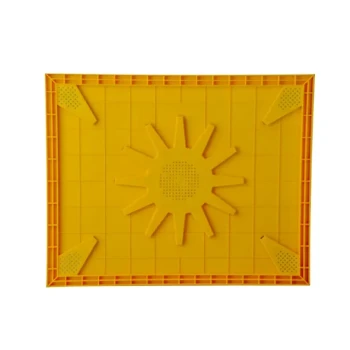
Pre-printed grid sticky boards serve as precision diagnostic tools that convert the chaotic environment of a beehive into a measurable scientific dataset. By placing a standardized grid coated with adhesive at the bottom of the hive, you transform the physical fall of parasites into quantifiable data, allowing for the accurate evaluation of infestation levels and the effectiveness of medicinal treatments.
Core Takeaway These boards provide the quantitative evidence required for data-driven pest management. By combining a sticky surface to secure samples against wind or scavengers with a standardized grid for accurate counting, they allow you to objectively measure parasite mortality rates and verify if your control protocols are actually working.
Transforming Observation into Quantitative Data
The primary role of a pre-printed sticky board is to bridge the gap between guessing and knowing. It functions as a platform for quantitative analysis.
The Function of the Grid System
Counting hundreds of tiny parasites on a blank sheet is prone to error. Pre-printed boards utilize a standard grid design, such as a 54-grid layout, to segment the hive bottom into manageable zones.
Creating a Measurable Area
This layout converts the hive floor into a specific, measurable area. This allows technicians and beekeepers to perform systematic counts rather than rough estimates, ensuring the data collected is scientifically valid.
Evaluating Treatment Efficacy
The most critical application of this grid is evaluating medicinal treatments. By counting the parasites that drop immediately following a treatment application, you generate data that proves whether your control protocol is effective or if resistance is developing.
Ensuring Data Integrity and Accuracy
Data is useless if the sample is compromised. The "sticky" component of the board plays a vital role in preserving the evidence required for analysis.
Securing the Sample
Hive environments are dynamic, characterized by ventilation currents and bee activity. The adhesive force of the board ensures that dislodged parasites remain firmly attached to the collection area, preventing loss due to wind or vibration.
Preventing Biological Loss
Without a sticky barrier, scavenger insects like ants can remove dead mites from the bottom board before they are counted. The adhesive coating captures the target parasites while simultaneously acting as a barrier against these scavengers, preserving the integrity of your statistical data.
Standardizing the Count
By preventing displacement and theft of the sample, the sticky board ensures high precision. This reliability is essential when comparing weekly statistics or determining if an infestation has reached a critical threshold requiring intervention.
The Mechanics of Capture and Control
While primarily a monitoring tool, the sticky board also plays a functional role in the mechanical control of parasites when paired with specific hive components.
Non-Destructive Monitoring
When used in conjunction with wooden Varroa screens, sticky boards allow for continuous monitoring without harming the colony. The mesh allows parasites to fall through while preventing worker bees from accessing the bottom board to "clean" away the evidence.
Preventing Re-infestation
The sticky layer serves as a trap. Parasites that are groomed off bees or fall due to natural mortality are captured upon contact. The oil or adhesive prevents them from crawling back up to re-infect the colony or re-enter brood cells.
Passive vs. Active Collection
These boards support two modes of data collection:
- Natural Drop: Measuring the daily natural mortality rate to estimate total population.
- Treatment Drop: Measuring the massive drop induced by chemical or medicinal interventions to verify the "knock-down" effect.
Understanding the Trade-offs
To use sticky boards effectively, you must understand their limitations and requirements.
Dependence on Screening
Sticky boards are rarely used as standalone tools inside the brood chamber. They are designed to sit beneath a screen or mesh. Without the screen, bees would get stuck to the board, or they would walk over it and remove the debris you are trying to count.
Interpretation Context
The board provides a raw number, but that number requires context. A high count of parasites on the board could indicate a successful treatment (the mites are dying as planned) or a catastrophic infestation (natural die-off is high). You must correlate the grid count with the timing of your treatments to interpret the data correctly.
Making the Right Choice for Your Goal
How you utilize pre-printed grid sticky boards depends on your immediate objective for the apiary.
- If your primary focus is Efficacy Testing: Install the board immediately before applying a medicinal treatment and count the drop 24-48 hours later to verify the chemical is working.
- If your primary focus is Routine Monitoring: Insert the board for a standardized period (e.g., 3 days) to measure the "natural drop" and establish a baseline infestation trend.
- If your primary focus is Sample Integrity: Ensure the board is heavily coated with adhesive or oil to prevent ants from skewing your data by stealing the fallen parasites.
The grid sticky board ultimately transforms parasite control from a guessing game into a measurable science.
Summary Table:
| Feature | Function in Parasite Control | Benefit to Beekeepers |
|---|---|---|
| Standardized Grid | Divides hive floor into measurable zones | Enables accurate, systematic counting & scientific data |
| Adhesive Coating | Secures fallen parasites and traps pests | Prevents re-infestation & data loss from wind/scavengers |
| Data Monitoring | Measures natural vs. treatment-induced drop | Identifies infestation thresholds & treatment resistance |
| Screen Integration | Separates bees from the sticky surface | Allows non-destructive monitoring without harming the colony |
Maximize Your Apiary Productivity with HONESTBEE
Precise monitoring is the foundation of a healthy apiary. At HONESTBEE, we specialize in supporting commercial apiaries and distributors with a comprehensive wholesale portfolio designed for professional-scale operations. From precision diagnostic tools like pre-printed sticky boards to advanced hive-making and honey-filling machinery, we supply the full spectrum of equipment and consumables your business needs to thrive.
Partner with HONESTBEE to access:
- High-Volume Wholesale Pricing: Premium quality beekeeping tools at competitive industrial rates.
- Professional Equipment: Specialized hardware and machinery for efficient honey processing.
- End-to-End Solutions: Everything from hive hardware to honey-themed cultural merchandise.
Contact our export specialists today to streamline your supply chain and enhance your colony management protocols!
References
- Amber Rana, Barish E. James. The efficacy of clove oil to manage Varroa destructor and Apocephalus borealis, in Apis mellifera L. colony. DOI: 10.52804/ijaas2023.4213
This article is also based on technical information from HonestBee Knowledge Base .
Related Products
- Professional Engraved Round Hive Number Tags for Beekeeping
- Langstroth Solid Bottom Board for Beekeeping
- HONESTBEE AC Powered Wire Embedder with Alligator Clips
- Solid Bottom Board Australian Pine Wood Langstroth Bottom Board for Wholesale
- Durable Plastic Hive Number Set for Beekeeping
People Also Ask
- What role do numbered tags and specialized adhesives play in honey bee genetic research? Linking Genotype to Behavior
- What function do hive identification tags serve in long-term monitoring? Secure Precise Data & Outlier Detection
- What is the role of record-keeping tools like manuals and hive markers in professional queen bee breeding? Master Data.
- What are the advantages of numbered plastic tags? Achieve Precise Individual Honeybee Identification
- Why is stable hive temperature important for honeybee colonies in winter? The Key to Winter Survival and Spring Buildup